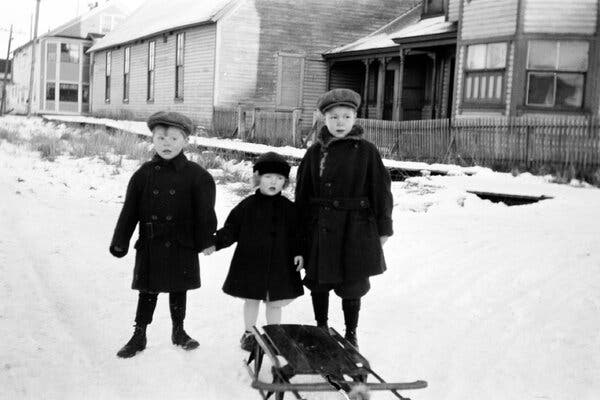
Jirdes Winther Baxter, the last known survivor of the devastating diphtheria epidemic that struck Nome, Alaska, in 1925, passed away in Juneau on January 5, 2024. She was 101 years old. Her son, Fred J. Baxter, confirmed her death in a hospital, marking the end of a remarkable life that witnessed one of the most harrowing chapters in Alaskan history.
Born in 1924, Jirdes was just 11 months old when she and her family were struck by diphtheria, a highly contagious bacterial infection. Medical records in the possession of Fred Baxter reveal that Jirdes was hospitalized on January 30, 1925, with a severe case of the illness, accompanied by a high fever. Her mother, Ragnhild Winther, and her brother John were also admitted shortly after, while her father, Johan, and another brother, Gudmund, managed to avoid the disease.
The epidemic claimed the lives of two young children by mid-January, prompting a quarantine in Nome, which had a population of approximately 1,400 at the time. Dr. Curtis Welch, the town’s only physician, recognized the urgency of the situation. He understood that a broader outbreak was “almost inevitable” and quickly sent out alerts via radio telegram to other Alaskan towns, seeking emergency assistance from the U.S. Public Health Service.
As the crisis escalated, the nearest supply of diphtheria antitoxin, crucial for treatment, was located 1,000 miles away in Anchorage. The situation necessitated a heroic rescue operation, which would become legendary. A sled dog relay carrying the lifesaving serum traveled nearly 700 miles across treacherous terrain to reach Nome, saving countless lives in the process.
Jirdes Winther Baxter’s survival was a testament to the resilience of those who lived through the epidemic and a reminder of the importance of community in times of crisis. Her experiences and the legacy of the 1925 diphtheria epidemic continue to resonate, reflecting the challenges faced by isolated communities.
Baxter’s passing signifies the end of an era, as she was the last living link to the remarkable history of Nome during one of its most challenging times. Her life spanned over a century, witnessing significant changes in medicine, technology, and society.
The impact of the diphtheria epidemic and the legendary dog sled relay remains a vital part of Alaskan history, inspiring generations to remember the courage and determination of those who faced insurmountable odds.