As the political landscape evolves, the year 2025 has revealed significant trends influencing American politics. Observers noted that President Donald Trump has maintained a powerful grip over political discourse, while also facing emerging challenges from within his own party and economic pressures affecting the electorate.
In the early months of 2025, Trump’s administration demonstrated a calculated efficiency, aggressively targeting institutions such as mainstream media and elite universities. This approach created an atmosphere of intimidation, leading many to perceive that dissent could become increasingly perilous. However, by summer, internal conflicts began to surface within the Republican Party. Notably, Rep. Marjorie Taylor Greene, previously a staunch Trump ally, began voicing opposition on critical issues ranging from foreign policy to domestic governance.
Amid this backdrop, millions of Americans grappled with rising costs and tightening job markets. The administration’s dismissive attitude toward the affordability crisis, which many voters experienced firsthand as grocery prices soared, eroded trust. The Democratic Party, recognizing the significance of economic concerns over abstract notions of democracy, positioned affordability as a central argument in upcoming elections.
Democratic Resurgence Amid Economic Struggles
In an unexpected turn, the Democrats found renewed vigor during an autumn government shutdown, which highlighted the expiration of Affordable Care Act subsidies and the impending rise in health insurance costs for many Americans. This strategic focus on economic issues contributed to a stronger showing in the November 2025 off-year elections. As events unfolded, including Trump’s unsuccessful attempt to cancel a popular television show and the emergence of protests against his policies, a growing sentiment emerged that he was not invulnerable.
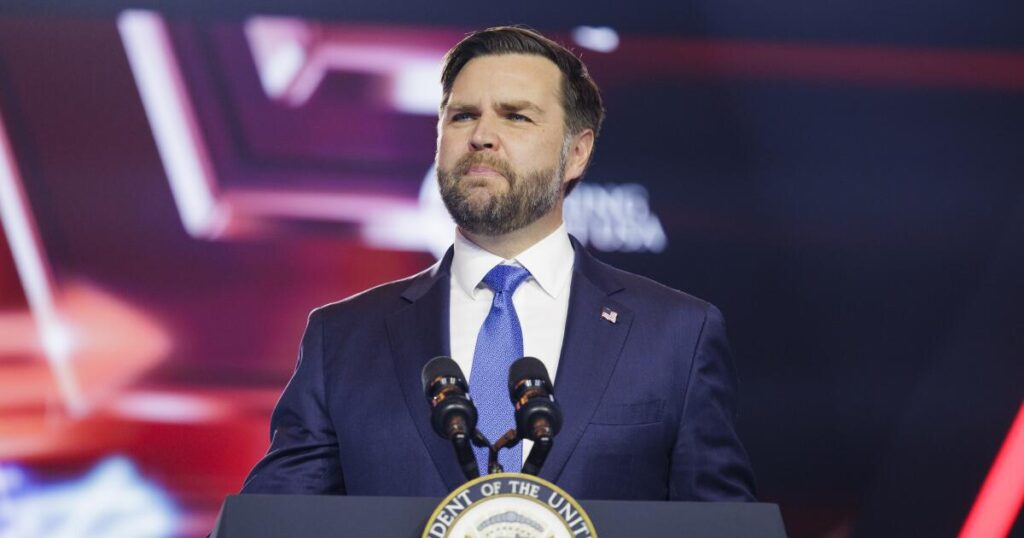
This shifting dynamic prompted Republicans to reevaluate their allegiance to Trump. By year’s end, many party members began looking beyond his leadership, with JD Vance emerging as a frontrunner for the Republican nomination in the next presidential election. In a revealing interview, Trump’s Chief of Staff, Susie Wiles, indicated that prominent figures such as Marco Rubio were reluctant to compete against Vance in 2028.
Challenges Ahead for Republican Leadership
The political landscape for Vance, however, is fraught with challenges. The tragic death of conservative influencer Charlie Kirk in September left a notable void among right-wing factions. In the wake of this leadership vacuum, a more radical segment of the party has grown increasingly vocal, with figures like white nationalist Nick Fuentes expressing open disdain for Vance, particularly due to his multicultural marriage.
To consolidate his position, Vance may need to navigate these internal pressures while reinforcing his right-wing credentials, a balancing act that could complicate his attempts to unify the party. The broader implications of these developments suggest a transition period for the Republican Party, as it grapples with the reality of Trump’s diminishing influence and the need to appeal to a diverse voter base.
In summary, 2025 has been characterized by a shift in power dynamics within American politics. As Trump’s dominance wanes, potential successors are beginning to emerge, reminding voters that economic realities remain paramount. While the year has not concluded with definitive outcomes, it has set the stage for a complex political landscape as the nation enters 2026. Observers remain alert, aware that unforeseen events can dramatically alter the trajectory of politics, as history has often shown.