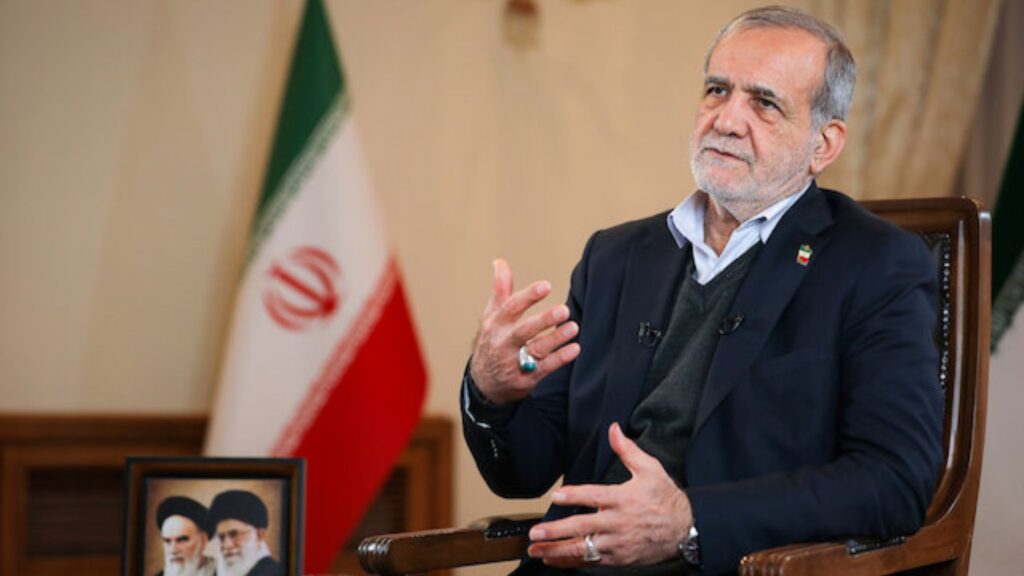
UPDATE: Iran’s President Masoud Pezeshkian has proclaimed the country is in a state of “total war” with the United States, Israel, and Europe. This alarming declaration, made in a recent interview, signals a dramatic escalation in hostilities that could reshape global security dynamics.
In an interview published on December 27, 2025, Pezeshkian accused Western powers of attempting to weaken Iran through diplomatic, economic, and military means. His statements represent one of the most explicit acknowledgments of Tehran’s antagonistic relationship with the West in decades. The president stated, “In my opinion, we are at total war with the United States, Israel, and Europe; they want to bring our country to its knees.”
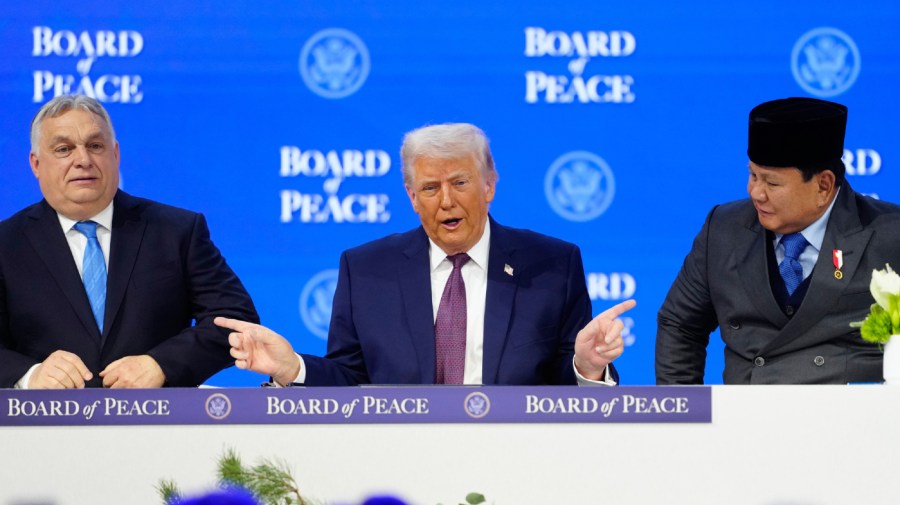
This urgent announcement comes just ahead of scheduled talks between U.S. President Donald Trump and Israeli Prime Minister Benjamin Netanyahu in Washington, where Iran’s nuclear ambitions are expected to dominate discussions. The backdrop of this declaration is a recent conflict in June 2025, which saw direct confrontations between Iran and Israel, resulting in over 1,000 Iranian deaths and at least 28 Israeli fatalities from missile strikes.
Following the June conflict, U.S. airstrikes targeted three Iranian nuclear sites, a move Washington defended as necessary to mitigate a perceived nuclear threat. Tehran has consistently denied pursuing nuclear weapons, asserting that its nuclear program is solely for civilian purposes. This ongoing tension has prompted France, Britain, and Germany to reinstate UN sanctions on Iran, a decision made in September 2025, which Tehran condemned as further evidence of Western hostility.
Pezeshkian’s rhetoric reflects not only external pressures but also significant internal challenges. Iran’s economy is reeling from prolonged sanctions, with skyrocketing inflation and a depreciating rial compounding the struggles of ordinary citizens. The Iranian government is grappling with the dual task of maintaining public services while addressing what they describe as a broad siege on the nation.
In response to these economic challenges, Pezeshkian outlined a 20-point economic plan aimed at stabilizing the economy and supporting lower-income families, though specifics on implementation remain vague.
Internationally, the declaration of “total war” has heightened alarm among Western nations, which are interpreting the rhetoric through the lens of recent conflicts and ongoing regional tensions. The U.S. has indicated that negotiations over Iran’s nuclear program could resume, but only under strict conditions that Tehran has rejected as undermining its sovereignty.
Meanwhile, Netanyahu’s discussions with Trump are anticipated to focus on new measures to counter what is perceived as Tehran’s destabilizing influence in the region. Iran’s affiliations with non-state actors such as Hamas and Hezbollah complicate the situation further, as Tehran’s support for these groups is widely recognized and factored into threat assessments.
As tensions escalate, both domestic and international observers are closely monitoring developments. The consequences of Pezeshkian’s statements and the potential for renewed conflict could have profound implications for regional and global security.
Stay tuned for updates on this evolving situation, as the international community watches closely for the next moves from both Tehran and Washington.