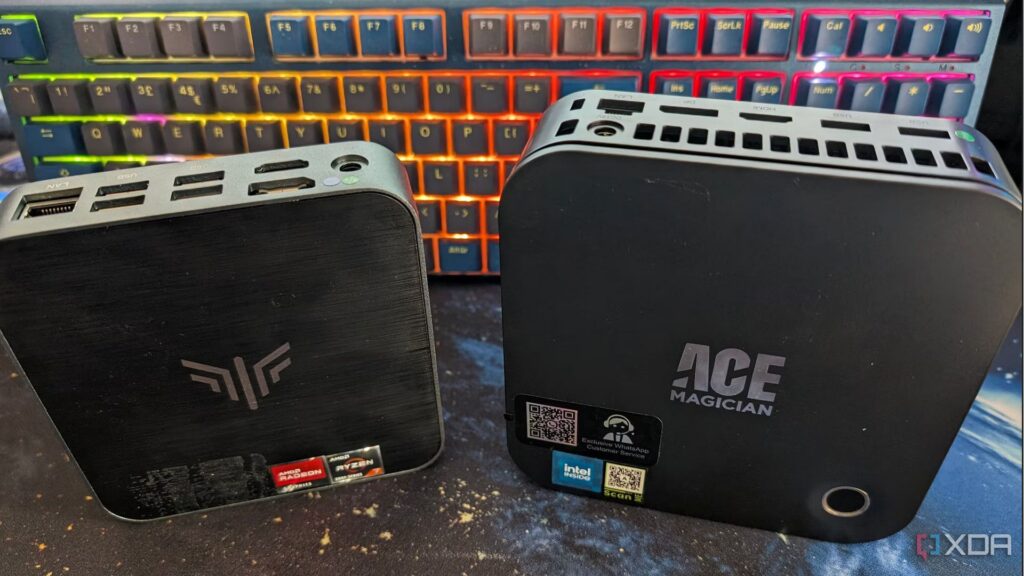
UPDATE: The home server landscape is witnessing a seismic shift as Intel N100 mini PCs surge ahead, effectively dethroning the Raspberry Pi as the go-to choice for DIY enthusiasts. This transformation, driven by performance leaps, is redefining what budget hardware can achieve in home environments.
Just announced, the Intel N100 mini PCs offer capabilities that are not just incremental improvements over the Raspberry Pi but are categorically superior. With a price point around $100, these devices deliver performance that is up to three times faster than the latest Raspberry Pi 5. This dramatic power difference is compelling hobbyists and professionals alike to reconsider their server solutions.
The advent of the Intel N100 is particularly significant for users running containers, self-hosted applications, and media services. As demands for performance grow, the N100’s multicore prowess rivals that of older desktop CPUs. Tasks that once strained Raspberry Pi setups, such as database management and media transcoding, now run smoothly and efficiently on N100 systems.
Performance ceilings that once seemed acceptable for Raspberry Pi users are now becoming dealbreakers. While the Raspberry Pi has historically provided “good enough” performance for light workloads, modern self-hosting requirements push these limits. The N100 mini PC provides a fan-cooled, full-fat x86 system that operates with minimal power consumption, outperforming the Raspberry Pi under sustained workloads.
The cost breakdown further highlights the N100’s advantages. A fully functional Raspberry Pi setup, including necessary accessories like a case, power supply, and storage, quickly escalates in price. Users often find themselves inching closer to the cost of an N100 while sacrificing performance. As the total cost of ownership shifts in favor of the N100, the conversation around home server solutions is rapidly changing.
Moreover, the N100 mini PCs offer robust network performance out of the box. Unlike many Raspberry Pi configurations that require additional components for reliable gigabit throughput, N100 devices come equipped with integrated network interface cards (NICs) that ensure stability and speed, essential for setups that demand high uptime.
The superiority of the Intel N100 extends to software compatibility, a critical factor for users managing various packages and applications. While the Raspberry Pi uses ARM architecture, which can limit compatibility with certain software, the N100’s x86 architecture sidesteps these issues entirely. This ensures a smoother experience for those looking to expand their home lab setups without encountering architectural pitfalls.
As users increasingly rely on home servers for critical tasks, the maintenance and update processes also become paramount. The N100 supports mainstream Linux distributions, making system patching straightforward, while the Raspberry Pi can present challenges that may frustrate users.
Despite the N100’s disruptive impact, the Raspberry Pi retains niche advantages. Its GPIO pins and robust ecosystem make it an ideal choice for automation, robotics, and educational projects, where interaction with hardware is paramount. The charm of the Raspberry Pi lies in its accessibility and community support, offering a rich learning environment for beginners.
However, as home server needs evolve, the Intel N100’s performance and compatibility are setting new expectations. The Raspberry Pi, while still valuable for specific applications, is increasingly seen as outclassed in the realm of home servers where speed and efficiency are crucial.
The implications of this shift are profound. As the landscape of home computing transforms, users are now weighing their options more critically than ever. The Intel N100 is not just an alternative; it represents a new standard for what budget hardware can deliver.
With the home server market rapidly evolving, it’s clear that the Intel N100 has emerged as a game-changer. The Raspberry Pi’s days of dominance in this sector are numbered, as hobbyists and professionals alike embrace the enhanced capabilities of this new contender.