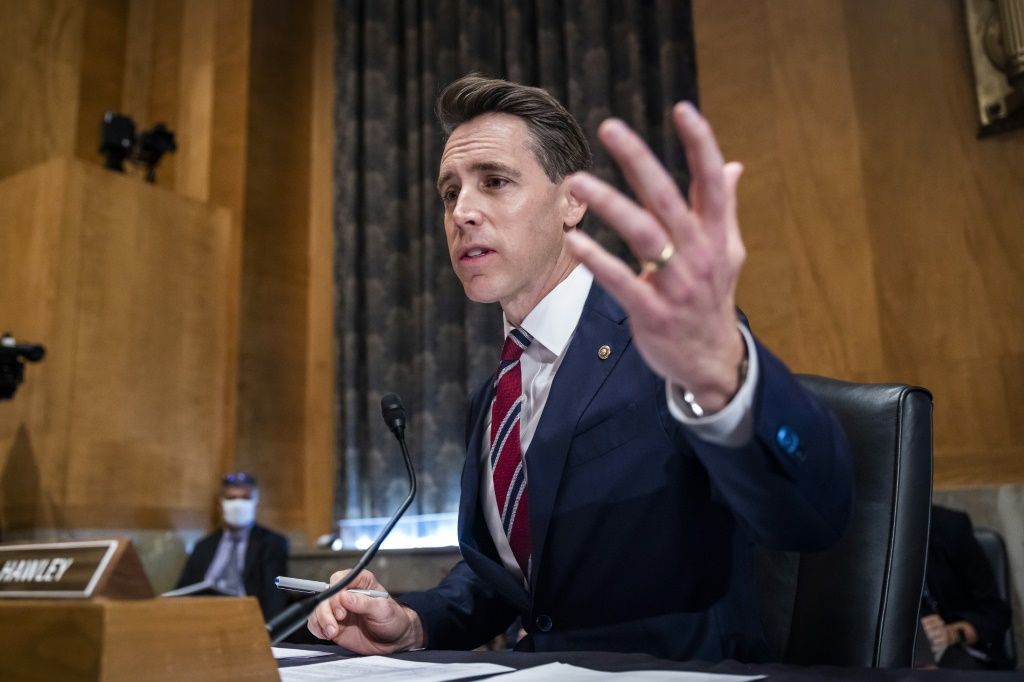
UPDATE: Missouri Senator Josh Hawley has publicly defended his controversial vote against President Donald Trump‘s military agenda in Venezuela. In a swift response to the newly passed resolution, Hawley took to social media to explain his support for the measure, which blocks any future military action in Venezuela without congressional approval.
The resolution, spearheaded by Democratic Senator Tim Kaine of Virginia, was approved by the Senate with a narrow 52-47 vote and now moves to the House of Representatives. This action comes in light of recent military interventions that included the capture of Venezuelan President Nicolás Maduro and his wife Cilia Flores, both currently in custody in Brooklyn, NY, facing serious charges including narco-terrorism and weapons offenses.
Hawley, a prominent ally of Trump, emphasized the need for congressional oversight. He stated, “If the President feels the need to put boots on the ground there in the future, Congress would need to vote on it. That’s why I voted yes on this morning’s Senate resolution.” His stance marks a significant divergence from many of his Republican colleagues, as only four other GOP senators supported the resolution: Todd Young of Indiana, Lisa Murkowski of Alaska, Susan Collins of Maine, and Rand Paul of Kentucky.
This resolution is designed not to reverse past military actions but to limit the executive branch’s power to unilaterally escalate U.S. military involvement in Venezuela. It seeks to ensure that any future military operations go through the proper legislative channels, especially those that could exceed targeted actions against drug-smuggling operations.
Trump responded vehemently to the Senate’s decision, asserting on his platform Truth Social that the senators who supported the resolution “should be ashamed.” He characterized the measure as a threat to national security and an infringement on his presidential authority, declaring that those who voted for it “should never be elected to office again.”
As the resolution heads to the Republican-controlled House, its fate remains uncertain. Previous efforts to limit military actions against Venezuela have stalled in the House, raising the possibility that this measure could face a similar fate. Furthermore, Trump has signaled intentions to veto the resolution should it reach his desk.
This development comes amidst heightened tensions in Venezuela and ongoing scrutiny of U.S. foreign policy. The implications for both U.S. military strategy and diplomatic relations with Venezuela are profound, with many observers watching closely for the next moves in this evolving political landscape.
As the situation develops, it is crucial to monitor how both chambers of Congress will respond and what this means for future U.S. involvement in Venezuela. Stay tuned for further updates.