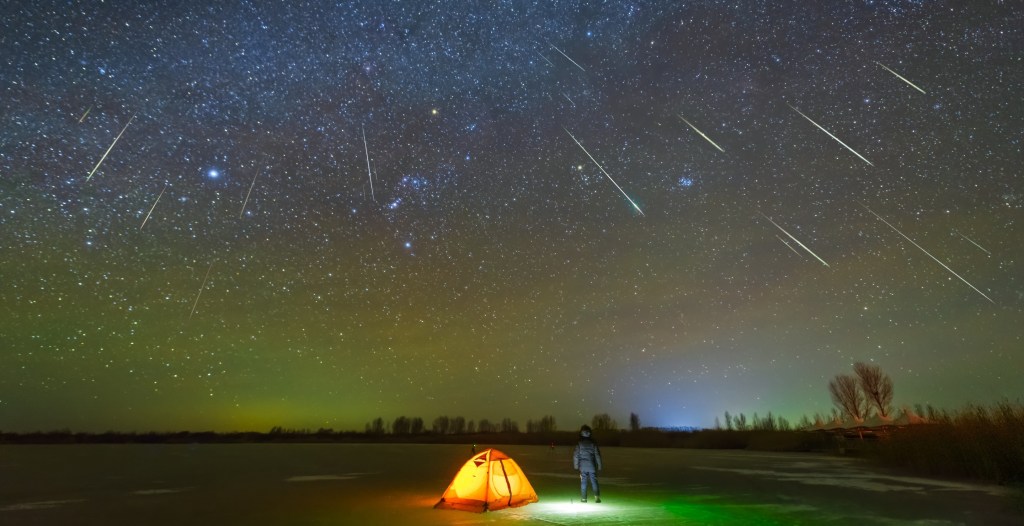
UPDATE: The highly anticipated Geminids meteor shower is set to peak on the night of December 13 into December 14, 2025, offering viewers a spectacular display of up to 150 meteors per hour. This annual celestial event is not just a spectacle; it’s a chance to reconnect with the awe of the universe.
This year, conditions are perfectly aligned for skywatchers in the Northern Hemisphere. With a waning crescent moon only 28 percent illuminated, the skies will be dark enough to provide an unobstructed view of the meteors. The moon will remain absent until around 2:30 a.m. local time, allowing hours of pristine darkness for optimal meteor viewing.
The Geminids, which run from December 4 to December 17, originate from the rocky asteroid 3200 Phaethon. Unlike most meteor showers that come from icy comets, these meteors are slower-moving and renowned for their bright colors, thanks to elements like sodium and calcium. Observers can expect to see vibrant streaks of yellow, green, and even violet as they light up the night sky.
The American Meteor Society recommends that viewers start watching anytime after 10 p.m. on December 13 for the best chance to witness the show. For an optimal experience, find a location far from city lights and allow your eyes to adjust to the dark for about 20 minutes. No telescope is needed—simply look up and enjoy the cosmic display.
As the Geminids begin to fade, another meteor shower, the Ursids, will start on the night of December 21 and peak on December 21-22, providing an additional treat with around ten meteors per hour. The new moon that week will ensure dark skies for this event as well.
This December offers two incredible meteor showers back-to-back, making it a rare opportunity to witness the magic of the universe. As the Geminids light up the night, families, friends, and astronomy enthusiasts are encouraged to step outside and bask in the wonder of a starry sky. Don’t miss your chance to see nature’s fireworks—mark your calendars and prepare for an unforgettable night!