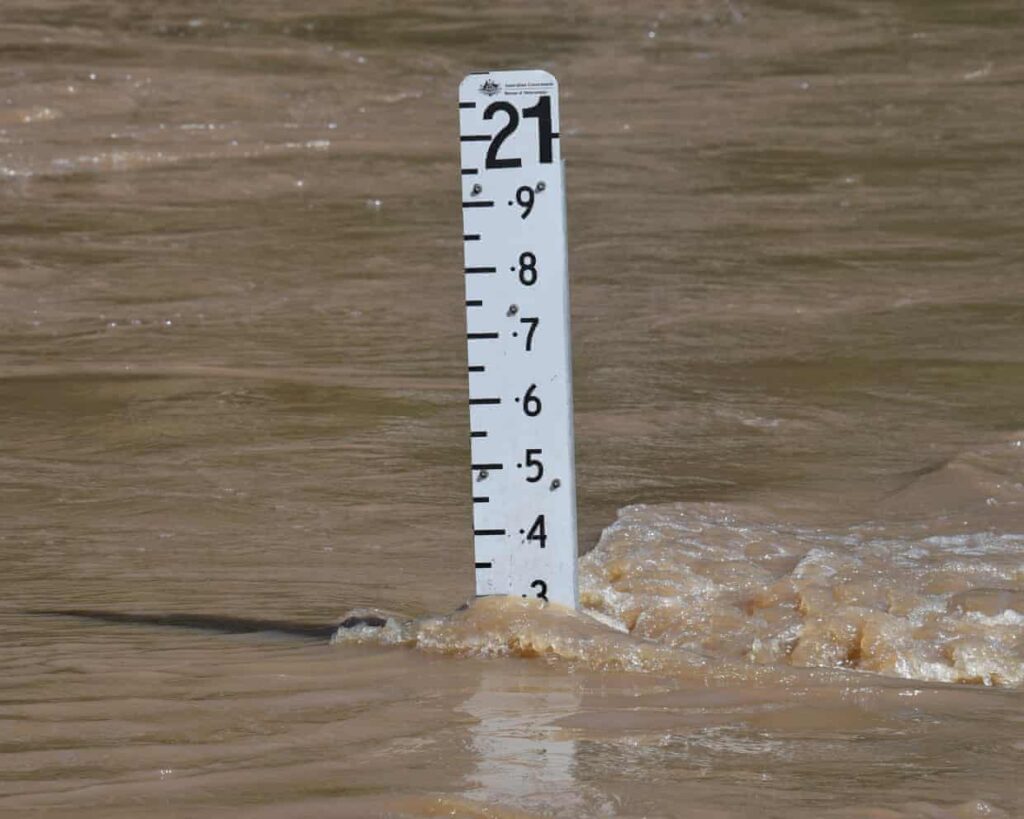
Heavy monsoonal floods in far north Queensland have resulted in the tragic drowning of a man in his 70s, prompting emergency responses and community concerns about significant damage. The individual was discovered in a submerged vehicle in the town of Normanton on January 2, 2024, as flood waters continued to rise, isolating communities and closing dozens of roads across the region.
In a notable act of bravery, an officer entered crocodile-infested waters to help recover the deceased from the vehicle. Acting Superintendent Paul Austin of the Mount Isa District commended the emergency services’ efforts, stating, “The SES operator was able to align their vessel with the submerged car, and one of the police officers entered into a significant depth… If he hadn’t done what he did, it certainly would have made it a very difficult operation to try and retrieve that vehicle with the deceased in it.” He underscored the dangers posed by large crocodiles in the Norman River, highlighting the officer’s actions as particularly heroic.
The loss has deeply affected the local community, according to David Crisafulli, the Premier of Queensland, who described it as “a deep tragedy for the North West community.” He emphasized the importance of maintaining infrastructure, stating that roads and bridges are essential for keeping communities connected during such crises.
As the aftermath of the flooding unfolds, Janene Fegan, the mayor of McKinlay Shire, indicated that it could take weeks to fully assess the extent of damage and livestock losses. Following days of intense rainfall, conditions began to improve on January 3, allowing graziers to deploy helicopters to survey their properties. “We just don’t know officially yet – it’s just sitting and waiting but it doesn’t look good in parts of the north-west of our shire,” Fegan noted. Reports suggest that water levels may exceed those seen in previous floods, such as in 2019.
The Bureau of Meteorology has issued warnings for isolated heavy rainfall, with accumulations of up to 100mm expected in certain areas of the Northern Goldfields and Upper Flinders, among other districts. Meteorologist Miriam Bradbury indicated that while rain and thunderstorm activity will persist, a more significant easing is anticipated late in the weekend into early next week.
In response to the severe flooding, disaster relief measures have been activated for five councils in north Queensland. Meanwhile, in Western Australia, emergency services are evaluating the impact of ex-tropical cyclone Hayley, which affected the Kimberley coast as a category three storm. Winds reaching up to 158 km/h and rainfall of 132 mm were recorded, though no major damage or injuries have been reported.
The situation remains dynamic as authorities and communities work together to navigate the challenges posed by these extreme weather events.