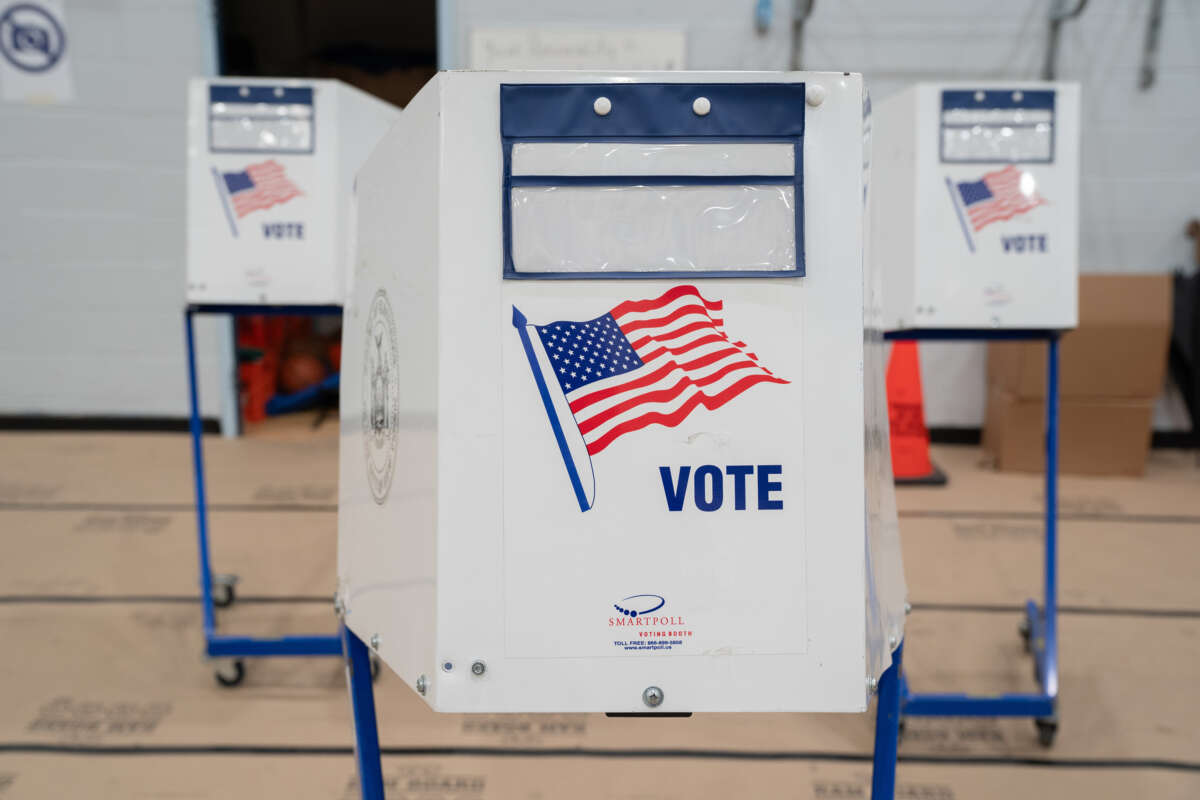
A newly expanded federal system designed to verify voters’ citizenship has raised significant concerns due to widespread inaccuracies. According to reports, the Department of Homeland Security’s (DHS) Systematic Alien Verification for Entitlements, known as SAVE, flagged thousands of registered voters as potential noncitizens, leading to confusion and potential disenfranchisement.
In November, Boone County, Missouri, Clerk Brianna Lennon received alarming news when SAVE identified 74 individuals on the county’s voter rolls as possible noncitizens. Despite her experience running elections for seven years, Lennon was not surprised by the inaccuracies after reviewing the flagged voters’ documentation. One case involved a voter whose registration form bore the initials of a staff member who assisted him at his naturalization ceremony. Ultimately, more than half of those identified in Boone County were citizens.
The inaccuracies stemmed from SAVE’s use of data that was not fully updated. Initially intended to verify eligibility for public benefits, the system was expanded by the Trump administration to assist states in checking voter citizenship status. Donald Trump has repeatedly claimed that millions of noncitizens are on state voter rolls, asserting that they compromise the integrity of American elections.
As states began utilizing SAVE, many Republican secretaries of state embraced the tool, leading to the upload of their voter rolls for verification. However, an investigation by ProPublica and The Texas Tribune revealed that the system was not ready for implementation. The rushed rollout resulted in persistent errors, particularly when assessing individuals born outside the United States. This is problematic as many of these individuals became U.S. citizens after the initial data was collected.
In Texas, the situation escalated when the Secretary of State’s office directed county election officials to temporarily bar flagged voters from voting before confirming SAVE’s findings. The initial results indicated that 2,724 potential noncitizens had been identified, but many were later proven to be citizens, with at least 87 individuals across 29 counties flagged erroneously.
The errors have raised serious questions about the reliability of SAVE. As Bobby Gonzalez, the elections administrator for Duval County, Texas, noted, “I really find no merit in any of this.” Despite the findings, the initial searches through SAVE did not support Trump’s claims of widespread voting by noncitizens. States that ran their voter rolls through the system identified only about 4,200 individuals as noncitizens, representing a mere 0.01% of registered voters.
Officials from the U.S. Citizenship and Immigration Services (USCIS), the DHS branch overseeing SAVE, acknowledged the tool’s limitations in providing up-to-date citizenship information. Brian Broderick, who leads the verification division, stated that while the system is a valuable resource, it is ultimately up to the states to determine how to utilize its data.
In response to criticism, Texas Secretary of State Jane Nelson has defended the use of SAVE as part of the office’s duty to ensure that only eligible citizens participate in elections. Nevertheless, she declined to comment on the inaccuracies and the decision to send flagged lists to counties without thorough verification.
Concerns over privacy and the potential implications for immigration enforcement have also prompted some states to hesitate in adopting SAVE. When voters are flagged as noncitizens, they may be referred to DHS for potential criminal investigation, which adds another layer of anxiety for those wrongfully identified.
Individuals flagged by SAVE, such as Sofia Minotti, a naturalized citizen originally from Argentina, express frustration at being required to provide proof of citizenship despite having followed legal processes. In her case, 84 voters in her county were identified incorrectly, contributing to an error rate of at least 14%.
Election officials across the country have long sought better access to federal citizenship data. Many states do not require voters to provide proof of citizenship during registration, relying instead on attestation under penalty of perjury. Previous attempts to identify noncitizens on voter rolls have faced significant challenges, including a failed initiative in Texas that misidentified thousands of citizens.
The expansion of SAVE, initiated by an executive order from Trump in March 2022, allowed states to access federal citizenship data at no charge. This order prompted a rapid overhaul of the system, which included incorporating confidential Social Security Administration data. However, many officials have raised concerns that the data used is often outdated or incomplete, particularly for individuals not born in the U.S.
As the investigation continues, the implications of SAVE’s rollout remain profound. The initial results from the system have not only failed to validate claims of noncitizen voting but also risk disenfranchising eligible voters.
Clerks like Lennon are wary of relying on SAVE data for voter eligibility. “This is not ready for prime time,” she stated. “And I’m not going to risk the security and the constitutional rights of my voters for bad data.” The situation illustrates the urgent need for reliable systems that ensure election integrity without compromising the rights of legitimate voters.