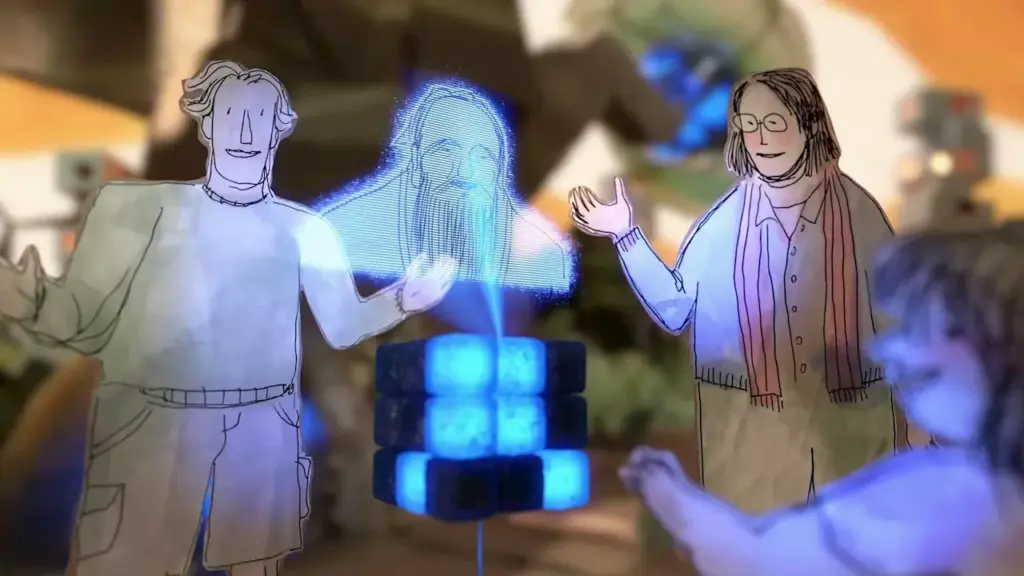
Daniel Kwan, the co-director of the acclaimed film Everything Everywhere All At Once, is venturing into the world of artificial intelligence with his latest project, The AI Doc: Or How I Became an Apocaloptimist. This documentary, co-directed by Daniel Roher, known for the Oscar-winning film Navalny, alongside Charlie Tyrell, aims to explore both the dangers and promises of AI. The film made its world premiere at the 2026 Sundance Film Festival and is set for a theatrical release on March 27, 2026, after being acquired by Focus Features.
In an interview with ScreenRant, Kwan expressed his intent to spotlight the profound implications of AI on society. He described the film as a necessary exploration of existential threats posed by this technology, particularly from the perspective of Roher, who is soon to become a father. Roher and Tyrell embarked on this project with an aim to interview leading experts to better understand the world into which Roher’s child will be born.
The magnitude of the documentary’s research is staggering. The production team, which includes Diane Becker and Ted Tremper, conducted interviews with over 40 individuals on camera, supplemented by more than 100 background interviews with confidential sources. This extensive effort yielded a staggering total of over 3,300 pages of transcripts, not accounting for Kwan’s family archives dating back decades.
Creative Collaboration and Challenges
Kwan emphasized the collaborative nature of the project. Becker noted the challenge of distilling vast amounts of information into a coherent narrative, describing the task as “Sisyphean.” Tremper highlighted the importance of a “handmade quality” to the film, aiming to present AI in a manner that feels relatable rather than overly technical. He stated, “It’s very human. It’s very, very handmade.”
When asked about their motivation to tackle AI, Tyrell explained that the subject found him rather than the other way around. He and Roher, both from Toronto, had long wanted to collaborate, and Kwan’s outreach following Roher’s recent successes catalyzed the documentary’s development.
The filmmakers are keen to communicate a message about the dual nature of AI, as expressed by Tristan Harris. He drew parallels between AI and nuclear weapons, emphasizing the need for clarity in understanding the potential benefits and threats of such technology. Harris stated, “If the world can have clarity around something that feels overwhelming, it can lead to actual action.”
Kwan further elaborated on the concept of “The Resource Curse,” which suggests that nations rich in resources may neglect investments in their people, opting instead for infrastructure that supports AI and technological dominance. He warned of a future where the economic reliance on AI could lead to societal neglect.
The Human Element in Technology
The documentary aims to provoke thought about humanity’s relationship with technology. Kwan remarked on the importance of creative storytelling in navigating the complexities of AI. He stated, “We need to find clarity and move towards action.”
Tremper defined an “apocaloptimist” as someone who believes that humanity can overcome catastrophic futures through unity and collaboration. This perspective serves as a guiding principle for the film, which seeks to empower audiences to engage thoughtfully with the challenges posed by AI.
As the filmmakers conclude their project, they hope that viewers will leave with a better understanding of AI’s implications. Shane Borris highlighted a poignant moment in the film, emphasizing the distinction between intelligence and wisdom, urging viewers to consider the kind of world they wish to create.
With the release of The AI Doc: Or How I Became an Apocaloptimist approaching, Kwan and his team are determined to provide a platform for discussion about the future of AI and its impact on society. The film promises to be an accessible entry point into a topic that is increasingly relevant in today’s technological landscape.