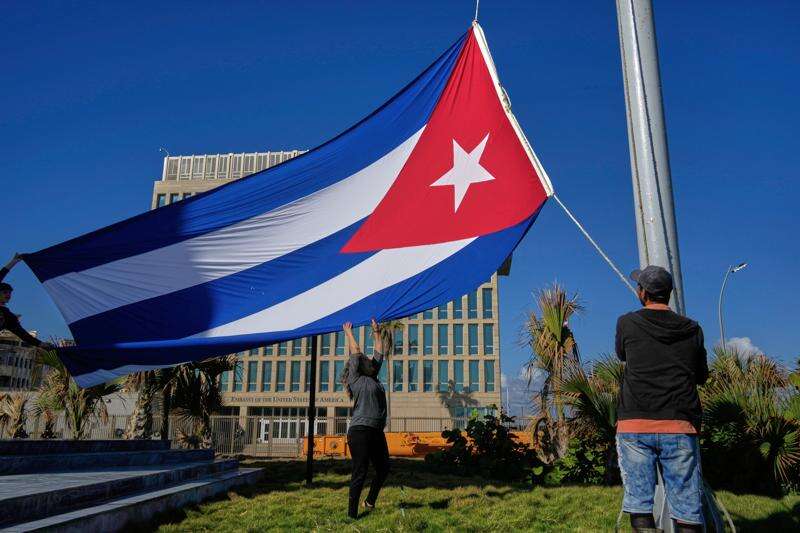
BREAKING: Cuba faces an uncertain future following the U.S. weekend strike that resulted in the ousting of Venezuelan President Nicolás Maduro. In an emotional display of mourning, Cuban officials lowered flags across the nation at dawn on Monday for the 32 security officers reportedly killed in the attack. The implications of this dramatic shift in power are sending shockwaves through the island, which has relied heavily on Venezuela for economic support.
Residents of Cuba, an island nation of approximately 10 million people, are left grappling with the dire consequences of losing their closest ally. Maduro’s government has been a lifeline, providing Cuba with an average of 35,000 barrels of oil daily, a crucial resource for its struggling economy. With Maduro’s fall, the future of this vital oil supply is now in jeopardy.
The Trump administration has made it clear that toppling Maduro aligns with a long-standing strategy to weaken the Cuban government. Trump stated emphatically, “Cuba is going down for the count,” highlighting the grim outlook for the already beleaguered nation. Cuban authorities have called on the international community to resist what they term “state terrorism,” as they brace for potential fallout.
Cuban citizens are reacting with shock and fear. “I can’t talk. I have no words,” said Berta Luz Sierra Molina, a distressed 75-year-old resident, who broke down in tears. Meanwhile, Regina Mendez, 63, expressed her readiness to fight for her country, stating, “Give me a rifle, and I’ll go fight.” These sentiments reflect a deep-seated anxiety about the future as Cubans confront the possibility of worsening conditions.
Experts warn that the loss of Venezuelan oil could trigger a humanitarian catastrophe. Jorge Piñón, a Cuban energy expert, raised a critical question: “Is the U.S. going to allow Venezuela to continue supplying Cuba with oil?” As the situation develops, Cuba’s energy landscape may face drastic changes, further exacerbating the ongoing crisis marked by blackouts and food shortages.
Cuban economist Ricardo Torres emphasized the severity of the impending crisis, remarking, “Imagine a future now in the short term losing that,” referring to the oil supply from Venezuela. He noted that blackouts have already been significant, and the removal of this lifeline could lead to a catastrophic decline in living conditions.
The international community watches closely as this situation unfolds. The immediate aftermath of Maduro’s ouster is likely to redefine not only the political landscape in Venezuela but also the economic stability of Cuba. With each passing hour, the stakes continue to rise, and the world awaits further developments that may reshape the region.
As Cuba enters this new chapter filled with uncertainty and fear, the emotional toll on its citizens is palpable. The fate of the island hangs in the balance as it confronts an uncertain future without its key ally. What happens next is crucial, and all eyes are on the unfolding events that could have lasting repercussions for millions.