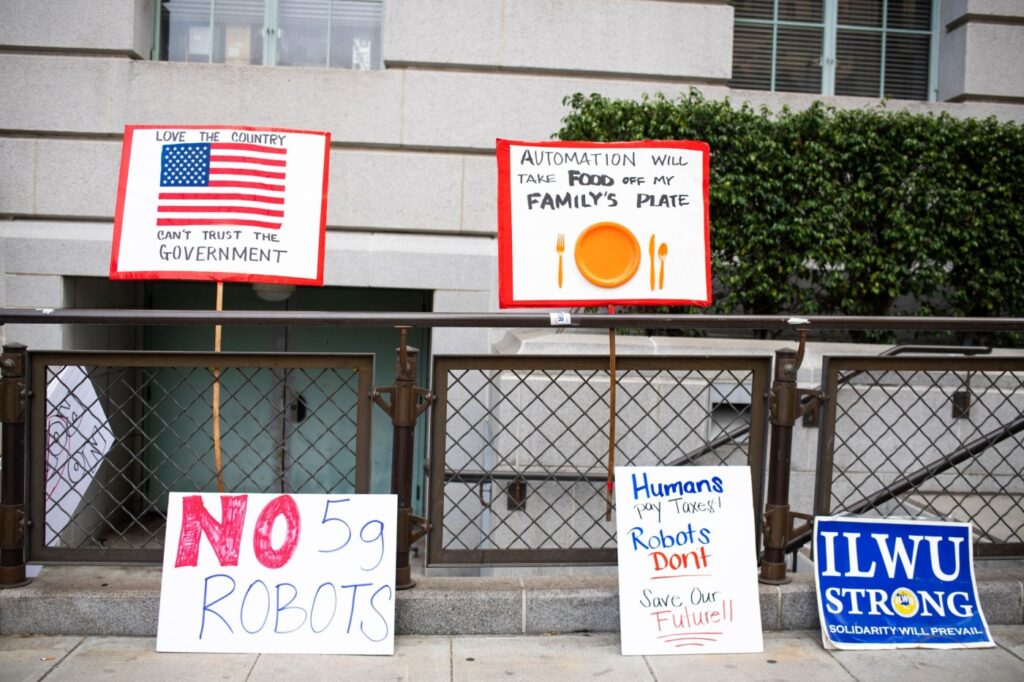
UPDATE: California’s anti-AI movement is gaining momentum, with a flurry of legislation proposed in Sacramento aimed at regulating artificial intelligence technologies. This urgent push reflects a critical clash between innovation and the state’s labor unions, which are increasingly alarmed about job losses driven by AI advancements.
Just announced measures come as Gov. Gavin Newsom strives to balance technological progress with labor concerns ahead of his anticipated 2028 presidential run. The California Legislature has seen dozens of AI-related bills introduced, signaling a growing divide over how to approach the future of work in a tech-dominated economy.
In a landmark decision, California became the first state to implement a regulatory framework for advanced AI systems when Senate Bill 53 was signed into law in September 2025. This legislation imposes rigorous standards on major AI companies, mandating them to establish safety frameworks and create an incident reporting system, alongside offering whistleblower protections for workers.
As the state grapples with these developments, the California Civil Rights Department has extended protections against discrimination for employees evaluated by automated decision systems. Starting January 1, 2027, new regulations will enforce transparency in AI-driven hiring, promotions, and employee evaluations, ensuring that technology does not compromise workers’ rights.
The urgency of the situation intensified last month when tech giant Waymo announced plans to launch an autonomous taxi service in San Diego. In response, the San Diego Metropolitan Transit System Board voted overwhelmingly to oppose such expansions without local oversight, highlighting local governments’ growing resistance to rapid technological changes. Board member Sean Elo-Rivera stated, “No corporation should be allowed to quietly replace people with machines just to boost profits.”
This pushback against AI resonates deeply with labor leaders across the state. Union officials are warning that protecting jobs from AI will be crucial in determining their support for Newsom’s future political ambitions. The sentiment echoes a broader national debate over the implications of AI on the workforce.
Critics of the anti-AI movement argue that embracing technology is essential for economic advancement. They emphasize that resisting innovation could hinder job creation and economic growth, ultimately harming workers in the long run.
As California navigates this complex landscape, the spotlight remains on how these legislative changes will affect the future of work. With ongoing discussions and proposed regulations, the state is at a pivotal moment that could redefine the relationship between technology and labor in the coming years.
Next steps will include monitoring how these regulations are implemented and the potential for further legislative actions as the 2028 presidential campaign approaches. The unfolding developments in California could have significant implications for the national dialogue surrounding AI and labor rights, making it a critical issue to watch.