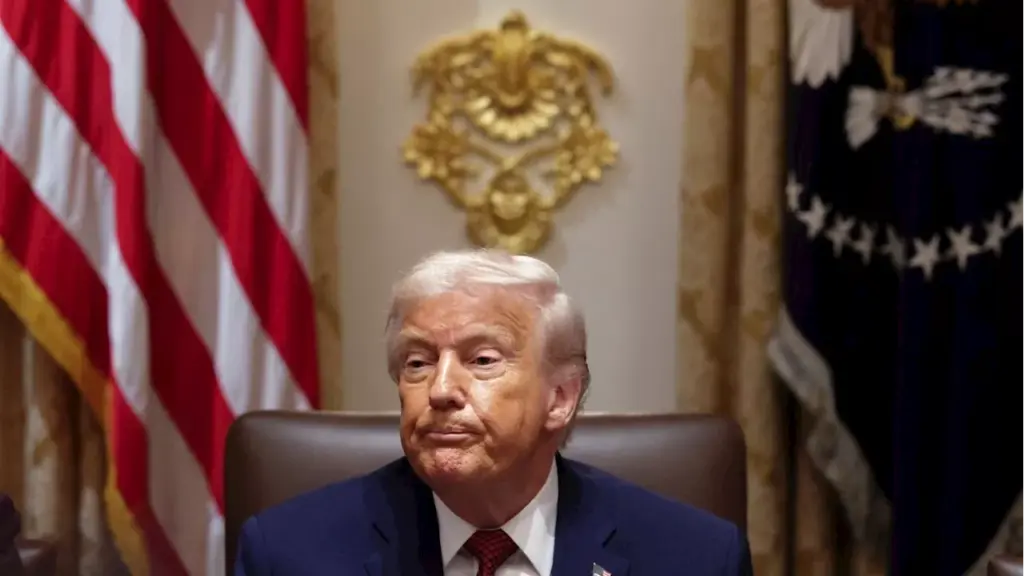
President Donald Trump plans to issue an executive order aimed at establishing a unified set of national regulations for artificial intelligence (AI). This move seeks to replace the current fragmented system of state-level laws, which Trump argues could impede innovation and development within the AI sector.
The decision comes as concerns over AI safety, copyright issues, and the absence of cohesive federal oversight have grown. Many in the technology sector have expressed a desire for a standardized approach to AI regulation, which they believe is essential for fostering innovation while ensuring safety. “There must be only one rulebook if we are going to continue to lead in AI,” Trump stated in a recent social media post. He emphasized the need for a streamlined approval process, criticizing the inefficiency of requiring multiple state approvals for AI developments.
As the landscape of artificial intelligence evolves rapidly, legislative responses have lagged behind. According to data from the Brennan Center for Justice, more than 150 AI-related bills were introduced in the previous Congress, yet none were enacted into law. Current Congress has struggled to address the regulatory void, leading to disparate state laws that vary significantly in their scope and enforcement.
In a statement about the anticipated executive order, Adam Kovacevich, founder and CEO of the Chamber of Progress, noted, “To do this right, we really need federal action to establish a national regulatory framework for AI.” Kovacevich highlighted the importance of avoiding a patchwork of regulations that could deter innovation and complicate the consumer experience.
Despite the push for federal regulation, some state leaders have voiced skepticism. Ron DeSantis, Governor of Florida, remarked that an executive order cannot effectively preempt state legislation. He argued that while a federal standard for AI is necessary, it requires comprehensive dialogue among members of Congress to create a coherent regulatory framework.
Trump’s announcement has garnered mixed reactions from industry leaders and policymakers. While many are hopeful that a national standard will provide clarity and encourage growth, others stress that achieving consensus in Congress is crucial. Kovacevich pointed out, “You need to get members of Congress, Republicans and Democrats, talking to each other about rules of the road and a federal standard that doesn’t just preempt states.”
With the current environment of uncertainty regarding AI regulations, the executive order could have significant implications for both the technology industry and consumers. As federal standards become increasingly necessary, the ability of Congress to formulate and implement a robust regulatory scheme will be pivotal.
The upcoming executive order is set to be signed in the coming days, with industry stakeholders eagerly awaiting its details. The outcome of this initiative may set a precedent for how artificial intelligence is governed in the United States, shaping the future of innovation while addressing safety and ethical concerns.