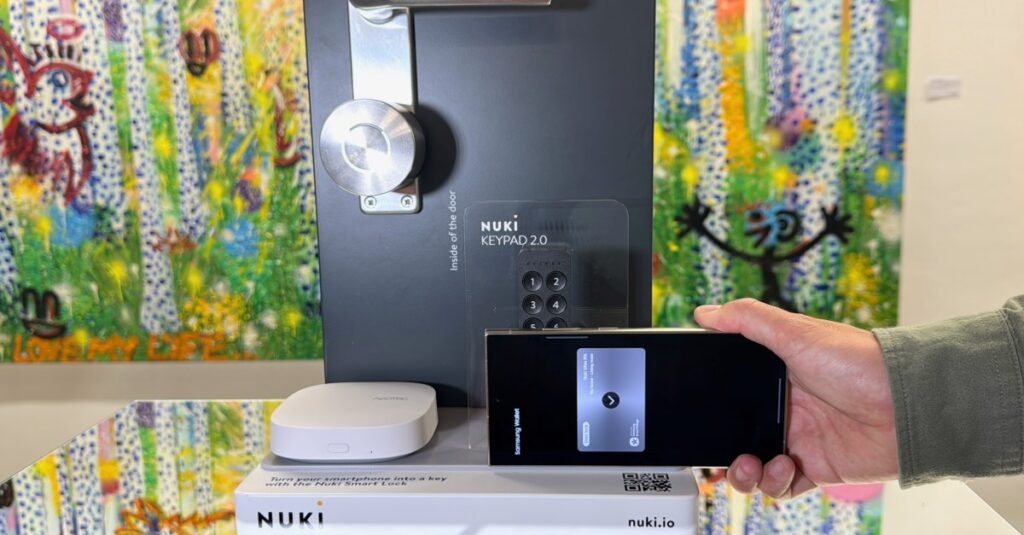
The new smart lock standard known as Aliro has officially launched, offering a solution that could revolutionize how people access their homes and offices. Announced in 2023, Aliro now has a version 1.0 specification, enabling companies to certify their hardware and implement support for this groundbreaking technology. Designed as an open standard, Aliro allows any smart lock to be unlocked by any smartphone, regardless of the manufacturer.
Users can store a digital key in their phone’s wallet, enabling a simple tap to unlock compatible locks—similar to tap-to-pay technology. Unlike Apple’s Home Key, which confines users to a single ecosystem, Aliro is cross-platform, functioning seamlessly on both Android and iOS devices. This means that an iPhone user can unlock their smart lock just as easily as a friend or roommate with an Android device.
How Aliro Works and Its Technical Foundations
Aliro does not rely on cloud connections, apps, or proprietary software; instead, it establishes a direct connection between the smartphone and the lock. The technology supports multiple radio protocols, including near-field communication (NFC) and Bluetooth low energy (BLE), and also integrates ultra-wideband (UWB)Nelson Henry, chair of the Aliro Working Group and representative of Last Lock, major tech companies such as Apple, Google, and Samsung have been instrumental in developing Aliro. They have committed to supporting the standard from the outset, with widespread rollout expected within the next few months. This collaborative effort aims to address the current fragmentation in smart locks, where compatibility issues can hinder user experience.
Industry Support and Future Prospects
The broad backing from over 220 companies, including major lock manufacturers like Assa Abloy (which owns Kwikset and Yale) and Allegion (Schlage), as well as chip manufacturers like Infineon and Nordic, suggests strong potential for Aliro’s widespread adoption. The standard promises to unlock a future where a single digital key on a smartphone or smartwatch can access various locks—residential, commercial, and even hotel doors.
Despite this optimism, the transition may require new hardware. While it is technically feasible to upgrade existing locks with NFC chips, manufacturers have indicated that backward compatibility may be limited. For example, Kwikset confirmed that its existing products will not receive updates for Aliro support. Instead, the company plans to introduce new locks that are compatible with the standard.
In contrast, Garrett Lovejoy, head of connected products at Fortune Brands, noted that Yale is actively exploring ways to incorporate Aliro into its existing product lineup. This includes possibilities for retrofitting current locks, which could significantly enhance user access without necessitating a complete overhaul of existing systems.
As manufacturers begin to roll out Aliro-compatible devices, the focus will likely be on ensuring ease of use and reliability. The open standard aims to reduce the number of proprietary apps needed, making it simpler for users to manage their digital keys.
The potential for Aliro is significant. If successful, it could transform how we think about access and security in both personal and professional spaces. The promise of hands-free unlocking and seamless integration across devices could pave the way for a future where accessing properties is as simple as tapping a smartphone. With the support of industry giants and a clear path forward, the Aliro standard could indeed simplify and enhance the user experience in the smart lock market.