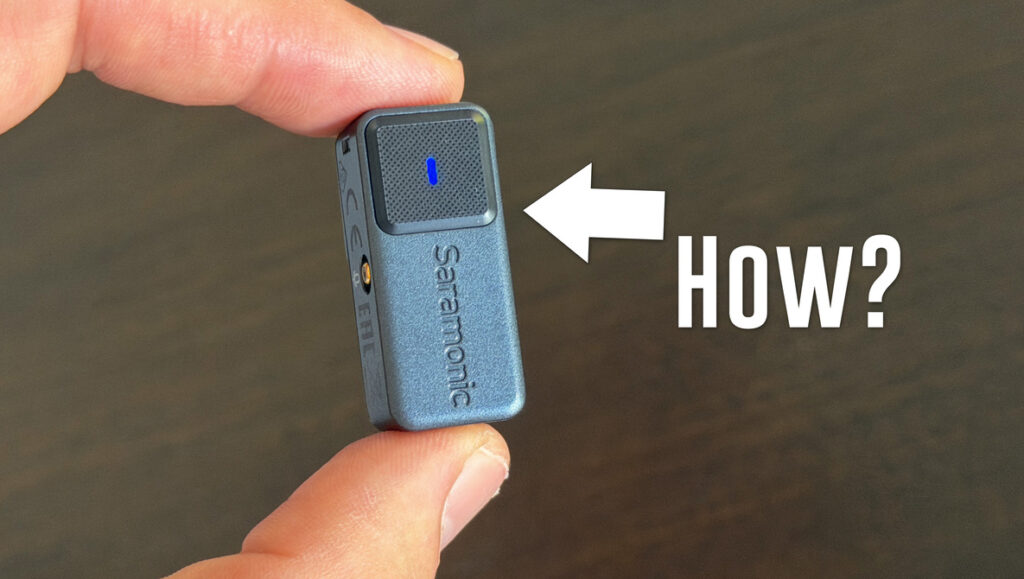
The launch of the Saramonic Air microphone has stirred excitement in the audio equipment market, offering a compact and affordable alternative to the well-regarded DJI Mic 2. Priced at just $150, the Saramonic Air aims to impress with its sound quality and portability, making it an attractive option for content creators.
The Saramonic Air package includes a variety of accessories: a carrying case, charging case, two tiny transmitters, one receiver, and multiple adapters. Among the optional accessories is a Sony hot shoe adapter, which enables digital audio transmission directly from the microphone to compatible Sony cameras. This feature enhances convenience and audio clarity by minimizing interference from standard audio cables.
Size is a significant factor in the Saramonic Air’s appeal. The charging case is notably smaller than that of the DJI Mic 2, while the transmitters are less than half the size of their DJI counterparts. Both systems support the use of lavalier microphones, but the Saramonic Air includes them in the package, while buyers of the DJI Mic 2 must spend an additional $50 for comparable lavaliers, bringing the total cost closer to $100 more than the Saramonic option.
Despite its advantages, the Saramonic Air’s lavalier design has some drawbacks. The proprietary connector limits compatibility with other high-end lavaliers, and the lavalier itself is larger and rounder than typical designs, complicating concealment during use. Additionally, the wind protection features could be better implemented, as the deadcats only fit the built-in mic, while the foam windscreen can be challenging to attach to the lavalier.
User interface differences also characterize the two systems. The DJI receiver employs a touchscreen with a rotary dial, which some users find cluttered and unintuitive. In contrast, Saramonic opts for a simpler button navigation system, which can be prone to accidental settings adjustments, particularly with its noise cancellation feature. Many experienced users prefer to manage noise reduction in post-production, making the navigation’s reliance on the noise cancellation button a potential pitfall.
The Saramonic Air’s charging case, crafted from metal for a premium feel, has a quirky design flaw: the magnets can attract or repel transmitters depending on their orientation, leading to instances where a transmitter can unexpectedly eject from the case.
On the positive side, the Saramonic Air’s accompanying iPhone app is robust, providing users with intuitive control over sound settings, including equalization options. Many users report that the microphone produces excellent sound quality straight out of the box.
In direct audio comparisons, the Saramonic Air’s built-in microphone consistently outperformed the DJI Mic 2 in clarity and fullness. This difference remains evident even in outdoor settings. The Saramonic Air also boasts superior wireless range, maintaining a stable signal at considerable distances, a claim supported by previous testing.
A significant limitation of the Saramonic Air is its lack of internal recording capabilities. This feature is crucial for many users, as it provides a reliable backup in case of wireless interference. For those requiring internal recording, Saramonic does offer another model priced under $300 that includes this functionality.
Overall, the Saramonic Air demonstrates a clear advantage over the DJI Mic 2 in key areas such as size, sound quality, and price, especially for users who do not require internal recording. Whether you’re a solo creator or simply seeking impressive audio in a compact form, the Saramonic Air stands out as a compelling choice in the current market.
Lee Morris, a professional photographer based in Charleston, SC, and co-owner of Fstoppers.com, highlighted the Saramonic Air’s value, reinforcing the notion that its performance exceeds expectations for its price.