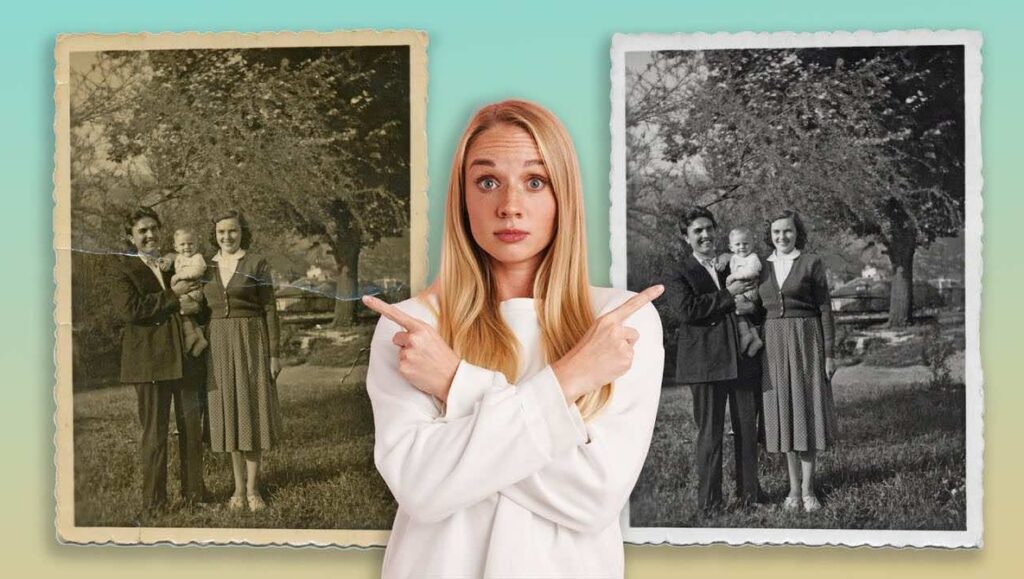
Adobe’s latest update to Photoshop is transforming the way users restore damaged family photographs. The introduction of AI models, particularly the Gemini 3 with Nano Banana Pro, allows for the revival of cracked and faded images that once required hours of meticulous editing. This powerful technology offers a legitimate solution for preserving cherished visual records of family history.
Exploring AI Restoration Techniques
A recent video tutorial by Morganti demonstrates how to utilize these new features effectively. By employing Photoshop’s Generative Fill, users can rebuild old prints using a straightforward prompt. Morganti illustrates the process by selecting the entire frame, activating Generative Fill from the contextual taskbar, and switching from Adobe’s Firefly models to the more advanced partner options, allowing Gemini 3 to drive the editing process.
One noteworthy aspect of this process is the simplicity of the prompts. Morganti opts for a concise command: “repair, restore, and remove yellow color cast.” This straightforward instruction effectively communicates the desired outcome to the AI, showcasing the balance between efficiency and clarity. Users will notice that while the partner models produce only one variation per attempt, this method ensures that the faces in the restored images remain recognizable—a common pitfall for many other AI restoration tools.
Delving into Color Restoration Challenges
The sensitivity of these models to slight changes in prompts is another critical point. Morganti performs a side-by-side comparison using the same damaged print, first allowing Gemini 3 to eliminate the yellow cast and then revising the prompt to preserve the sepia tone. The results illustrate a significant shift in the image’s overall mood, highlighting the importance of color accuracy in photo restoration.
As Morganti pushes the capabilities further by asking the model to “repair, restore, and colorize,” he encounters some challenges. Details such as hats and costume elements become altered, and even a family pet’s appearance shifts from the original. This raises concerns for those prioritizing historical accuracy over stylistic enhancements, emphasizing that restoration and colorization are distinct levels of intervention.
In a later segment of the video, Morganti tests the same approach on a faded color photo and a personal image from his family, taken toward the end of World War II. The Gemini 3 model proves effective at cleaning up scratches, stabilizing tones, and removing distracting pen marks without requiring intricate masking. However, it also reveals its limitations, reminding users to maintain realistic expectations. The technology serves as a robust initial pass, rather than a complete solution for all archival print issues.
Ultimately, Morganti’s insights provide a clear understanding of when to accept a slightly imperfect but authentic restoration and when to revert to manual retouching for a more polished finish. Those interested in exploring this innovative technology can find the full tutorial in the video above.
Alex Cooke, a Cleveland-based photographer and meteorologist, shares his passion for photography and music, along with his love for horses and rescue dogs, adding a personal touch to the conversation about preserving family history through photography.