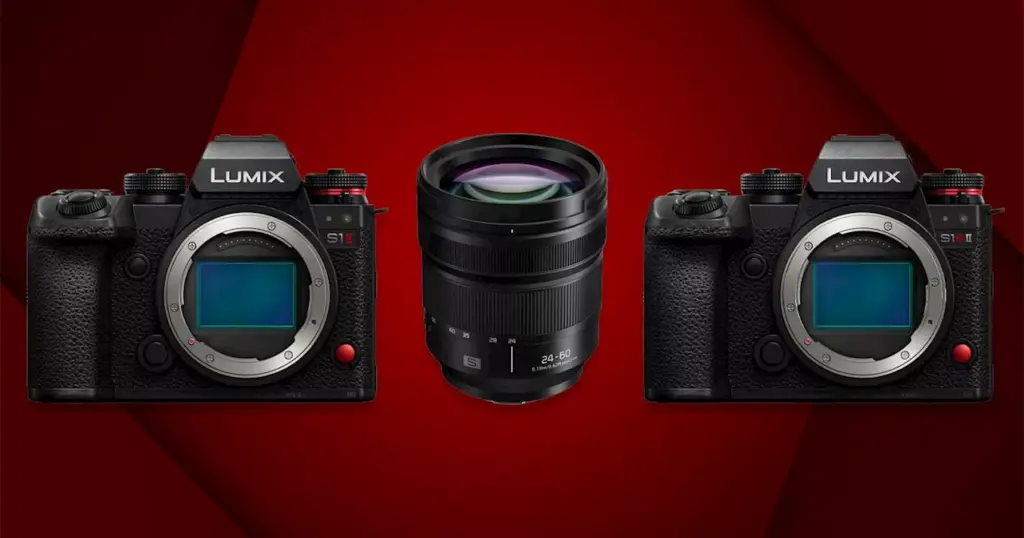
Panasonic has made significant strides in the full-frame camera market in 2025, introducing the highly anticipated Lumix S1 II and S1R II. Despite these advancements, the company has notably sidelined its Micro Four Thirds line, raising questions about its future in this segment.
The launch of the Lumix S1 II marks a pivotal moment for Panasonic, featuring a new 44.3-megapixel image sensor, capable of shooting at 40 frames per second, and offering 8K video recording. This camera is designed to compete with leading models such as the Nikon Z8 and Canon R5 Mark II. Meanwhile, the S1R II serves as a high-resolution update for professionals seeking superior image quality.
While the full-frame Lumix S system has thrived, Panasonic’s commitment to Micro Four Thirds has waned. In 2025, the company did not release any new Micro Four Thirds cameras or lenses, prompting speculation about its long-term strategy for this system. The absence of new products marks a stark contrast to previous years when the company had at least offered incremental updates.
Chris Niccolls, a noted reviewer, emphasized the strengths of the S1 II, stating, “It is easy to like the Lumix S1 II. Panasonic has made a capable and reliable hybrid camera that can handle many different kinds of photography.” He suggested that the S1 II could become a favorite among videographers due to its versatile features and performance.
The S1 IIE, also released alongside the S1 II, offers a more budget-friendly option priced $800 less than its sibling. However, it lacks the advanced features of the S1 II, relying instead on a standard 24MP BSI CMOS sensor. This makes it less competitive, particularly when compared to options like the Nikon Z6 III.
In terms of lenses, Panasonic introduced just two new options in 2025. One of the notable releases is the Lumix S 24-60mm f/2.8, a compact zoom lens priced at $899. This lens provides a versatile range similar to that of a 24-70mm f/2.8 at a fraction of the price and weight, appealing to travel photographers and those in need of a reliable general-purpose lens.
The second lens is Panasonic’s first full-frame ultra-telephoto zoom, designed specifically for wildlife and sports photography, reaching a substantial 500mm focal length. This addition further enhances the Lumix S lineup, which continues to offer appealing options for enthusiasts and professionals alike.
Despite the developments in the full-frame category, the lack of attention to the Micro Four Thirds system has raised concerns among loyal users. The absence of new products for this line has led to frustration, as Panasonic appears to prioritize its full-frame offerings.
Panasonic’s Micro Four Thirds ambitions seem to be diminishing, evident in the lack of recent releases. While Micro Four Thirds remains a viable option for many photographers, the company’s apparent shift in focus suggests a different direction for its future.
As the company moves forward, it will be interesting to see how it balances its commitment to both systems. The full-frame Lumix S lineup shows promise with exciting features and technology, while the Micro Four Thirds system may require a reevaluation of strategy to ensure its relevance in a rapidly evolving market.