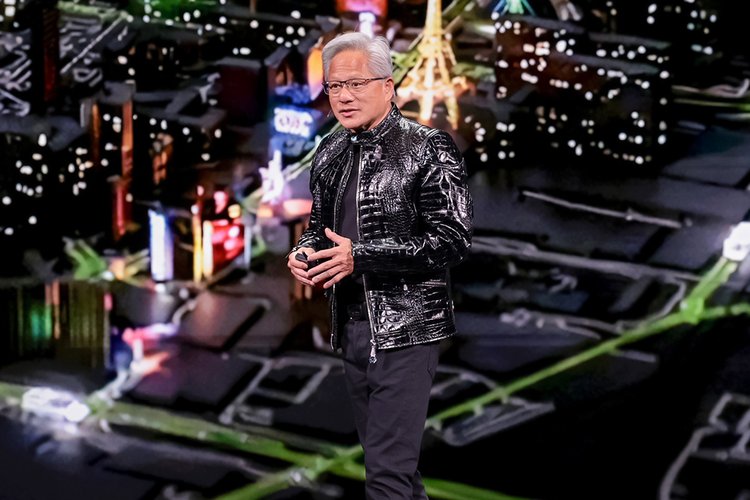
Nvidia has launched its latest advancements in artificial intelligence (AI) with the introduction of the Jetson T4000 and BlueField-4 during its showcase at CES 2026. These innovations aim to enhance AI capabilities, extending their influence from edge computing directly into data storage solutions. The announcements reflect Nvidia’s ongoing commitment to revolutionizing the AI landscape across various sectors.
The Jetson T4000 is designed to empower developers working on AI applications at the edge. It boasts improved processing capabilities, enabling real-time data analysis and machine learning tasks on devices situated at the network’s periphery. This upgrade allows for faster decision-making, crucial for applications in industries such as automotive, healthcare, and robotics.
In tandem, the BlueField-4 addresses the growing demand for efficient data storage solutions, pushing the boundaries of traditional storage architectures. Nvidia’s CEO Jensen Huang emphasized that this latest technology will transform how data is processed and stored, allowing businesses to manage vast amounts of information with unprecedented efficiency. The BlueField-4 platform integrates advanced AI features, streamlining storage tasks and enhancing data security.
Redefining AI and Storage Integration
Nvidia’s expansion into storage technology is a significant leap forward. The BlueField-4 not only supports data processing but also incorporates AI-driven insights that can optimize storage management and performance. This dual functionality is expected to reduce operational costs for enterprises while improving their ability to respond to market demands.
According to Nvidia, the BlueField-4 can handle data at rates exceeding 200 gigabits per second, a notable advancement that positions it as a leader in the high-performance computing market. The integration of AI into storage solutions is anticipated to drive innovation across sectors that rely heavily on data analysis, including finance, telecommunications, and cloud services.
Nvidia’s announcements at CES 2026 come as part of a broader strategy to solidify its position at the forefront of AI technology. The company has seen substantial growth in recent years, fueled by increasing demand for AI and machine learning tools. The introduction of the Jetson T4000 and BlueField-4 is expected to further accelerate this trend.
Looking Ahead: Production and Market Impact
As Nvidia prepares for production, the company aims to make these technologies available to developers and enterprises by the end of the first quarter of 2026. Early adopters are already expressing interest, recognizing the potential of these innovations to enhance their operational efficiency and AI capabilities.
The implications for the tech industry are significant. Both the Jetson T4000 and BlueField-4 are set to play critical roles in the ongoing evolution of AI applications, particularly as organizations increasingly prioritize data-driven decision-making. Nvidia’s advancements not only reflect technological progress but also a strategic response to the growing complexities of modern data management.
In summary, Nvidia’s latest developments at CES 2026 highlight a clear trajectory toward more integrated AI solutions, bridging the gap between edge computing and data storage. As these technologies move toward production, their impact on various industries will likely be profound, reshaping how organizations leverage AI to drive growth and innovation.