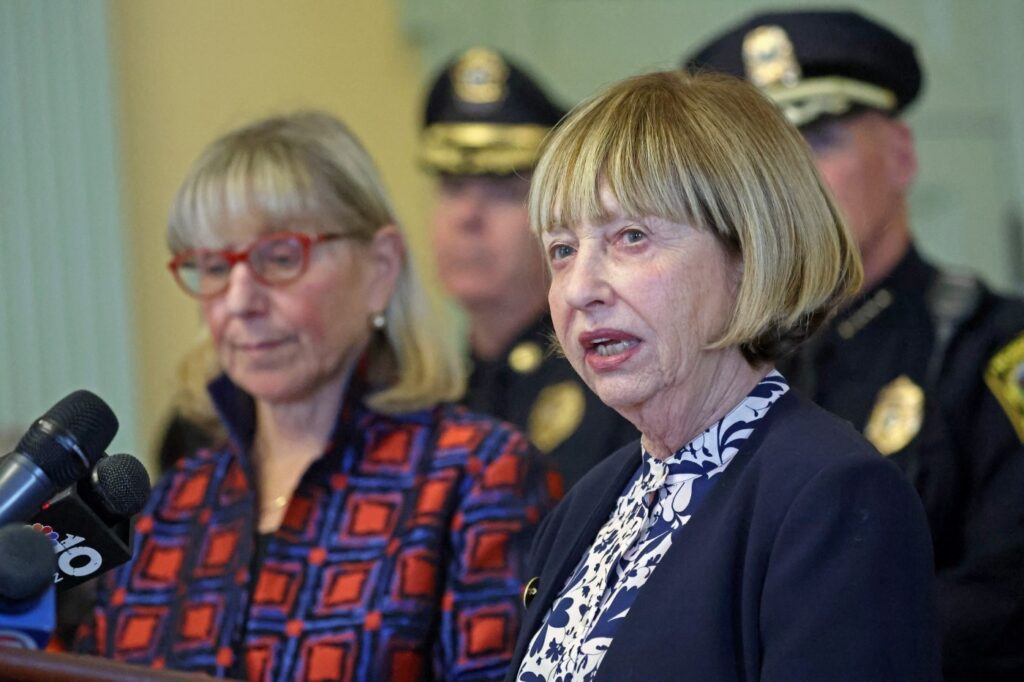
State Senator Cynthia Stone Creem, a Democrat from Newton, has introduced a controversial bill aimed at reducing personal vehicle miles in Massachusetts as part of the state’s efforts to meet climate goals. Named “An Act Aligning the Commonwealth’s Transportation Plan with its Mandates and Goals for Reducing Emissions and Vehicle Miles Traveled,” the legislation has faced significant backlash for its perceived implications on individual driving choices.
Proponents of the bill emphasize its potential to enhance public transportation options and address pollution from personal vehicles. In a statement to the Boston Herald, Stone Creem asserted, “The purpose of the Freedom to Move Act is to ensure that we are investing in all transportation options — both roads and highways and cleaner alternatives like trains and buses — to help align Massachusetts with its climate target.” She argued that the bill does not impose restrictions on individual driving but rather expands transportation choices.
Despite these assurances, critics argue that the bill may inadvertently limit how far individuals can drive. According to the legislation’s summary, the Massachusetts Department of Transportation (MassDOT) would be mandated to establish goals for reducing the collective miles residents travel in their personal vehicles. The bill also stipulates that regional transportation plans could be rejected if they do not align with the vehicle miles traveled reduction targets set by the state’s transportation secretary.
At a hearing in May 2023, supporters of the bill, including Kevin Shannon, an analyst with the Union of Concerned Scientists, highlighted the necessity of bridging the gap between climate goals and transportation plans. He stated that the bill addresses a critical oversight in previous legislation, which failed to incorporate climate objectives effectively.
The push for reduced vehicle miles traveled aligns with ongoing discussions about transportation funding in the state. In December 2019, some legislators considered increasing the state’s gasoline tax but ultimately recognized that such measures would not sustain long-term revenue due to improvements in vehicle fuel efficiency. Instead, state Representative Thomas Stanley advocated for a pilot program to charge fees based on miles traveled, a concept known as vehicle miles traveled (VMT) tax. This could provide necessary funding for public transit upgrades, but the initiative stalled in the legislature.
As the bill progresses, it has drawn attention from various quarters, including concerns about equity. Michael Barrett, a Senate colleague and Committee Co-Chair, expressed apprehension that limiting personal vehicle miles could disproportionately impact residents in rural areas, where commuting distances tend to be longer. He remarked, “I do worry about an unintended and subtle bias against rural Massachusetts.”
In response to these concerns, Stone Creem stated that the bill allows for “regional flexibility” to account for different commuting needs. Nevertheless, the legislation seems to overlook the significant shifts in working patterns resulting from the COVID-19 pandemic. Data from TD Economics indicated a commercial vacancy rate of 15.1% in Boston during the third quarter of 2025, reflecting a substantial increase since the pandemic.
The shift towards remote work has led to a notable reduction in vehicle miles traveled, independent of climate legislation. A survey conducted by the Greater Boston Chamber of Commerce revealed that 85% of local businesses have adopted hybrid work models, with employees spending an average of three days per week in the office. This trend suggests that the necessity for major reductions in driving may already be occurring as a result of broader societal changes.
As Massachusetts navigates these complex transportation and environmental issues, the implications of the proposed bill will require thorough examination. The interplay between climate goals, transportation infrastructure, and the evolving nature of work will be critical in shaping the future of mobility within the state.