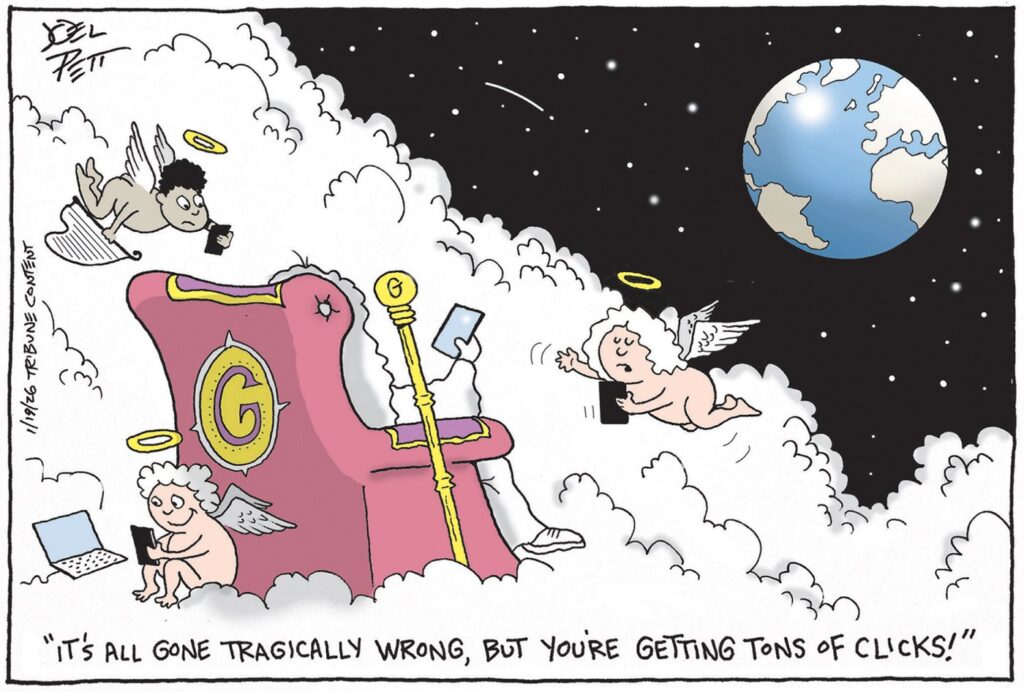
Recent trends in digital media indicate a growing fascination with apocalyptic themes, particularly as they relate to audience engagement. Editorial cartoons and various media outlets are increasingly utilizing end-of-world scenarios to attract viewers, sparking critical conversations about the implications of sensationalism in the news. This shift highlights how the portrayal of catastrophic events can capture public interest and drive traffic.
The Allure of Catastrophe
The rise of digital platforms has transformed how news is consumed and shared. According to a study conducted by the Reuters Institute for the Study of Journalism in September 2023, content that focuses on extreme or catastrophic events receives significantly higher engagement rates compared to more mundane news stories. Editorial cartoons, which often draw on these themes, serve as both entertainment and commentary, allowing audiences to process complex global issues through humor.
Editorial cartoonists have become adept at using apocalyptic imagery to comment on pressing societal issues. For instance, cartoons depicting climate change, political unrest, or pandemics resonate strongly with audiences, prompting shares and discussions on social media platforms. This trend raises important questions about the responsibility of media creators in portraying such serious subjects.
Impacts on Public Perception and Discourse
While sensationalism can lead to increased clicks and shares, it also risks oversimplifying complex issues. The World Health Organization has expressed concerns that constant exposure to dire narratives may lead to desensitization among audiences, potentially undermining public response to real crises. Instead of fostering informed discourse, this approach may inadvertently contribute to anxiety and apathy.
The challenge for media outlets lies in balancing engagement with ethical responsibility. As audiences increasingly seek out news that resonates with their emotional experiences, creators must navigate the fine line between captivating storytelling and the risk of contributing to a culture of fear.
As the digital landscape continues to evolve, the trend of leveraging apocalyptic themes for clicks may persist. The implications of this shift will likely be debated for years to come, prompting discussions about the role of media in shaping public perception and discourse on critical global issues.