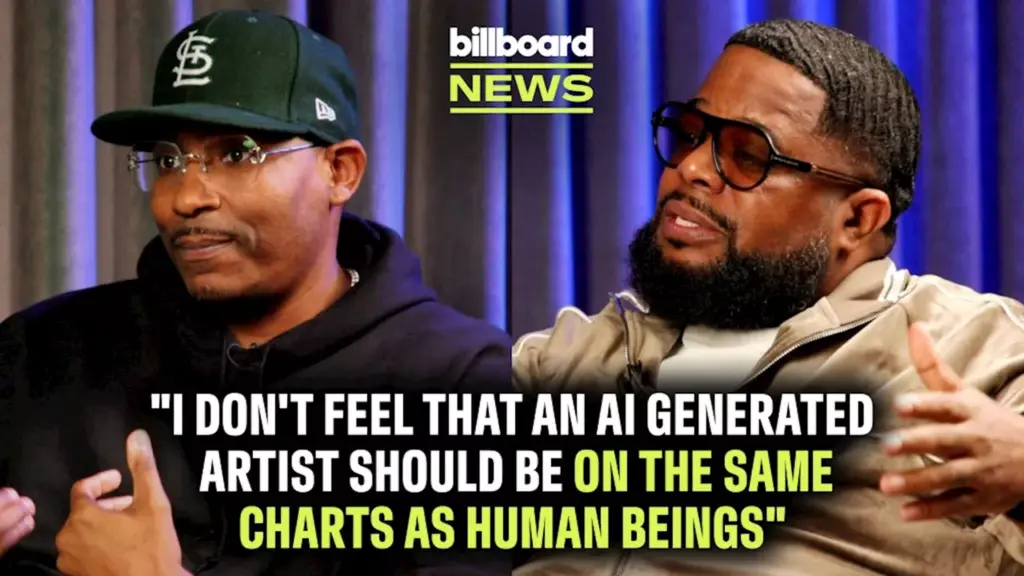
The debate over whether AI-generated artists should share chart space with human musicians is intensifying within the music industry. Key figures in the discussion include Romel Murphy, manager of the AI artist Xania Monet, and Prophet, the CEO of the Black Music Action Coalition. They recently faced off to address the complex dynamics of AI music and its implications for traditional music charts.
The conversation centers around how AI artists, like Xania Monet, should be categorized on platforms such as Billboard, TikTok, and Spotify. As the music industry grapples with the rise of AI-generated content, this issue raises significant questions about authenticity, creativity, and the future of music consumption.
Romel Murphy introduced Xania Monet to the music scene, emphasizing that she is not merely a product of technology but has a human creator, Nikki Jones, who writes the poetry that inspires her songs. Murphy has a background in the music industry spanning over two decades and now finds himself navigating the evolving landscape of AI in music. He stated, “I had to research and learn it fast,” highlighting the rapid changes occurring in this space.
On the other side, Prophet represents a coalition formed in 2020 in response to social justice issues highlighted by the deaths of George Floyd, Breonna Taylor, and Ahmaud Arbery. His organization aims to hold the music industry accountable while advocating for the rights and representation of Black artists. Prophet expressed concerns about how AI-generated music might overshadow human creativity and the potential for exploitation of artists’ work.
The discussion revealed a spectrum of opinions. Some view AI artists as innovative contributors to the musical landscape, while others fear they could dilute the authenticity of human artistry. “There’s a lot of nuance to this conversation,” Murphy noted, emphasizing the diverse perspectives within the industry.
As streaming services continue to evolve, the classification of AI music remains uncertain. Both guests acknowledged the inherent challenges in establishing guidelines that fairly represent both human and AI creators. The dynamic nature of music consumption means that solutions must be adaptable, addressing both technological advances and the needs of artists.
Listeners and industry stakeholders are left to ponder the implications of this ongoing debate. The outcome could reshape how music is created, distributed, and appreciated in the years to come.
As both sides continue to explore this uncharted territory, the conversation is far from over. The intersection of art and technology will likely lead to further discussions about the role of AI in music, and how it fits within the broader cultural context. The music industry stands at a crossroads, as it must reconcile the benefits of innovation with the cherished values of human creativity.