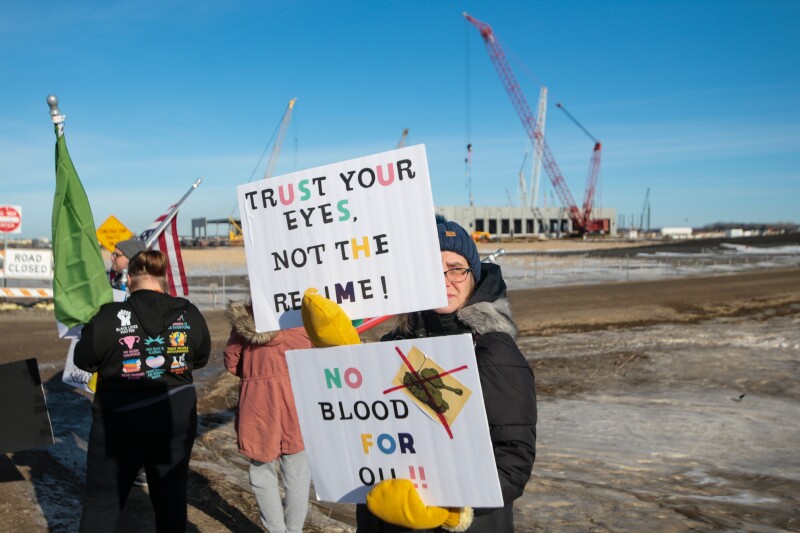
Reported plans for a visit by Vice President JD Vance to a data center under construction near Harwood, North Dakota, led to an unexpected protest on January 12. The demonstration, organized by Indivisible Fargo-Moorhead, drew around 20 participants who gathered at a gravel road intersection south of the $3 billion artificial intelligence data center site. Chants of “JD Vance has got to go” echoed through the area, with protesters holding signs denouncing fascism.
However, the anticipated visitor was not Vance but rather Lori Chavez-DeRemer, the U.S. Secretary of Labor, as confirmed by Harwood Mayor Blake Hankey. Chavez-DeRemer is touring all 50 states as part of the America At Work Tour. She announced her plans via her X account on January 11. Reports indicate that she and her entourage arrived at the Fargo Jet Center on the same day.
The protesters, despite the mix-up regarding the visitor’s identity, aimed to voice their concerns regarding various socio-political issues. Among these were the actions of Immigration and Customs Enforcement (ICE) agents, U.S. military strikes against Venezuela, and policies from the previous Trump administration. Lyn Dockter-Pinnick, a member of Indivisible Fargo-Moorhead, articulated the group’s position, stating, “No good comes from that kind of occupation. No good comes from using a military force against civilians in a peaceful time.”
The urgency of the protest was heightened by recent tragic events, including the fatal shooting of Renee Good by an ICE officer in Minneapolis. This incident has left many, especially in immigrant communities, feeling anxious. Michael Southam, co-founder of FM Volunteers for Ukraine, attended the protest in solidarity. He highlighted that he has heard of ICE detaining Ukrainians in the Twin Cities who are seeking asylum or have pending temporary protected status, which should safeguard them from deportation.
Southam noted, “Some people are scared to leave their homes. Others are really afraid that ICE will break into their homes or into their apartments.” The protest underscored widespread fears about ICE actions, particularly against legal immigrants. Dockter-Pinnick emphasized that many individuals detained across the country are not “rabid criminals,” as suggested by some political rhetoric, but rather individuals seeking a better life. She condemned the labeling of immigrants as the enemy, calling it a tactic reminiscent of fascism that her father, a World War II veteran, fought against.
The protest reflects growing tensions surrounding immigration policy and law enforcement practices, highlighting the deep concerns of community members about the treatment of immigrants in the United States. As the political landscape continues to evolve, such grassroots actions may play a significant role in shaping public discourse.