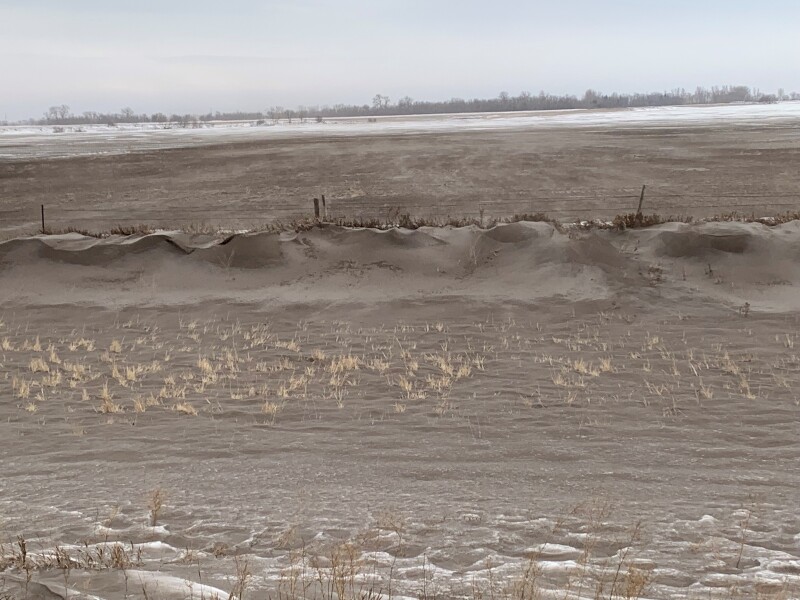
A recent analysis from researchers at North Dakota State University (NDSU) indicates that the loss of just 6 inches of topsoil could cost farmers upwards of $6,600 in lost nutrients and organic matter. Topsoil, known for its rich microbial activity, is vital for sustainable crop production. The study highlights the economic ramifications of soil erosion, emphasizing that it is not solely an environmental concern.
The researchers found that the direct cost of nutrient loss, combined with the impact of organic matter depletion, amounts to over $1,100 for each inch of topsoil lost. This totals approximately $6,600 for a full 6-inch layer. According to Naeem Kalwar, a soil health specialist at the Langdon Research Extension Center, “Protecting topsoil from erosion is crucial. That layer is where farmers plant seed, and it is responsible for feeding the world.”
Soil erosion occurs when soil sediments are displaced by elements such as wind, water, and tillage practices. In particular, tillage can exacerbate erosion by loosening the soil, making it more susceptible to being washed or blown away. As soil erodes into roadside ditches, it poses a risk to both human and livestock drinking water.
Kalwar’s research aimed to quantify the value of topsoil in terms of the costs associated with replacing lost crop nutrients and organic matter. The study involved collecting a 6-inch sample of topsoil that had eroded into a roadside ditch and sending it to a laboratory for a detailed fertility analysis. The findings revealed significant quantities of essential nutrients and organic matter.
Calculations indicated that replacing the nitrogen, phosphorus, potash, sulfate-sulfur, and iron lost with the topsoil would cost approximately $2,541.22 for the full 6 inches, or about $423.54 per inch. Additionally, the cost of replacing nutrients lost due to organic matter depletion added another $4,141.73, resulting in a combined total of $1,113.82 per inch, equating to nearly $6,682.95 for the entire 6-inch layer.
While fertilizers can replenish lost nutrients, the restoration of soil organic matter is a much longer process that can take decades. A study conducted at the Carrington Research Extension Center found that soil organic matter increases by only 1% after 27 years of consistent livestock manure applications. Based on this rate, it could take approximately 154 years to replace the 5.7% of organic matter lost from 6 inches of topsoil.
Kalwar emphasizes that preventing erosion is more cost-effective than attempting to rebuild the soil. “Simple practices like reduced tillage and cover crops can save thousands over time,” he noted.
For further details, the full research report is available at ndsu.ag/erosion-cost. For strategies aimed at protecting soil health and preventing erosion, interested parties can visit ag.ndsu.edu/soilhealth.