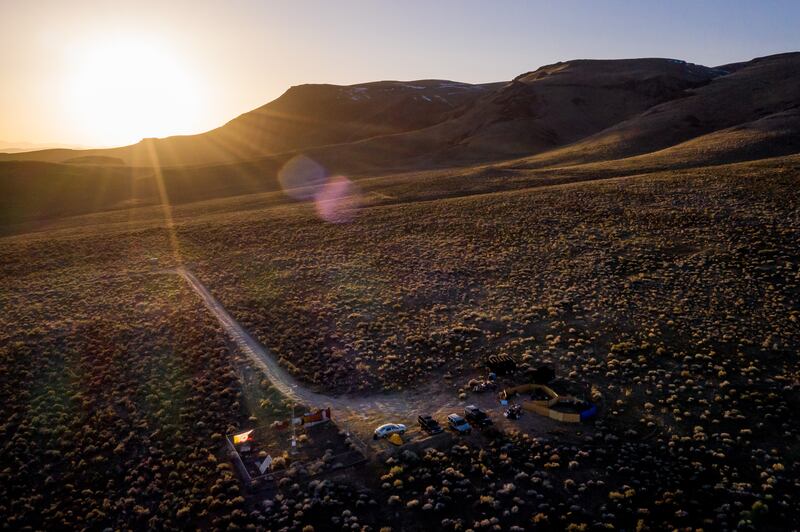
The third-highest ranking official at the Department of the Interior, Karen Budd-Falen, faces scrutiny for not disclosing her family’s financial connections to what is expected to be the world’s largest lithium mine, located on Bureau of Land Management property. Documents reveal that Budd-Falen’s husband, Frank Falen, sold $3.5 million worth of water rights from a ranch in Nevada to Lithium Nevada Corp., a subsidiary of Lithium Americas, which owns the rights to the Thacker Pass mine.
In 2018, while serving as deputy solicitor for wildlife and parks, Budd-Falen’s husband finalized the deal that required permits from the Department of the Interior to proceed. The approval of these permits was critical for the transaction; if they had not been granted, the deal would have collapsed. By January 2021, during the final stages of Budd-Falen’s tenure with the Department of the Interior (DOI) under the first Trump administration, the necessary permits were issued.
In March 2025, Budd-Falen was appointed associate deputy secretary of the Interior, a position that does not require Senate confirmation. Shortly thereafter, the Trump administration acquired a 5% equity stake in both the Thacker Pass mine and Lithium Americas. This federal stake was part of a broader agreement when the Department of Energy released more than $430 million from a $2.5 billion loan designed to expedite the mine’s development.
The findings were initially reported in December by Public Domain and High Country News, which obtained Budd-Falen’s disclosures through a Freedom of Information Act request. The documents received lacked signatures from DOI ethics officials, raising questions about their compliance with applicable laws.
In a statement to Public Domain, Charlotte Taylor, deputy communications director at the DOI, emphasized Budd-Falen’s extensive experience and leadership. “She leads this administration’s efforts to manage America’s public lands effectively and responsibly,” Taylor said, asserting that Budd-Falen upholds the standards expected of the department and the executive branch.
Another spokesperson for the DOI reiterated Budd-Falen’s dedication and professionalism throughout her career, asserting that her record of excellence speaks louder than any accusations.
The question of whether Budd-Falen’s actions constitute an ethics violation is significant. The Ethics in Government Act mandates that high-ranking officials disclose financial interests to prevent conflicts of interest and enhance accountability. Additionally, a separate law prohibits officials from engaging in matters that would financially benefit them or their family members.
According to the DOI’s guidelines on conflicts of interest, officials may not work on assignments that could impact their financial interests or those of their spouses. Frank Falen informed the New York Times that Budd-Falen met with executives from Lithium Americas in Washington, D.C., on his behalf in 2019, after the water deal was completed. While both the mine company and Frank Falen stated that the meeting was social and did not involve discussions about their business dealings, the optics of the meeting raised concerns.
Robert Weissman, co-president of Public Citizen, an organization focused on government ethics, commented on the situation. “It’s not clear that Karen Budd-Falen knew she had a conflict, but it’s clear she should have known,” he stated. Weissman stressed that the public should have been made aware of these connections, especially considering her meeting with Lithium Nevada.
Budd-Falen, a seasoned attorney from Wyoming, has long advocated for landowners’ rights in her home state and beyond. Known as a “cowboy lawyer,” she has a rich history in law, having co-founded the Budd-Falen Law Offices in Cheyenne. While she has distanced herself from the firm, her husband remains its principal.
Her experience includes serving in both the Reagan administration and the previous Trump administration. In 2018, she almost accepted a nomination to lead the Bureau of Land Management but withdrew when the demands became untenable, particularly the requirement to relinquish her family ranch.
As of now, Budd-Falen has not publicly addressed her financial disclosures or the potential conflicts of interest that have been highlighted. Nevertheless, she continues to receive support from the Department of the Interior as the situation unfolds.