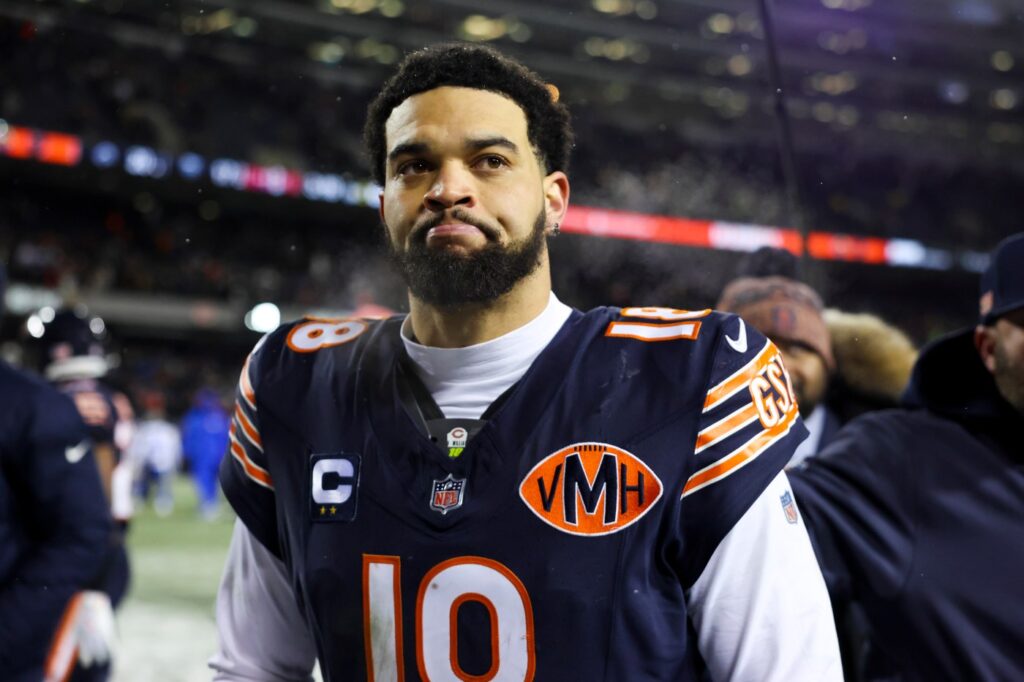
The Chicago Bears’ playoff hopes were dashed on January 18, 2026, as they fell to the Los Angeles Rams 20-17 in an NFC divisional matchup. Quarterback Caleb Williams delivered a dramatic game-tying touchdown late in regulation but ultimately threw an overtime interception, sealing the Bears’ fate.
The pivotal moments of the game showcased the unpredictable nature of Williams’ season. With just 27 seconds left in the fourth quarter, the Bears faced a critical fourth-and-4 situation at the Rams’ 14-yard line. Williams, under pressure, backpedaled to the 40-yard line and launched a high pass that found tight end Cole Kmet in the end zone, tying the game.
Yet, the excitement was short-lived. In overtime, after the Bears managed to move the ball to the Rams’ 48-yard line, Williams attempted a deep throw to wide receiver DJ Moore. Rams safety Kam Curl intercepted the pass, allowing the Rams to march down the field and secure victory with a 42-yard field goal by Harrison Mevis.
Williams concluded his second professional season with a 1-1 postseason record, following an impressive wild-card win against the Green Bay Packers. Despite the loss to the Rams, he demonstrated resilience throughout the game, finishing with 257 passing yards and two touchdowns, alongside three interceptions.
Game Highlights and Key Plays
The Bears’ comeback effort began after their defense forced a Rams punt. Following a shanked 33-yard kick, Williams and the Bears took over at midfield. The drive was initiated with an 18-yard completion to Colston Loveland, but stalled after a series of incompletions. Facing a make-or-break moment, Williams evaded the Rams’ rush and executed a perfect lob to Kmet, who caught the ball over cornerback Cobie Durant.
Kmet reflected on the moment, stating, “It just felt like a pop fly in center field. I don’t know what happened to the guy guarding me.” Coach Ben Johnson praised Williams, declaring the play “ridiculous” and highlighting his ability to perform under pressure.
Williams acknowledged the significance of the play, noting he felt the urgency of the situation. “I just wanted to give him my best ball and give him a shot,” he said. This kind of clutch performance had been characteristic of Williams throughout the season, as he had made several game-changing plays, including a memorable fourth-and-8 throw against the Packers.
The Bears’ subsequent drive in overtime began promisingly with a completed pass to Kmet and a scramble by Williams for a first down. However, during a second-and-8 play, miscommunication led to the crucial interception. Williams explained, “Just a miscommunication between him and I,” emphasizing the need for better coordination moving forward.
Looking Ahead
Despite the disappointment, Williams expressed optimism about the future. “I’m excited, though, also. Obviously, not happy about the outcome. But that’s over with, and I can’t go back and change it,” he said during his postgame address. He plans to analyze the game thoroughly to improve for next season.
In total, Williams threw for 618 yards and four touchdowns in his two playoff games, marking a significant milestone in Bears’ history. These statistics place him second all-time for the franchise in postseason performance, showcasing his potential as the Bears look to build on this season’s experience.
As the team reflects on the season, both the highs and lows will shape their strategy moving forward. With a promising young quarterback at the helm, the Bears remain hopeful for a more successful campaign in the coming year.