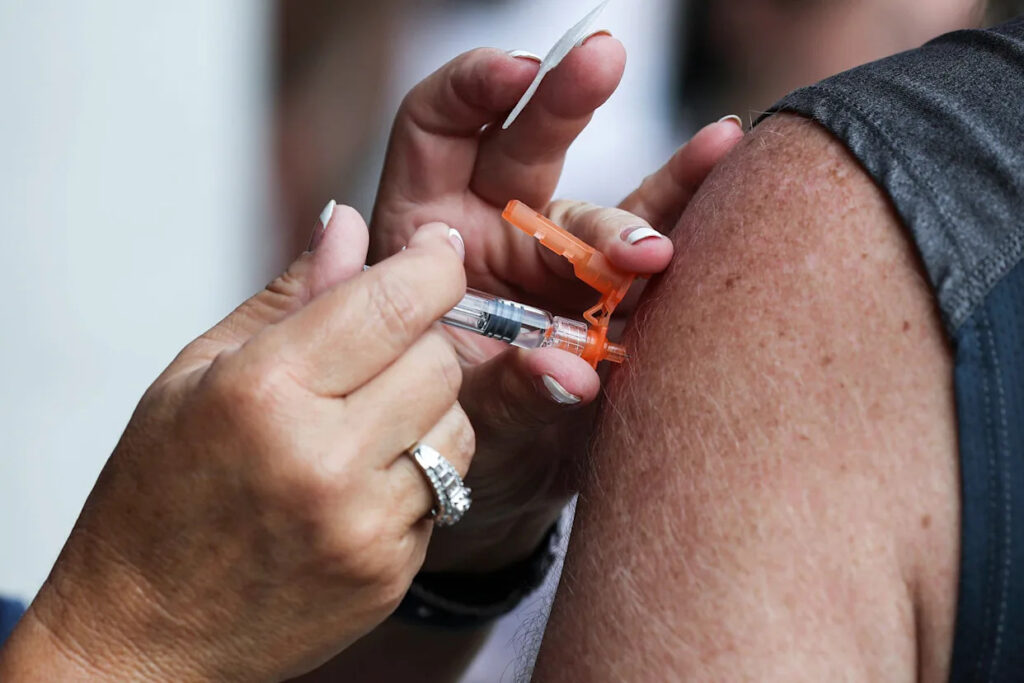
As vaccination rates for tetanus decline in the United States, health officials express increasing concern over a resurgence of the disease. In 2024, the country recorded 32 cases of tetanus, with at least 37 confirmed cases this year—the highest number in over a decade. The situation highlights a troubling trend as vaccination rates for the diphtheria-tetanus-pertussis (DTaP) vaccine drop, leaving more individuals vulnerable to this potentially deadly infection.
The tetanus vaccine has been a cornerstone of public health since it was first combined with diphtheria and pertussis in 1948. At that time, there were **601 reported cases** of tetanus in the U.S. Over the decades, the number of cases decreased significantly, with annual reports showing only **15 to 28 cases** in recent years. However, the recent spike is alarming, as doctors warn of the consequences of declining vaccination rates.
Vaccination Declines Raise Alarm
According to an investigation by NBC News and Stanford University, more than **75% of counties and jurisdictions** across the U.S. have experienced a decrease in kindergarten vaccination rates against tetanus since 2019. The vaccine is typically administered to infants starting at **2 months old**, and while tetanus is not transmitted from person to person, lower vaccination rates diminish overall community protection.
Dr. Mobeen Rathore, chief of pediatric infectious diseases and immunology at the University of Florida College of Medicine-Jacksonville, expressed his concerns about the implications of these trends. “It looks terrible,” he said, referring to the symptoms of tetanus, which can include severe muscle spasms and respiratory difficulties. The disease, often referred to as lockjaw, can result in a painful and distorted facial expression.
Tetanus bacteria thrive in soil and manure, and infections typically occur through puncture wounds. Treatment can be complicated and expensive. A 6-year-old boy in Oregon, who contracted tetanus in 2019, accumulated nearly **$1 million** in medical bills, according to the Centers for Disease Control and Prevention (CDC).
Real-Life Consequences of Tetanus
Dr. Matthew Davis, enterprise physician-in-chief at Nemours Children’s Health in Florida and Delaware, emphasized the importance of widespread vaccination in reducing tetanus cases and mortality rates. “It wasn’t until we had widespread vaccination that we saw a decline in cases of tetanus and thereby a reduction in the risk of mortality from it,” he stated.
Nikki Arellano, a **42-year-old** resident of Reno, Nevada, recently experienced the harsh realities of tetanus firsthand. After a minor leg injury from a metal arch, she developed symptoms that escalated quickly. “My jaw was completely locked shut,” she recalled. Arellano was eventually hospitalized for nearly a week, receiving antibiotics and intensive care to manage her symptoms.
Climate change adds another layer of risk. Natural disasters such as hurricanes and floods can lead to injuries that increase exposure to tetanus. Kristie Ebi, an epidemiologist at the University of Washington, noted that climate-related events could heighten the risk of outbreaks. States like Florida, Texas, and Kansas, which face significant natural disaster risks, are also seeing declines in vaccination rates.
In Florida, for instance, kindergarten DTaP vaccination rates have plunged from **94.1%** in the 2016-17 school year to **88.8%** in 2024-25. This trend is mirrored in Texas, where **85% of counties** reported declines in vaccination rates since 2019.
The implications extend beyond the U.S. John Johnson, a vaccination and epidemic response adviser at Doctors Without Borders, highlighted the stark contrast between tetanus cases in the U.S. and countries where vaccination is less accessible. In the Democratic Republic of the Congo (DRC), there were **540 cases** of tetanus last year, according to the World Health Organization. “If you see one case of tetanus in the U.S., it’s a shame. There’s no reason we should be seeing this disease anymore,” Johnson stated.
As health officials grapple with these challenges, Dr. Rathore warns of a potential “post-vaccination era” and its consequences on public health. “It is unfortunate that the children are going to suffer,” he concluded.
The rising awareness of these issues underscores the critical need for renewed efforts to bolster vaccination rates and prevent the resurgence of tetanus, a disease that, despite being easily preventable, remains a threat to public health.