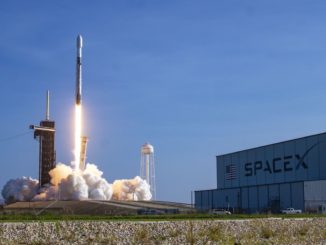
SpaceX successfully launched the Starlink 6-88 mission on January 1, 2026, marking its first deployment since a satellite incident on December 17, 2025. The mission lifted off at 12:00 a.m. EST (05:00 UTC) from Space Launch Complex 40 at Cape Canaveral Space Force Station, adding 29 Starlink V2 Mini Optimized satellites to its growing constellation.
The launch had initially been scheduled for December 19, 2025, but was delayed after SpaceX lost contact with the Starlink satellite designated as number 35956. This satellite, which had been launched from Vandenberg Space Force Base in California on November 23, 2025, was operating at an altitude of 418 kilometers when the anomaly occurred.
SpaceX reported that the incident involved venting from the propulsion tank and a rapid descent in the satellite’s orbit, leading to the creation of trackable debris. In a social media post, the company acknowledged the seriousness of the situation, stating, “Our engineers are rapidly working to root cause and mitigate the source of the anomaly and are already in the process of deploying software to our vehicles that increases protections against this type of event.”
On December 20, Michael Nicolls, Vice President of Starlink Engineering, shared images of the affected satellite taken by Vantor’s WorldView-3 satellite. These images indicated that Starlink 35956 remained largely intact despite the incident. “Additional data suggest that there is a small number of trackable debris objects from the event, and we expect the satellite and debris to reenter and fully demise within weeks,” Nicolls stated.
Former astronaut Ed Lu, now the Chief Technology Officer at Leolabs, reported that radar had detected hundreds of objects in the vicinity of the satellite’s orbit. He explained that these objects tend to spread along the orbital track and had already dispersed over a distance of 6,000 kilometers.
Following the anomaly, the satellites intended for the Starlink 6-88 mission were temporarily moved back to SpaceX’s processing facility for modifications. Despite this setback, the launch proceeded on January 1, 2026, using a brand new Falcon 9 booster, designated tail number 1101. The booster successfully targeted a landing on the drone ship “Just Read the Instructions,” positioned in the Atlantic Ocean. If successful, this will mark the 147th landing on this vessel and the 555th booster landing overall for SpaceX.
The Starlink component of SpaceX’s business has seen significant growth recently. According to a report released after the New Year, SpaceX concluded 2025 with over nine million customers across more than 155 countries, having added 4.6 million new customers over the year. The company launched 122 Falcon 9 rockets carrying Starlink satellites, deploying a total of 3,168 satellites into low Earth orbit.
SpaceX noted that enhancements to the V2 Mini satellite design allowed for more satellites to be launched per mission, contributing over 270 terabits per second of capacity to the overall constellation. This increase in capacity is attributed to the company’s vertical manufacturing approach and its commitment to the recovery and reuse of Falcon 9 first-stage boosters.
As the company looks to the future, it has plans to introduce the next generation of Starlink satellites, version 3, in 2026. These new satellites are expected to provide over 1,000 gigabits per second of downlink capacity and over 200 gigabits per second of uplink capacity. SpaceX has indicated that it aims to launch these satellites aboard its Starship-Super Heavy rocket system.
In a collaborative effort, Nicolls announced that approximately 4,400 Starlink satellites currently in orbit will be lowered to an altitude of about 480 kilometers. This adjustment is intended to decrease the likelihood of collision and reduce the number of debris objects in space.
As SpaceX continues to innovate and expand its satellite network, the successful launch of Starlink 6-88 represents a key milestone in its mission to provide global internet coverage, including in remote areas.