Four mice launched into space aboard the Shenzhou-21 spacecraft have returned to Earth, marking a significant milestone in reproductive biology. The mission, which began on October 31, 2023, saw these rodents living in microgravity for two weeks. Upon their return on November 14, 2023, one female mouse gave birth to nine healthy pups on December 10, 2023. This development could have profound implications for future human exploration beyond Earth.
The Journey and Its Challenges
The mice, designated as 6, 98, 154, and 186, were sent to live aboard China’s space station, located approximately 400 kilometers above the planet. The mission was not without its difficulties. When the return schedule for the Shenzhou-20 spacecraft changed unexpectedly, the mice faced an extended stay, leading to potential food shortages. The ground team quickly mobilized, testing various emergency rations, including compressed biscuits, corn, hazelnuts, and soy milk. After thorough verification tests, soy milk was determined to be the safest option for the mice.
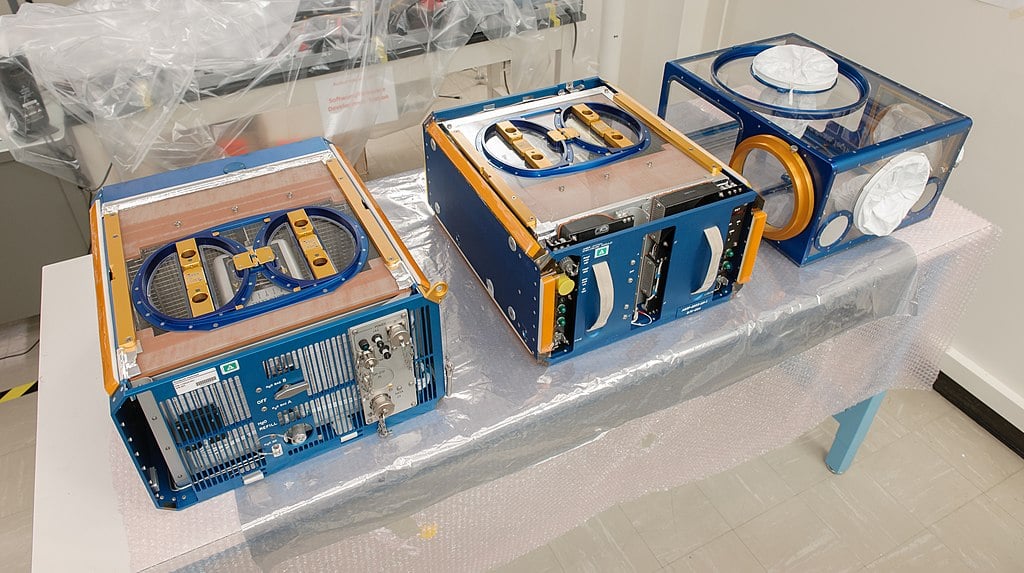
Throughout their orbital stay, the mice lived under tightly controlled conditions that mimicked an Earth-like environment. Their habitat was equipped with a light cycle that imitated day and night, while directional airflow helped maintain cleanliness by directing waste into collection containers. An AI monitoring system tracked the mice’s movements, eating habits, and sleep patterns in real-time, ensuring they received adequate care.
Implications for Future Space Exploration
Wang Hongmei, a researcher at the Chinese Academy of Sciences’ Institute of Zoology, highlighted the significance of this research. She noted that the ability of the mice to reproduce after a short-term spaceflight suggests that microgravity does not fundamentally impair mammalian reproductive functions. This is crucial as scientists prepare for potential long-duration human missions to Mars and permanent settlements on the Moon.
Mice are genetically similar to humans and serve as a valuable model for studying physiological responses to space conditions. If microgravity or exposure to cosmic radiation adversely affects reproduction, mice would likely exhibit those effects first. The successful birth of these pups adds to the understanding of how spaceflight may impact future human reproduction.
Researchers will continue to monitor the offspring closely, examining their growth and checking for physiological changes that may arise from their mother’s exposure to space. They will also explore whether these pups can reproduce normally, aiming to understand any potential multi-generational impacts.
The ultimate objective of this research extends beyond understanding mouse reproduction in space. Scientists seek to ascertain whether mammals can conceive, gestate, and give birth in reduced gravity. They are also investigating the potential damage cosmic rays may inflict on eggs or sperm, which might only manifest in subsequent generations.
While the birth of one mouse does not resolve all questions regarding reproduction in space, it lays a promising foundation for future studies. As humanity looks to the stars, understanding these biological processes will be essential for ensuring the success of long-term space missions.