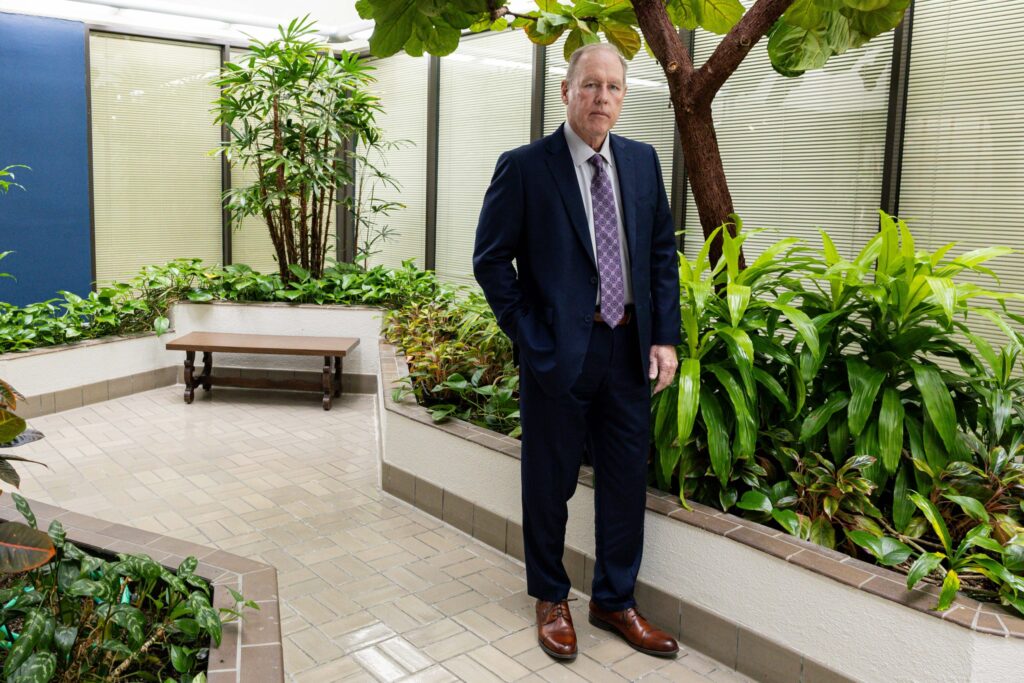
The Southwest Research Institute (SwRI) has appointed Ben Thacker as its new Chief Operating Officer. In this role, Thacker will oversee the operations of SwRI’s technical divisions and manage internal research programs. Founded in 1947 by philanthropist Tom Slick, SwRI is an independent nonprofit research institute that addresses challenges “from deep sea to deep space.”
Thacker’s extensive background uniquely positions him to lead the institute. He began his engineering career focused on submarines at General Dynamics in Connecticut before joining SwRI nearly four decades ago. His contributions have been pivotal in developing probabilistic analysis software that enhanced risk simulations for NASA’s space shuttle engines. Additionally, he played a crucial role in analyzing the causes of the 2003 Columbia disaster.
In a recent interview, Thacker reflected on his journey and the evolution of SwRI since he arrived in San Antonio in 1988. He described the initial interview process as welcoming and engaging, noting how it emphasized SwRI’s commitment to autonomy in research through funding proposals. This approach allows employees to explore their interests and create innovative solutions.
Thacker’s first significant project involved the space shuttle’s main engine components, which required intricate simulations due to the extreme conditions these engines faced. He explained that testing under such pressures and temperatures was impractical, necessitating advanced computer modeling. His team’s work on these simulations laid the groundwork for improved safety measures in NASA’s operations.
His involvement with NASA’s Return to Flight program followed the Columbia tragedy. Thacker and his team developed tools to calculate the risk associated with foam debris from the external fuel tank, which was suspected to have caused the shuttle’s destruction during re-entry. By creating specialized equipment to test foam impacts, they contributed significantly to understanding and mitigating launch risks.
Thacker’s expertise also extended to the Los Alamos National Laboratory, where he adapted NESSUS for nuclear weapon stockpile certification following the Nuclear Test Ban Treaty in 1996. As a result, he helped develop probabilistic analyses crucial for ensuring the reliability of the U.S. nuclear arsenal without physical testing.
Reflecting on SwRI’s growth, Thacker noted that the institute has expanded significantly, now employing over 3,000 staff members. With this growth, he emphasized the institute’s mission to provide innovative science and technology solutions for government, industry, and the public. The challenges have evolved, but the commitment to problem-solving remains intact.
Looking ahead, Thacker expressed a desire to increase project numbers from 4,500 to 6,000, including larger initiatives that require substantial funding. One notable project is the Center for Accelerating Materials and Processes (CAMP), aimed at streamlining the development of high-speed aerospace engines. By consolidating the supply chain under one roof, Thacker aims to reduce the time from blueprint to test article from several years to just a few months.
In conclusion, Thacker’s vision for SwRI is ambitious yet grounded in the institute’s rich history of innovation. As he steps into his role as COO, the research community looks forward to the advancements that will emerge under his leadership.