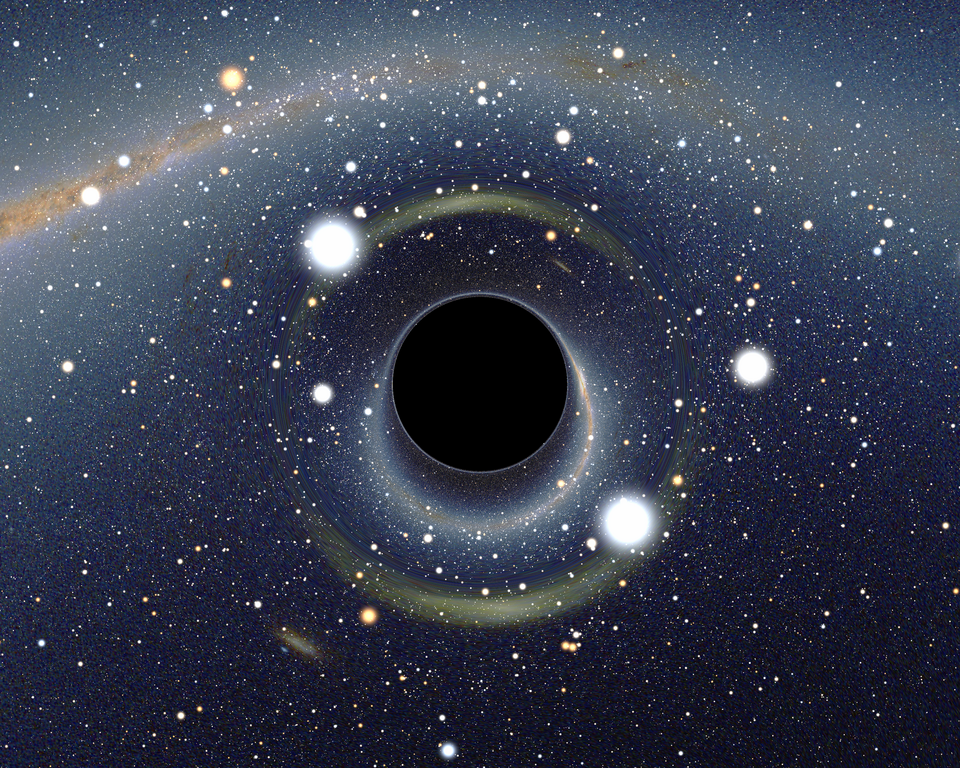
Researchers at KAIST in South Korea have developed an innovative laser technology that significantly enhances the ability to capture images of black holes. Traditional methods of photographing these astronomical phenomena have faced challenges due to the need for precise synchronization among multiple radio telescopes. This breakthrough promises to transform how astronomers observe distant objects in the universe.
Revolutionizing Radio Astronomy
Black holes, located millions of light-years away, cannot be photographed simply by pointing a telescope and taking a snapshot. Instead, capturing their intricate details necessitates a network of radio telescopes operating in unison. The critical challenge lies in ensuring that these telescopes observe simultaneously, with their signals perfectly aligned. Until now, electronic reference signals have been used, but this approach has proven unreliable at higher radio frequencies.
The KAIST team, led by Professor Jungwon Kim from the Department of Mechanical Engineering, has introduced a solution that replaces these electronic signals with optical frequency comb lasers. These lasers emit thousands of precise light frequencies, arranged in regular intervals like a ruler. This innovation allows for significantly enhanced synchronization among telescopes, providing a stable reference point for their observations.
As astronomers attempt to observe shorter wavelengths to capture finer details, the limitations of electronic signals become increasingly apparent. Traditional methods often falter in maintaining the necessary stability and accuracy, akin to using a flexible ruler when precision is paramount. The laser technology developed by the KAIST team addresses this issue directly by integrating the optical frequency comb into each telescope’s receiver, aligning the phase relationships with the inherent stability of light.
Successful Testing and Broader Implications
The effectiveness of this laser-based system has been validated through successful tests at the Korea VLBI Network’s Yonsei Radio Telescope, where the team detected stable interference patterns between multiple telescopes. Expanding their efforts, researchers also demonstrated the system’s capability at the KVN Pyeongchang Radio Telescope, proving its functionality across various locations simultaneously.
The implications of this research extend beyond the realm of black hole imaging. The precision timing technology could enhance atomic clock comparisons across continents, enabling measurements with unprecedented accuracy. Additionally, this advancement could improve space geodesy, which tracks the Earth’s subtle movements, and facilitate the tracking of deep space probes.
Professor Kim emphasizes that this advancement represents a significant leap forward in overcoming the limitations associated with electronic signal generation, harnessing the unparalleled precision of light. For astronomers eager to capture sharper images of black holes and other distant objects, this technology marks a critical step towards creating a unified observational instrument from a network of far-flung telescopes.
This innovative approach to radio astronomy not only enhances our ability to observe the universe but also opens new avenues for research across various scientific fields, demonstrating the power of technology in expanding our understanding of the cosmos.