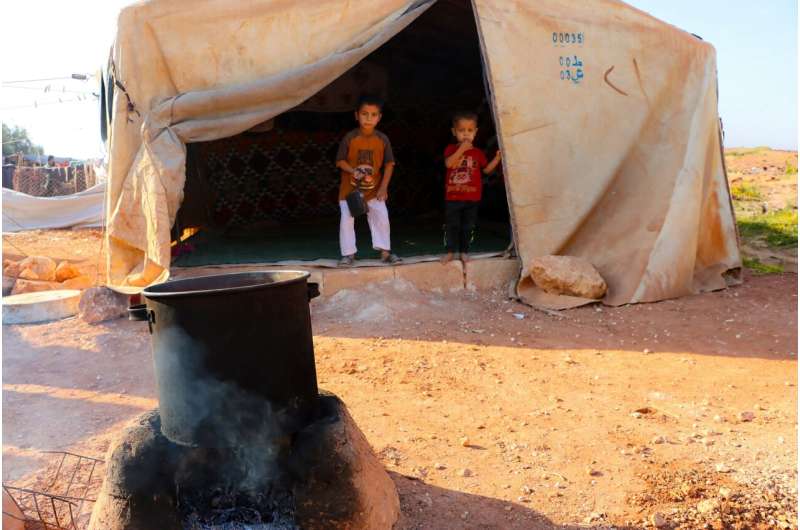
A recent study conducted by researchers from the University of Notre Dame reveals that social media sentiment analysis can significantly enhance predictions regarding population movements during crises. This research aims to improve humanitarian responses, which have become increasingly critical as forced displacement has surged globally.
According to the United Nations, the number of displaced individuals worldwide has nearly doubled over the past decade. In 2024 alone, approximately one in 67 people fled their homes due to various crises. The study, co-authored by Helge-Johannes Marahrens, assistant professor of computational social science, demonstrates how analyzing posts on social media platforms can help experts anticipate when people are likely to relocate, thereby facilitating faster and more effective aid delivery.
Leveraging Social Media for Timely Aid
Published in EPJ Data Science, the study examined three significant case studies:
1. In Ukraine, over 10.6 million people were displaced following Russia’s invasion in 2022.
2. Sudan witnessed approximately 12.8 million displacements due to civil war that erupted in April 2023.
3. In Venezuela, around 7 million individuals have been forced to leave their homes due to ongoing economic crises.
Researchers analyzed nearly 2 million social media posts in three languages on platform X (formerly Twitter). Their findings indicated that sentiment—whether posts conveyed positivity, negativity, or neutrality—was a more reliable predictor of impending movement than the emotional tone of the posts, such as joy or fear. This sentiment analysis proved particularly effective in forecasting the timing and volume of cross-border movements.
The study identified that pretrained language models, which are advanced AI tools trained on extensive datasets using deep learning techniques, provided the most robust early warning signals. Marahrens stated, “Our findings will help researchers refine models to predict how people move during conflict or disasters.”
Challenges and Future Directions
While the analysis of social media data showed promising results, Marahrens noted that its effectiveness varies by context. The method appears to work best in conflict scenarios like Ukraine, but less so in economic crises, such as those in Venezuela, where changes unfold more gradually. He cautioned that these analyses could sometimes trigger false alarms and emphasized their role as preliminary indicators that warrant further investigation, especially when integrated with traditional data sources like economic indicators and on-the-ground reports.
Future research could explore the connections between sentiment and emotional responses, focusing on how they intersect and diverge. Moreover, advancements in automated translation services could enable researchers to analyze posts in more languages, broadening the scope and applicability of the findings. Marahrens believes that these enhancements could significantly strengthen the tools available to policymakers and humanitarian organizations working with displaced populations.
Since joining the University of Notre Dame this fall, Marahrens has focused on various issues related to globalization and inequality. His expertise in computational social science supports a range of research initiatives, particularly through affiliations with the Keough School’s Pulte Institute for Global Development and the Lucy Family Institute for Data & Society.
The implications of this study are profound, suggesting that a shift towards utilizing digital data, such as social media sentiment, could fundamentally change how humanitarian responses are structured, ultimately saving lives and alleviating suffering in crisis situations.