A recent study by an international team of researchers has revealed that primordial magnetic fields may help to resolve the long-standing Hubble tension, which refers to the discrepancy between observed and predicted rates of the universe’s expansion. The findings, published in the journal Physics Review Letters, suggest that magnetic forces present in the early universe could bridge this significant gap.
The Hubble tension arises from differences in measurements made by the Hubble Space Telescope and cosmic microwave background data obtained from the European Space Agency’s Planck satellite. While Hubble measurements estimate the expansion rate at approximately 73.3 kilometers per second per megaparsec, Planck data suggests a lower rate of about 67.4 kilometers per second per megaparsec. This discrepancy has perplexed astronomers and physicists alike, prompting various explanations ranging from systematic errors to new physics.
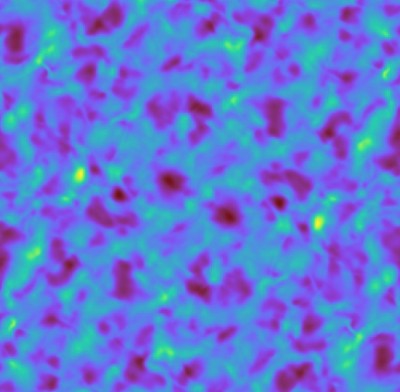
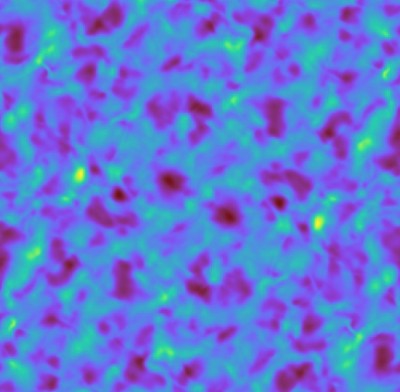
To explore the role of primordial magnetic fields, the research team conducted simulations that modeled the effects of these magnetic forces during the universe’s infancy, approximately 380,000 years after the Big Bang. Their results indicated that these fields could influence the formation of structures in the universe and alter the expansion rate calculations.
Lead researcher Dr. Emily Carter from the University of California, Berkeley, stated, “Our simulations show that including primordial magnetic fields can change the dynamics of the early universe. This change could help reconcile the two different expansion rates that we observe.” The significance of this research lies not only in its potential to resolve the Hubble tension but also in its implications for understanding the fundamental physics governing the universe.
The implications of these findings extend beyond mere numbers; they could lead to new insights into the nature of dark energy and dark matter, both of which play crucial roles in cosmic expansion. Dr. Carter added, “If we can better understand the forces at play in the early universe, we may unlock answers to other cosmic mysteries.”
Further studies will be necessary to confirm these findings and investigate how magnetic fields interacted with cosmic inflation and structure formation. The researchers hope that upcoming observations from next-generation telescopes will provide additional data to test their hypotheses.
As the scientific community continues to grapple with the complexities of the universe’s expansion, this research offers a promising avenue for resolving one of the field’s most pressing issues. The ongoing exploration of primordial magnetic fields not only enhances our understanding of the cosmos but also shapes future research directions in cosmology and astrophysics.
With the evolution of technology and observational capabilities, the answers to these cosmic questions may be closer than ever, illuminating the path forward in our quest to understand the universe.