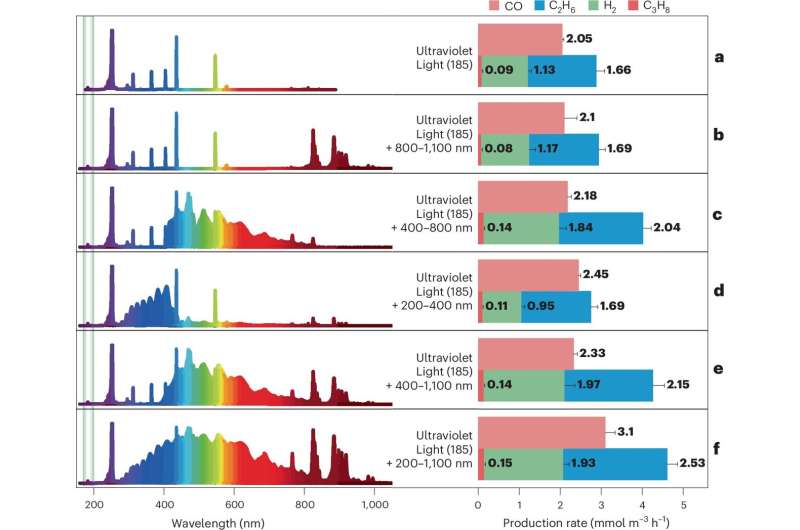
A team of scientists from China has developed a groundbreaking method to convert carbon dioxide and methane, two significant greenhouse gases, into valuable chemicals using only light, eliminating the need for expensive catalysts. This innovative approach, detailed in a study published on December 14, 2025, in Nature Photonics, harnesses high-energy photons to break strong chemical bonds in these gases, facilitating their transformation into useful products.
Carbon dioxide and methane are responsible for nearly 84% of the increase in global temperatures, making them critical targets for climate action. Carbon dioxide contributes to ocean acidification, posing a serious threat to marine ecosystems. Traditional methods to convert these gases into other molecules often rely on costly metal catalysts and extreme conditions, such as high temperatures above 700 °C and significant pressures, making the process energy-intensive and expensive.
The research team found that by utilizing high-energy photons with a specific wavelength of 185 nm, generated by a 28-W ultraviolet light source, they could directly break the chemical bonds in methane and carbon dioxide. They constructed a quartz reactor chamber filled with a mixture of 99.9% pure carbon dioxide and methane and illuminated it with varying light types under controlled conditions of 25 °C and low pressure.
Analysis of the gases produced revealed successful reactions generating carbon monoxide, hydrogen, and ethane at production rates of 3.1 mmol m-3 h-1, 1.93 mmol m-3 h-1, and 2.53 mmol m-3 h-1, respectively. The researchers noted that adding water to the mixture and removing atmospheric oxygen improved yield rates. In experiments simulating conditions similar to outer space by flushing the chamber with argon gas, the team achieved a total gas conversion of 1.51% within 24 hours.
While acknowledging that the yield is currently low, the study’s authors, including lead researcher Jianxin Zhai, believe that these findings represent a promising new approach to transforming greenhouse gases into valuable products without the need for catalysts or extreme energy demands. This method could significantly contribute to the development of a circular economy, where waste gases are repurposed as resources.
This research underscores the urgency of finding innovative solutions to combat climate change. By focusing on the conversion of existing greenhouse gases rather than merely reducing emissions at the source, scientists are exploring new pathways to mitigate the environmental impact of these harmful substances.
The implications of this study could extend beyond laboratory settings, potentially influencing industrial practices and contributing to global efforts aimed at reducing greenhouse gas emissions. As researchers continue to refine this technique, the prospect of effectively managing greenhouse gases through light-based processes remains an exciting avenue for future exploration.
The article was authored by Sanjukta Mondal, edited by Gaby Clark, and reviewed by Robert Egan to ensure accuracy and credibility. For further details, refer to the original study published in Nature Photonics.