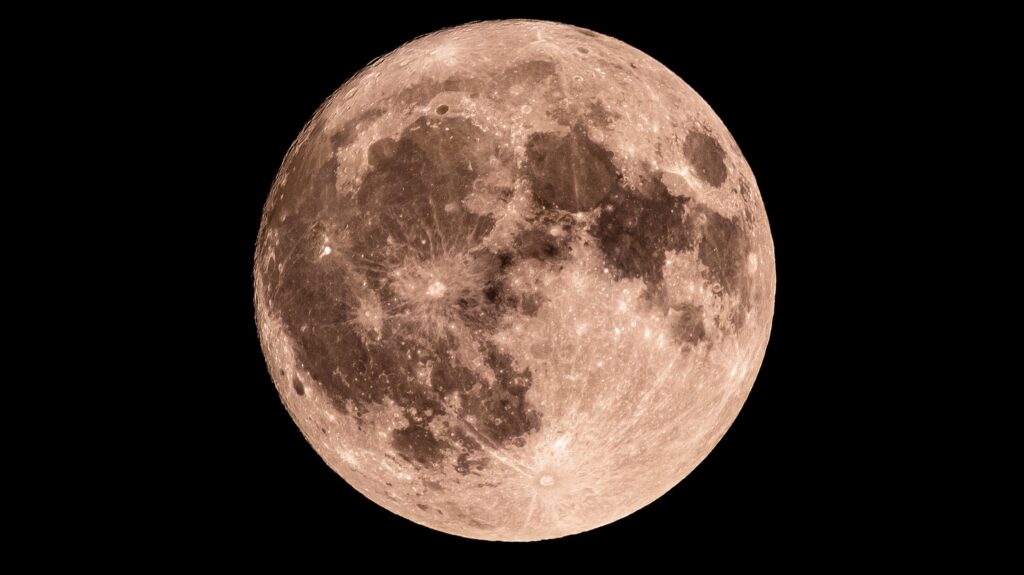
The Moon is officially in the New Moon phase today, January 18, 2024, marking a moment when it is positioned between the Earth and the Sun, rendering it invisible in the night sky. With this transition, the current lunar cycle is concluding, and the Moon will begin to brighten gradually over the coming nights until it reaches the Full Moon phase.
According to NASA’s Daily Moon Guide, there will be 0% illumination of the Moon tonight, meaning stargazers can expect no visibility of the lunar surface. As the days progress, the Moon will gradually reveal itself, moving through eight distinct phases in its cycle. The next Full Moon is set for February 1, 2024, following the last Full Moon on January 3.
Understanding the Lunar Cycle
The lunar cycle lasts approximately 29.5 days, during which the Moon completes one full orbit around Earth. As it travels, the amount of sunlight illuminating the Moon changes, leading to various visible phases. The eight phases include:
– **New Moon**: The Moon is positioned between Earth and the Sun, making it invisible.
– **Waxing Crescent**: A small sliver of light appears on the right side.
– **First Quarter**: Half of the Moon is illuminated on the right, resembling a half-Moon.
– **Waxing Gibbous**: More than half is lit, but it is not yet full.
– **Full Moon**: The entire face of the Moon is illuminated and fully visible.
– **Waning Gibbous**: The Moon begins to lose light on the right side.
– **Third Quarter (Last Quarter)**: Another half-Moon, but now the left side is lit.
– **Waning Crescent**: A thin sliver of light remains on the left side before the cycle restarts.
This cyclical change is a fascinating aspect of our natural world, influencing not only cultural practices but also marine and agricultural activities.
As the New Moon phase concludes, observers can look forward to the Moon’s gradual illumination, culminating in the next Full Moon, providing an opportunity for celestial enthusiasts to engage with the night sky in the weeks to come.