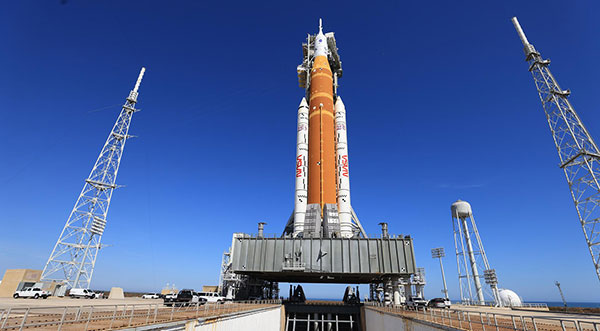
NASA is preparing to potentially roll back the Artemis II rocket and Orion spacecraft to the Vehicle Assembly Building (VAB) at the Kennedy Space Center in Florida following a significant issue with helium flow. The disruption, observed on February 21, 2024, affects the Space Launch System (SLS) rocket’s interim cryogenic propulsion stage, raising concerns about the upcoming launch schedule.
Engineers are actively analyzing data to identify the root cause of the interrupted helium flow. The helium is essential for maintaining the correct environmental conditions for the propulsion stage’s engine and for pressurizing the liquid hydrogen and liquid oxygen propellant tanks. While the systems functioned correctly during the Artemis II wet dress rehearsals, teams encountered challenges with helium flow during subsequent operations after the rehearsal concluded on February 19.
Rollback Preparations Underway
In light of the current situation, NASA has begun preparations for a rollback. This includes removing access platforms at Pad B, which are subject to wind-related constraints. The platforms, installed just a day earlier, cannot be removed in high wind conditions, and forecasts indicate such weather is expected soon.
Operators have implemented a backup method to maintain the environmental conditions necessary for the upper stage engines, ensuring that the rocket remains in a safe configuration. As teams continue their investigation, they are considering various potential causes for the helium flow issue, including possibilities at the interface between ground and rocket lines, a valve in the upper stage, and a filter that connects the two systems.
Impact on Launch Schedule
The need for a rollback could mean that NASA will miss the planned launch window for Artemis II in March. However, the agency’s swift preparations might still allow for a launch in April, depending on the results of ongoing data analysis, repair efforts, and the overall schedule in the coming weeks.
The Artemis II mission is critical for NASA’s goals of returning humans to the Moon. Astronauts involved in the mission include Reid Wiseman, Victor Glover, and Christina Koch, along with Jeremy Hansen from the Canadian Space Agency. Their participation underscores the international collaboration driving advancements in space exploration.
As teams work diligently to resolve the helium flow issue, NASA remains focused on ensuring the success of the Artemis II mission, which is seen as a crucial step toward future lunar and Mars exploration. The situation continues to develop, and further updates will be provided as they become available.