NASA’s Crew-11 astronauts successfully returned to Earth early on January 8, 2024, after a medical issue prompted their evacuation from the International Space Station (ISS). The spacecraft splashed down off the coast of California, marking a premature end to their mission. With their departure, the ISS is now temporarily staffed by a reduced crew, raising questions about operational capacity until the arrival of Crew-12 in February.
Reduced Crew Operations at the ISS
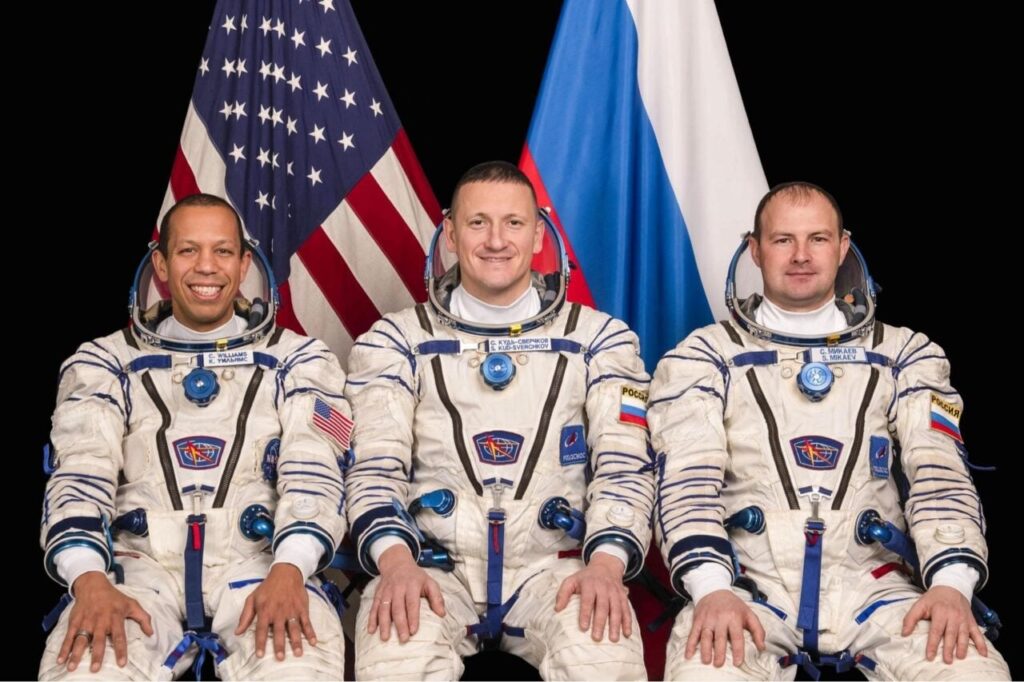
On Monday, Crew-11 pilot Mike Fincke handed over command of the ISS to Sergey Kud-Sverchkov of Roscosmos. The remaining crew now consists of Kud-Sverchkov, fellow cosmonaut Sergei Mikaev, and NASA astronaut Chris Williams. This leaves only three crew members aboard, the minimum required to keep the space station functional. Although operating with a smaller team is not inherently dangerous, it will affect the frequency and scope of daily activities.
The ISS has maintained a continuous human presence in space for over 25 years. Initially, the nominal crew size was set at three for the first nine years, but it has since expanded to seven to maximize research and operational efficiency. The recent medical evacuation of Crew-11 has necessitated a shift in focus for the remaining astronauts, who will prioritize essential maintenance and operations over research projects until Crew-12 arrives.
Focus on Safety and Operations
As the sole members of their respective teams, Kud-Sverchkov, Mikaev, and Williams will not conduct any spacewalks unless absolutely necessary. Typically, two crew members perform extravehicular activities (EVAs) while others provide support from inside the station. Williams will also manage the NASA segment of the ISS on his own, while Kud-Sverchkov and Mikaev oversee the Roscosmos side.
Amit Kshatriya, NASA’s Associate Administrator, expressed confidence in Williams’s ability to handle the responsibilities. “Chris is trained to do every task that we would ask him to do on the vehicle,” Kshatriya stated during a press conference. Ground control teams and Williams’s Russian colleagues will remain available for support.
The remaining crew is expected to operate with minimal staffing for about a month, pending the timely launch of Crew-12. This new team is anticipated to join the ISS in February, allowing Kud-Sverchkov, Mikaev, and Williams to continue their mission until summer, completing an eight-month stay aboard the station.
As for the Crew-11 astronauts, they are undergoing routine medical evaluations following their return to Earth. Extended stays in low gravity can lead to muscular atrophy, bone density loss, and fluid shifts, necessitating rehabilitation upon their return. The astronaut whose medical condition prompted the evacuation will receive further diagnostic attention that was not possible in space. NASA has not disclosed the identity of this astronaut or specific details regarding their condition, but has confirmed that they are stable.
This marks the first medical evacuation in the ISS’s 25-year history, underscoring NASA’s preparedness for unexpected situations. The agency has successfully managed the safe return of Crew-11, reinforcing confidence in the capabilities of the remaining crew to maintain the ISS operations until Crew-12 arrives.