A novel device has been developed that generates power by absorbing heat from its surroundings and beaming it into space. This innovative technology, led by researchers at the University of California, Davis, promises to enhance energy efficiency in applications such as greenhouse ventilation and residential climate control while reducing reliance on traditional power sources.
Reversing Solar Cell Technology
Traditional solar cells harness energy from sunlight, but this new class of devices operates in reverse. According to Jeremy Munday, a professor of electrical and computer engineering, these devices absorb heat from their environment and radiate it into the cold expanse of the sky. This process, known as radiative cooling, allows the device to emit heat at specific wavelengths of infrared radiation, which pass through the atmosphere without being absorbed.
The research team built upon earlier advancements in materials that enabled buildings to cool passively using similar principles. These materials, which were introduced in 2014, have the potential to significantly reduce electricity consumption, especially for air conditioning, which accounts for nearly 15 percent of electricity use in U.S. buildings.
Stirling Engines as a Solution
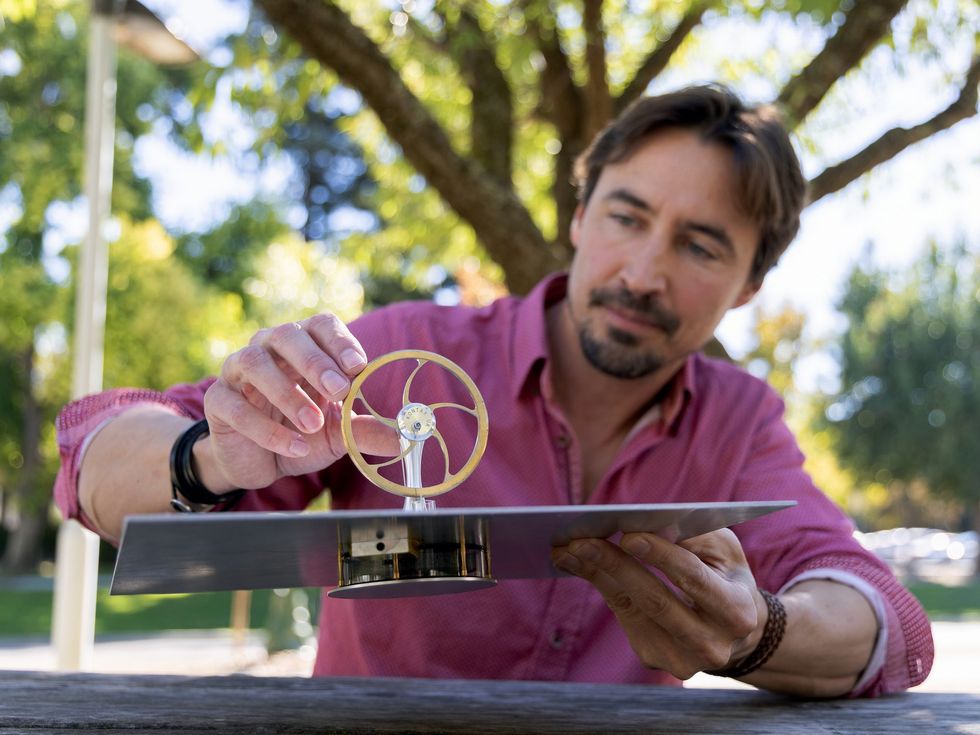
While early thermoradiative devices relied on semiconductor electronics that often required rare materials, Munday and his team explored the use of Stirling engines. These engines are mechanically simple and capable of generating mechanical power directly, making them suitable for tasks like air movement and water pumping without the need for intermediate electrical conversion.
At the core of a Stirling engine is a sealed gas that expands when heated and contracts when cooled, creating pressure changes that drive a piston. Unlike traditional engines that depend on large temperature differentials, the Stirling engine used in this study is efficient with much smaller variations in temperature.
During nighttime experiments, the researchers placed the device outdoors and found it could achieve cooling of over 10 degrees Celsius. This cooling effect was converted into power, producing more than 400 milliwatts of mechanical power per square meter. The device successfully powered a fan and even generated current through a small electrical motor.
The energy generated by this system is significantly lower than that of solar photovoltaics, roughly two orders of magnitude less. Munday clarified that the goal is not to replace solar energy but to complement it, particularly in scenarios where solar power is unavailable, such as at night or in remote areas without access to electricity.
Furthermore, the researchers calculated that the device could produce over 5 cubic feet per minute of airflow, meeting the minimum requirements set by the American Society of Heating, Refrigerating and Air-Conditioning Engineers for indoor air quality.
The potential applications of this technology are vast, ranging from improving air circulation in greenhouses to enhancing indoor comfort in homes. Munday expressed optimism about future enhancements, mentioning that replacing the gas within the device with lighter gases like hydrogen or helium could reduce friction and increase efficiency.
Ultimately, Munday and his colleagues aim to test their device in a real greenhouse setting to demonstrate its practical applications. They also aspire to engineer the device for daytime operation, further expanding its utility. The findings of this research were published in the journal Science Advances, highlighting a significant step toward more sustainable energy solutions.