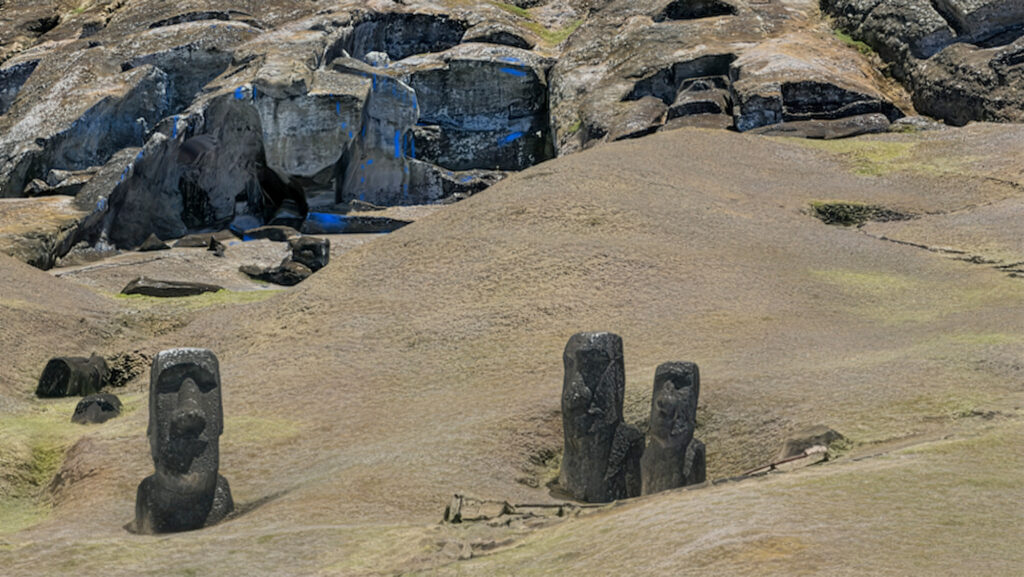
A team of geographers and researchers has unveiled a groundbreaking high-resolution 3D model of Rano Raraku, one of the main quarries on Rapa Nui, also known as Easter Island. This innovative project allows users to explore the iconic site from their homes, offering a glimpse into a location that remains inaccessible to visitors due to safety concerns.
Located in the South Pacific Ocean, Rapa Nui is the most isolated inhabited island in the world, home to approximately 6,000 residents. Known for its famous moai statues, the island attracts nearly 100,000 tourists each year, drawn by the allure of the towering 13-foot-tall stone figures. Access to the island is limited, with only a few flights operating weekly, particularly between December and March, making travel challenging.
The 3D model, created by faculty from Binghamton University and the State University of New York, features nearly 1,000 meticulously rendered moai statues. This digital representation of Rano Raraku not only enhances academic research but also democratizes access to the unique site. “You can see things that you couldn’t actually see on the ground,” said Carl Lipo, an anthropologist at Binghamton University and the lead author of a paper on the model published in PLOS One in November 2025.
Revolutionizing Access to Rano Raraku
The 3D model utilizes advanced Structure-from-Motion photogrammetry techniques, derived from 11,686 images taken by unmanned aerial vehicles (UAVs). This detailed documentation reveals the intricate spatial organization of production activities across multiple workshops within the quarry. Lipo emphasized the importance of this comprehensive model for both researchers and the general public, stating, “We’re documenting something that really has needed to be documented, but in a way that’s really comprehensive and shareable.”
Visitors to the island have long been restricted from certain areas, particularly those with steep volcanic terrain. The new model invites enthusiasts and scholars alike to explore Rano Raraku virtually, allowing them to experience the quarry, often described as “the archaeological Disneyland,” without leaving their homes.
Enhancing Understanding of Easter Island’s History
The advent of this 3D mapping technology not only sheds light on the construction and significance of the moai statues but also serves as a vital tool for education and preservation. By making this information accessible, Lipo and his team hope to foster a greater appreciation for Easter Island’s rich cultural heritage among global audiences.
As the world becomes increasingly interconnected, this innovative approach to archaeology exemplifies how technology can bridge gaps in understanding and access. With the ability to explore Rano Raraku from anywhere, the legacy of Rapa Nui continues to resonate, inviting new generations to engage with its storied past.
For those unable to travel to Easter Island, the new 3D model represents an exciting opportunity to connect with one of history’s most fascinating locations.