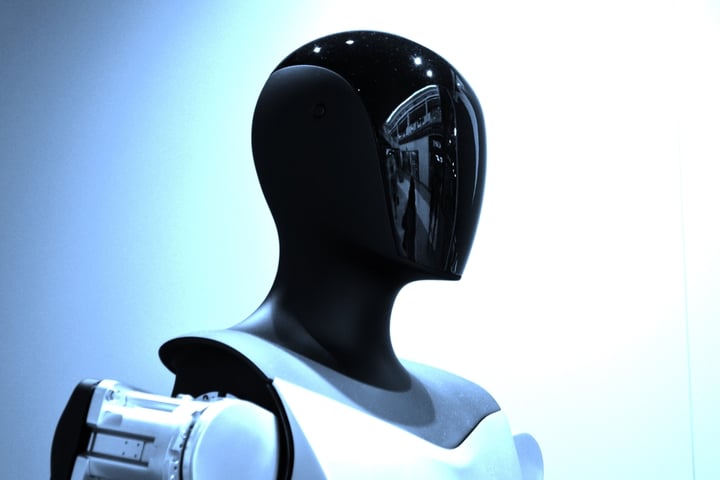
Elon Musk, CEO of both Tesla Inc. and SpaceX, has presented an ambitious vision for the company’s humanoid robot, Optimus. He claims that this advanced robot could potentially build civilizations on other planets, marking it as the first of its kind, dubbed a “Von Neumann machine.” Musk’s comments came in response to discussions surrounding SpaceX’s recent announcement of its merger with xAI, which aims to produce an impressive 1 terawatt (1TW) of artificial intelligence computing power annually.
In a conversation on the social media platform X, user Ryan Dahl questioned whether this development could signify the beginning of von Neumann probes—hypothetical spacecraft capable of self-replication using resources from various planetary systems. Musk responded affirmatively, stating, “Optimus will be the first Von Neumann machine, capable of building civilization by itself on any viable planet.”
Understanding the Concept of Von Neumann Machines
The notion of a von Neumann machine, originally proposed by Hungarian-American mathematician and physicist John von Neumann, refers to a theoretical spacecraft that can replicate itself by utilizing raw materials sourced from other celestial bodies. This technology would enable the machine to create copies of itself, which could then explore and colonize additional locations in space. Musk’s assertion that Optimus could fulfill this role suggests a belief that space-based artificial intelligence might soon evolve to control robotic systems on distant planets.
Musk has frequently touted the capabilities of Optimus, highlighting its potential to significantly enhance productivity on Earth. He envisions a future where Optimus, combined with advanced AI computing in space, could surpass the current output of human labor. To facilitate this ambitious production goal, Musk announced a strategic shift in Tesla’s offerings, including the discontinuation of the premium Model S and Model X vehicles. This change is intended to streamline resources and increase the production capacity of Optimus to an ambitious target of 1 million units annually at the company’s Fremont facility.
Market Reaction and Future Implications
The market responded to Musk’s announcements with a slight decline in Tesla’s stock price, which fell by 0.67% to $419.15 during after-hours trading on Tuesday. Despite this minor dip, analysts remain optimistic about Tesla’s momentum in the market. According to data from Benzinga Edge Rankings, Tesla continues to perform well on the momentum metric, indicating a favorable price trend for the long term.
As Musk’s vision for Optimus unfolds, it raises intriguing questions about the future of robotics and artificial intelligence in space exploration. The concept of a self-replicating machine capable of building civilizations on other planets could redefine humanity’s relationship with technology and space. With ongoing developments at Tesla and SpaceX, the potential for Optimus to play a pivotal role in future interplanetary colonization efforts remains an exciting possibility.
As this narrative continues to evolve, stakeholders in both the technology and investment sectors will be keenly observing how Musk’s ambitious plans materialize.