China has officially launched a powerful artificial intelligence system designed to enhance scientific research capabilities. On December 23, 2023, this significant project was unveiled, coinciding with the United States’ announcement of its own ambitious AI-driven science initiative. The new system can directly access China’s national supercomputing infrastructure, allowing it to independently conduct advanced research and potentially reshape the landscape of global technological competition.
Autonomous AI for Scientific Research
According to China Science Daily, the newly developed AI agent can process natural language instructions and autonomously manage entire research workflows with minimal human intervention. Once assigned a task, the system can decompose complex problems, allocate computing resources, run simulations, analyze extensive datasets, and produce detailed scientific reports. This self-directed functionality enables the AI to operate as a sophisticated research assistant, significantly reducing the time required for complex tasks. Research activities that once consumed a full day can now be completed in approximately one hour. Currently, the platform supports nearly 100 scientific workflows across critical fields such as materials science, biotechnology, and industrial artificial intelligence, with a focus on accelerating discovery through automation.
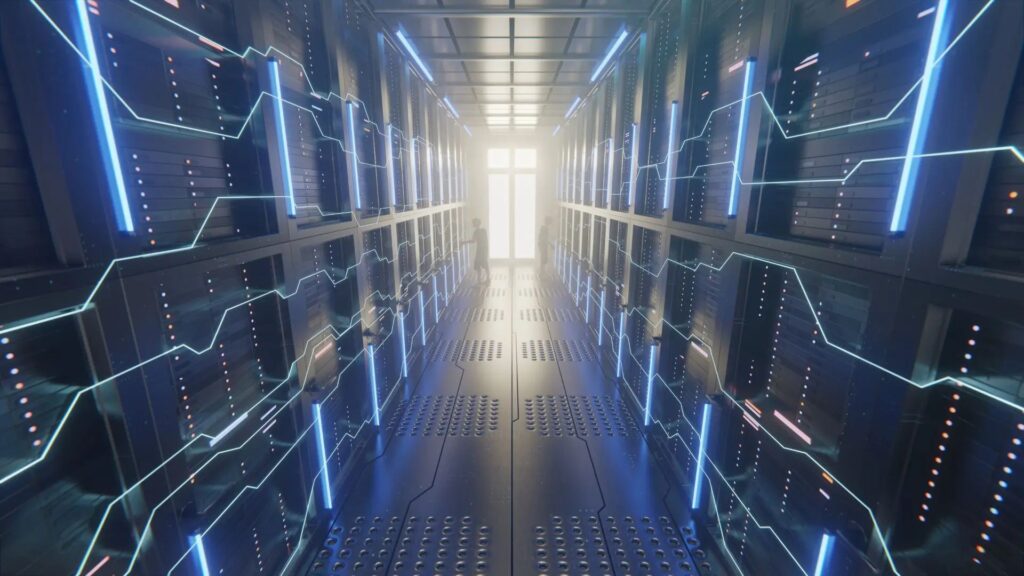
At the heart of this initiative is China’s National Supercomputing Network, known as SCNet. This advanced digital infrastructure connects over 30 supercomputing centers nationwide, facilitating the pooled computing power required for demanding scientific tasks. First launched in 2023, SCNet aims to integrate supercomputing and intelligent computing resources, and its official unveiling occurred in the Binhai Hi-Tech Zone in Tianjin in April 2024. With AI now directly linked to this expansive infrastructure, China has transitioned from experimental systems to large-scale deployment, potentially revolutionizing how scientific research is conducted across the country.
Transforming Research Methodologies
Chinese scientists involved in the project assert that this platform signifies a deeper transformation in the methodology of scientific work. “Science is shifting from number crunching to AI-powered discovery,” stated Qian Depei, a member of the Chinese Academy of Sciences and head of an SCNet expert panel. He emphasized that these new AI agents will facilitate connections between various tools, data, and computing power, ultimately allowing scientists to innovate more rapidly. Cao Zhennan, the deputy director of the High Performance Computer Research Centre, echoed this sentiment, noting that “AI for Science” embodies not only a technical advancement but also a transformation in research organization.
The launch aligns with Beijing’s national “AI+” initiative, announced in August 2023, which aims to leverage AI to boost scientific discovery and industrial innovation. This strategic move underscores China’s commitment to maintaining a leading position in the global AI landscape.
The announcement of this AI system coincides with escalating competition between the United States and China regarding advancements in artificial intelligence and supercomputing. Both nations have made significant investments in supercomputers for sensitive research, including applications in weaponry and drug discovery. In response, Donald Trump introduced the Genesis Mission in November 2023, likening it to an “AI Manhattan Project.” Led by the U.S. Department of Energy, this initiative aims to develop powerful AI agents utilizing federal supercomputers and vast government research datasets. Trump asserted that the mission would “invest in AI-enabled science to accelerate scientific advancement” and reinforce “America’s technological dominance and global strategic leadership.”
Though the U.S. initiative is bound by stringent deadlines, including the need for early demonstrations within 270 days, China’s rapid deployment raises concerns about the security implications of giving AI systems access to national supercomputing networks. This could potentially expose sensitive data, increase vulnerabilities to cyber intrusions, or grant AI access to classified information relevant to military applications.
As China advances its capabilities in AI-driven scientific research, the implications for both national and global security remain significant. The ongoing competition between these two technological powerhouses is poised to shape the future of scientific discovery and innovation on an international scale.