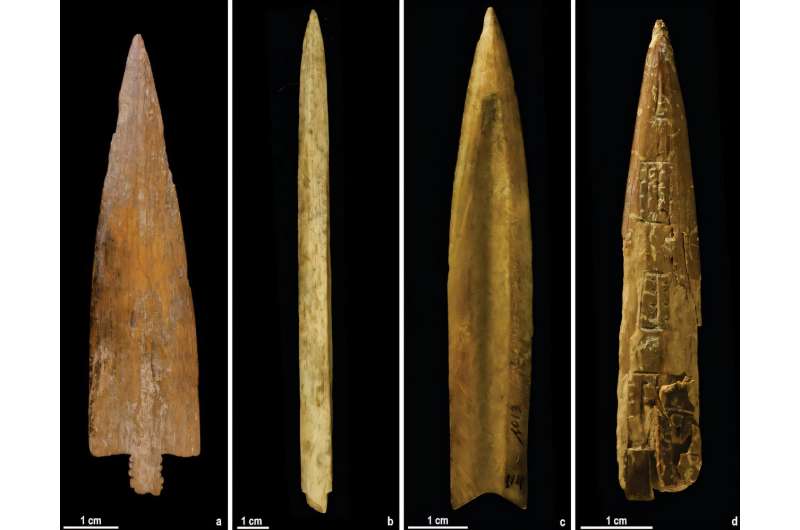
Research conducted by a team of archaeologists has unveiled significant insights into the craft production practices of ancient communities in the Sierras de Córdoba, Argentina. The study focused on the manufacturing techniques of bone arrow points, revealing a complex system of tool-making that played a crucial role in the daily life of the Late Prehispanic Period inhabitants, approximately between 1220 and 330 cal BP.
The findings, published in the International Journal of Osteoarchaeology, were led by Dr. Matías Medina, alongside colleagues Sebastián Pastor and Gisela Sario. Their research fills a critical gap in understanding how these prehistoric communities organized their craft production, a topic that has been largely overlooked in previous studies.
Understanding Ancient Craft Production
Historically, the Late Prehistoric Period in the Sierras de Córdoba was characterized by communities that practiced a flexible mixed economy. These groups combined hunting, gathering, and farming, allowing them to maintain high mobility and adapt their lifestyles seasonally. Despite the significance of bone tools in their material culture, previous research had provided limited insights. Dr. Medina remarked on the scarcity of publications specifically addressing bone technology in South America, noting that archaeological studies often focused on chronological analysis rather than the techniques of tool production.
The current study aimed to address this knowledge gap by analyzing a collection of 117 bone artifacts from the Museo Arqueológico Numba Charava. Collected over the 20th century from various sites in the southern Punilla Valley, these artifacts lacked precise provenance, complicating the analysis.
The research identified that the primary raw material for these arrow points was likely derived from the guanaco, a type of llama hunted for food. The bones were processed by splitting them lengthwise to create workable blanks, which were then shaped into arrowheads through grinding and scraping. In rare instances, decorative elements were added, with only three examples of incised decoration recorded in the archaeological literature.
Significance of the Findings
Dr. Medina suggested that these bone arrow points were primarily used for warfare rather than hunting. The presence of decorative elements indicates a cultural significance, expressing social identity and possibly serving as a reminder of the maker’s cultural affiliation.
The study’s implications extend beyond the immediate findings, suggesting that local production of arrowheads was a time-consuming yet standardized process, likely passed down through generations within nuclear families. This reinforces the notion that the nuclear family was a fundamental social unit responsible for food and tool production during the Late Prehispanic Period.
Dr. Medina highlighted the need for comparative studies with neighboring regions, such as the Low Paraná and Uruguay River floodplains, which are over 500 km away. He emphasized that a deeper understanding of technological practices in these areas—including the use of aquatic resources—could further illuminate the diversity of bone tool production across different prehistoric cultures.
Through this research, a clearer picture of the social and cultural dynamics of ancient communities in Argentina emerges, illustrating how their craft production methods reflect broader patterns of life in the Late Prehispanic Period. The study not only enriches the archaeological record of the region but also opens avenues for future exploration into the technological and social complexities of prehistoric societies.