Scientists from the University of Alaska Fairbanks expressed serious concerns about the future of Arctic research due to significant federal funding cuts during a major conference held in New Orleans from December 15 to 19, 2023. The conference, organized by the American Geophysical Union, brought together researchers from over a hundred countries to discuss pressing issues in Earth and space sciences.
During a panel discussion, Hinzman, a prominent figure at the University of Alaska Fairbanks and former member of the White House Office of Science and Technology Policy, highlighted the detrimental effects of reduced funding. He stated, “We’re going through a pretty traumatic time right now. There are tremendous cuts to really important programs that enable scientific research. This work is not just important to us, but it’s crucial for society in general.”
Hinzman was joined by John Walsh, another UAF scientist focusing on climate change, who detailed the ramifications of terminated federal observational programs. Walsh emphasized the broad implications of these cuts, saying, “The environmental observations affect every part of life. They affect food storage and sustainable resources.” He called for immediate action, urging society to “stop the bleeding” and to “save what remains, and rebuild what we’ve already lost.”
Their research indicated that the cuts impacted critical observation programs essential for storm forecasting. The elimination of weather balloons, which measure atmospheric conditions, was particularly concerning. Hinzman and Walsh explained that data gaps, compounded by staffing shortages at the National Weather Service, have led to a decline in forecasting accuracy.
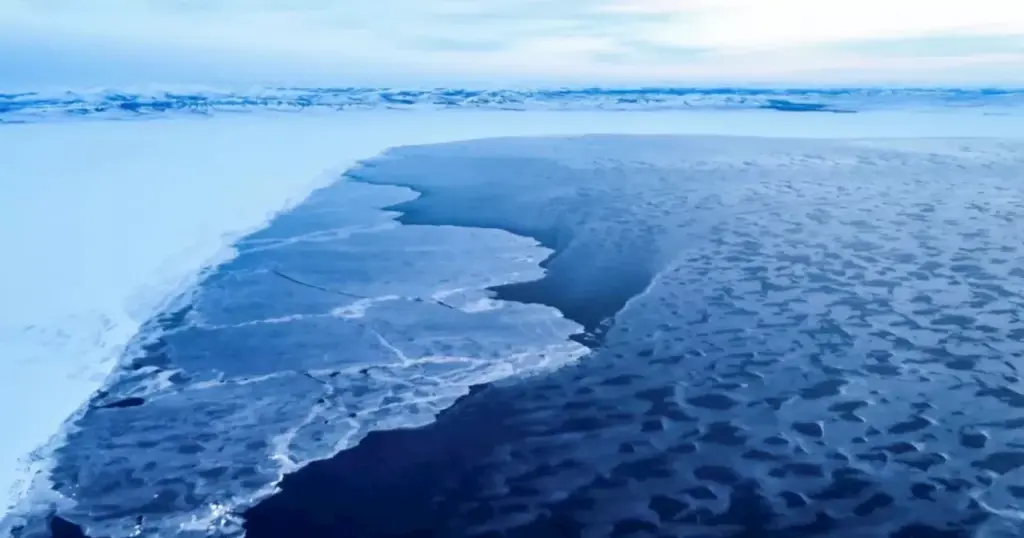
“As Arctic coastlines become increasingly vulnerable to storms as the open water season lengthens, the economic and societal benefits of forecast-based warnings of Arctic storms are becoming increasingly apparent,” they noted in their paper presented at the conference.
Despite these challenges, Hinzman expressed optimism about the future of polar research. He remarked, “I do believe that the golden era of polar research is behind us, but it’s also in front of us. It requires contributions from all of us to acknowledge and understand the importance of this work.”
The panel also addressed the current geopolitical tensions affecting international scientific collaborations. Hinzman pointed out that young researchers are feeling the impact of these stresses. “That’s a real loss for us,” he said, acknowledging the brain drain but emphasizing the importance of keeping young scientists in the field.
Bob McCoy, director of the Geophysical Institute at UAF, noted that ongoing relationships with Canada are strained, although there may be opportunities for collaboration through defense programs. He also remarked that joint research with Russia has significantly stalled since the onset of the war in Ukraine. Just before the conflict began, Russian scientists were in discussions with Alaskan researchers regarding permafrost phenomena, which have since halted.
Conversely, relationships with Greenland and Denmark have been on the rise, as highlighted by various speakers at the conference. Collaboration with Indigenous communities in Alaska’s Arctic is also growing. Researchers at the University of Alaska Fairbanks have increasingly partnered with local tribal communities to integrate traditional knowledge into scientific inquiries, particularly regarding environmental changes.
Laura Conner, interim vice chancellor for research at UAF, outlined the importance of these partnerships. “We want to conduct scientific investigations that reflect what is happening on the ground,” she said. “People living in the state have substantial knowledge, and when we combine these two bodies of knowledge, the results are much stronger.”
Serina Wesen, outreach engagement manager at UIC Science in Utqiagvik, emphasized the daily impacts of environmental changes on local communities. “This is affecting people’s livelihoods and their seasonal ways of life, including food gathering,” she explained. Wesen noted that UIC Science researchers are working with local elders to engage youth in understanding the changes in their community and the role of science in navigating these shifts.
“We have a real opportunity to integrate traditional knowledge with scientific research,” Wesen concluded. “This can foster hope and drive positive change for the future.”
The discussions at the conference underscore the critical juncture at which Arctic research stands, shaped significantly by funding challenges and evolving geopolitical dynamics.