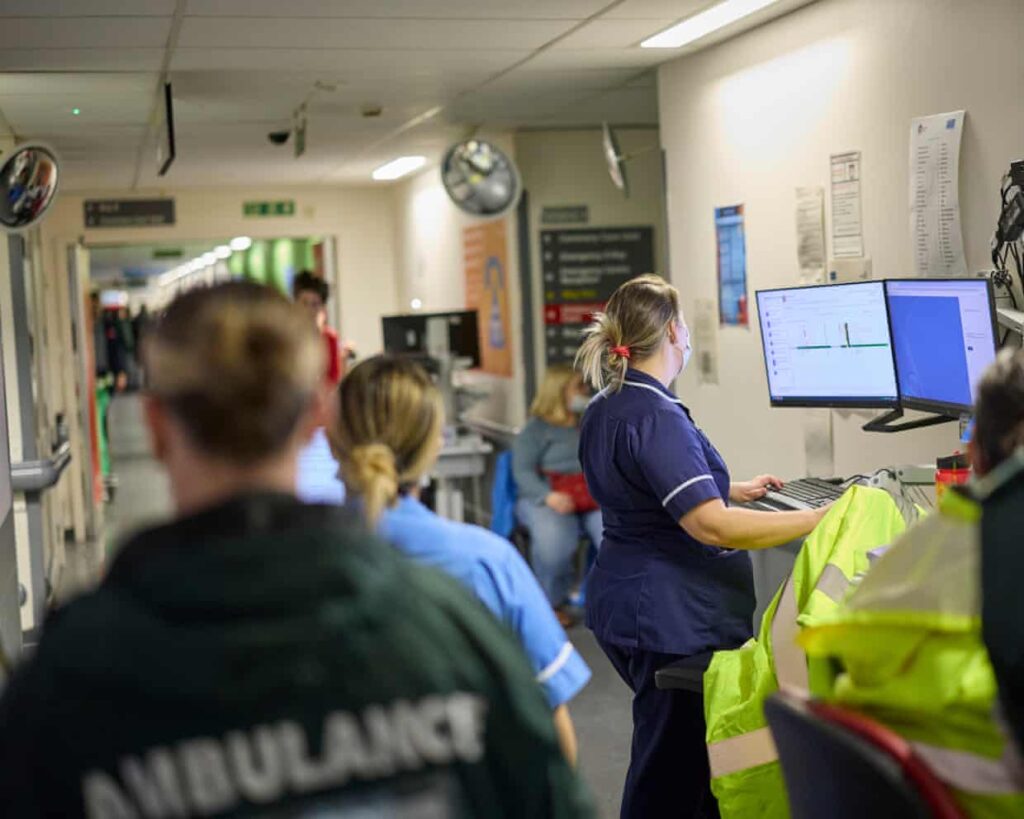
Hospitals across England are implementing artificial intelligence (AI) technology to address the growing challenge of waiting times in emergency departments this winter. An advanced A&E forecasting tool is now in use, enabling healthcare trusts to anticipate peak demand periods and better allocate staffing and bed resources.
The AI-driven prediction algorithm utilizes historical data, incorporating factors such as weather patterns, school holidays, and past influenza and COVID-19 trends to estimate the number of patients expected in A&E. According to Ian Murray, the Minister for Digital Government and Data, this technology allows healthcare professionals to focus on their core duties rather than being hindered by administrative tasks.
Enhancing Emergency Care with Predictive Insights
Murray emphasized the unpredictability of patient inflow, stating, “The front door of the NHS is the A&E department. You’ve no idea how many people will come through the door, although you can have some analytical evidence that Saturday nights might be busier than a Tuesday night.” He highlighted that the tool helps predict A&E traffic during seasonal trends, allowing for strategic preparation.
Hospitals can now deploy more consultants in specific specialties or increase nursing staff in departments forecasted to be the busiest. “You can maybe then see about freeing up beds further down the pipeline, maybe see how you might need to get more people out of the hospital quicker, and free up those beds,” Murray added.
The A&E forecasting tool is accessible to all NHS trusts, with around 50 NHS organisations already utilizing it and reporting positive outcomes. This initiative is part of Keir Starmer‘s AI Exemplars programme, which aims to modernize healthcare delivery through innovative technologies. In January, Starmer noted that AI would “drive incredible change in our country,” underlining the government’s commitment to leveraging technology in public health.
Future of Healthcare Management
Prof. Julian Redhead, the National Clinical Director for Urgent and Emergency Care at NHS England, stated that “early and efficient planning is key to managing busy periods like winter.” He believes that this new technology has the potential to significantly improve patient care management during high-demand times.
By harnessing AI, the NHS aims not only to improve operational efficiency but also to enhance the overall patient experience, ensuring that healthcare professionals can dedicate their time to providing quality care. The move signifies a critical step in adapting to the evolving demands of emergency healthcare while embracing the tools necessary for a more responsive and effective system.