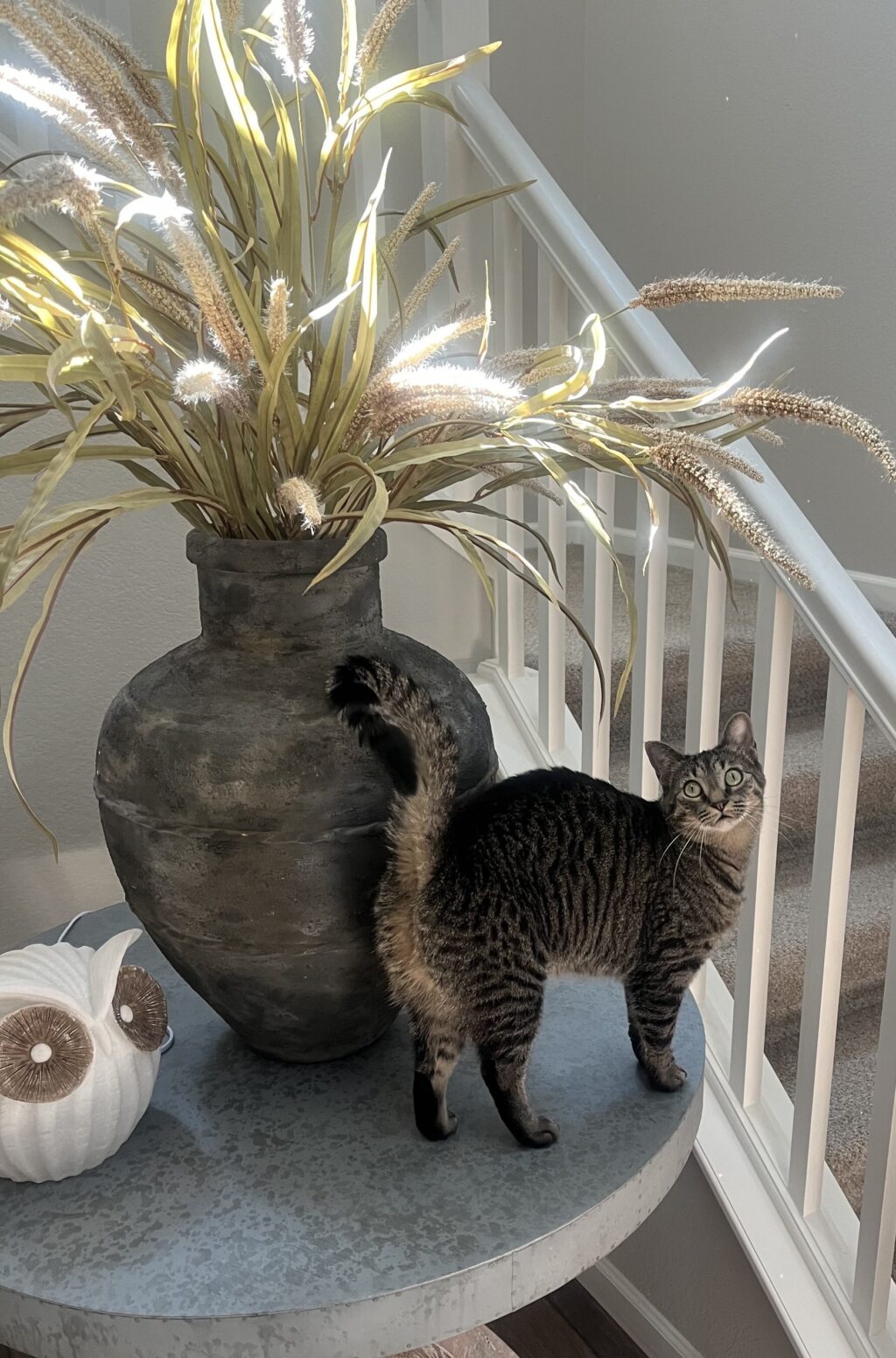
Doja apparently learned nothing from living with a veterinarian and decided to investigate several potentially poisonous houseplants. The veterinarian decided to call the toxicology experts.
A veterinarian’s cat named Doja faced a potential toxic exposure after being accidentally locked in an office filled with houseplants and flowers considered harmful to pets. On January 7, 2026, Dr. Mercedes Muldoon, a veterinarian from Minneapolis, shared her experience to raise awareness among pet owners about the dangers posed by certain plants.
Dr. Muldoon explained that a family member had received a bouquet of flowers for their retirement, which she had intended to keep away from Doja. Unfortunately, the curious cat managed to sneak into the office, where she spent about an hour exploring the area. The bouquet contained several flowers known to cause gastrointestinal upset in pets, including Peruvian lilies, roses, and carnations, along with a potted shamrock plant.
The timing of the incident coincides with National Houseplant Appreciation Day on January 10, which prompted toxicology experts at the Pet Poison Helpline to remind pet owners to be aware of toxic plants. Dr. Renee Schmid, a senior veterinary toxicologist at the helpline, stated that fortunately, the type of lily involved was not expected to cause severe toxicity. She noted that true lilies (genus Lilium) and daylilies (genus Hemerocallis) are particularly dangerous for cats, as even small ingestions can lead to severe acute renal failure.
Dr. Schmid further explained the risks associated with the shamrock plant. While its bitterness generally deters pets from ingesting it, accidental consumption can cause a sudden drop in calcium levels and, in rare cases, acute renal failure. Fortunately, Dr. Muldoon assessed that Doja had not ingested enough of any toxic item to require treatment.
Pet Poison Helpline, which receives many inquiries from veterinarians regarding potential poisoning cases, highlighted the importance of awareness. With over 50,000 licensed veterinarians in the United States but fewer than 100 veterinary toxicologists, the helpline serves as a crucial resource. Dr. Schmid noted that while cats are particularly vulnerable to lilies, other common houseplants can pose significant risks to dogs, such as the sago palm, which can lead to severe liver failure if ingested.
To assist pet owners, Pet Poison Helpline maintains a searchable online list of potential pet poisons and encourages immediate contact if a pet has ingested something suspect. Dr. Schmid emphasized, “If your pet has ingested something you suspect may be dangerous, visit our poison list first or call us immediately. We’re here to help save pets’ lives.”
In addition to providing vital resources for pet health, Pet Poison Helpline has also launched Toxin Tails, an initiative to educate the veterinary community and pet owners about common poisoning dangers. The program highlights successful recovery stories of pets that have been treated for poisoning.
As part of its outreach efforts, Pet Poison Helpline recently announced the winner of its 2025 Case of the Year, showcasing the successful treatment of a family whose pets were poisoned by toxic reef fish. This recognition underscores the organization’s commitment to saving animal lives and educating the public about the potential dangers their pets may face.
Pet Poison Helpline operates 24/7, providing expert advice for pet owners and veterinary professionals dealing with potential poisoning incidents. With a fee of $89 per incident that includes follow-up consultations, it offers a cost-effective option for animal poison control. More information can be found on their website, including a chat feature for immediate assistance.
As pet owners prepare to celebrate National Houseplant Appreciation Day, it is crucial to remain vigilant about the plants and flowers in their homes, ensuring a safe environment for their beloved pets.