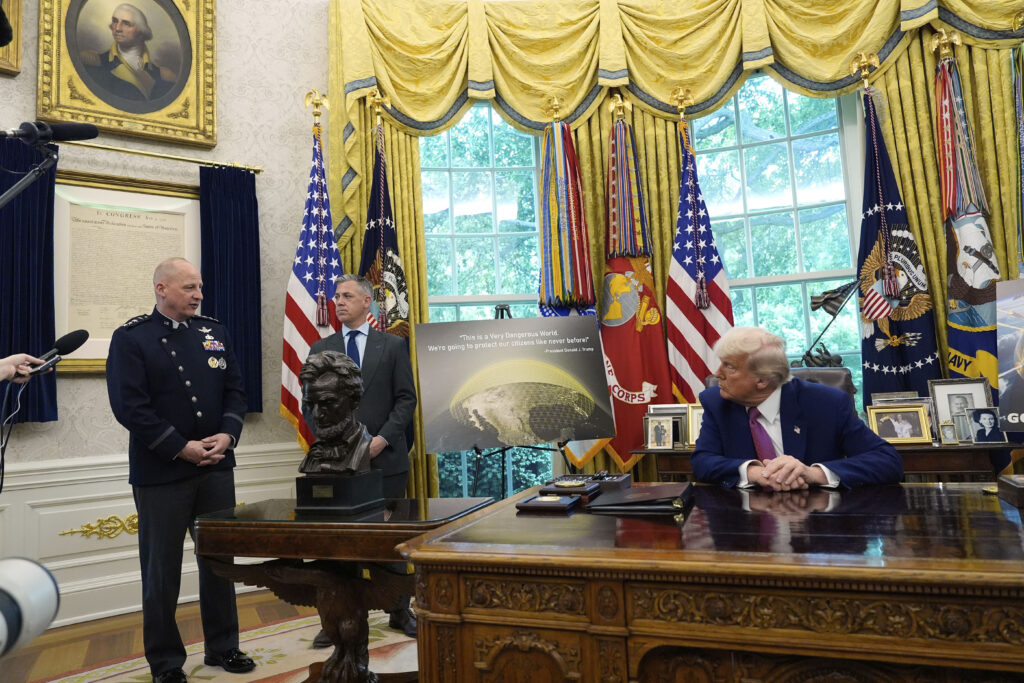
President Donald Trump and Rep. Jim Banks, R-Ind., listen as Space Force vice chief of space operations Gen. Michael Guetlein speaks in the Oval Office of the White House, Tuesday, May20, 2025, in Washington. (AP Photo/Alex Brandon)
The ambitious missile defense initiative known as Golden Dome, championed by former President Donald Trump, is significantly behind schedule, with little progress made since its announcement. Initially slated for completion within three years, the project has encountered numerous challenges, leaving stakeholders questioning its viability.
Launched in 2022, the Golden Dome program aimed to bolster the United States’ missile defense capabilities significantly. Trump promised a comprehensive shield designed to protect against various aerial threats, including intercontinental ballistic missiles. However, as of early 2023, no substantial advancements have been reported, raising concerns among defense analysts and political observers alike.
Challenges in Development
Despite an ambitious timeline, the Golden Dome project has faced technical and logistical hurdles that have stalled its progress. Experts in defense technology point to issues such as funding shortages, delays in procurement processes, and complications in integrating new systems with existing military infrastructure.
The Department of Defense has not provided updated timelines or detailed explanations regarding the setbacks. According to officials familiar with the project’s status, the complexities associated with developing a state-of-the-art missile defense system have contributed to the slow pace of implementation.
Strong opposition from various political factions has also played a role in the delays. Critics argue that the funds allocated for Golden Dome could be better spent on other pressing defense needs. Some lawmakers have called for a reevaluation of the initiative, suggesting that it may not be the most effective use of taxpayer dollars in today’s security landscape.
Implications for National Security
The delays in the Golden Dome project raise questions about the United States’ readiness to address emerging threats. With geopolitical tensions escalating in various regions, the need for an effective missile defense system has never been more critical. Experts warn that the lack of progress could leave the country vulnerable to missile attacks from adversaries.
As the project languishes, other nations continue to advance their own missile defense technologies. Countries such as Russia and China are actively developing sophisticated systems that could challenge U.S. military dominance.
In light of these developments, some defense analysts argue that the United States must reassess its approach to missile defense. They advocate for a more integrated strategy that includes not only advanced technology but also diplomatic efforts to mitigate potential conflicts.
The future of the Golden Dome project remains uncertain. As the Biden administration navigates the complexities of national defense, the question persists: Can the United States afford to fall behind in the race for missile defense technology? The answer may depend on the political will to prioritize and expedite the necessary resources to bring the Golden Dome initiative to fruition.