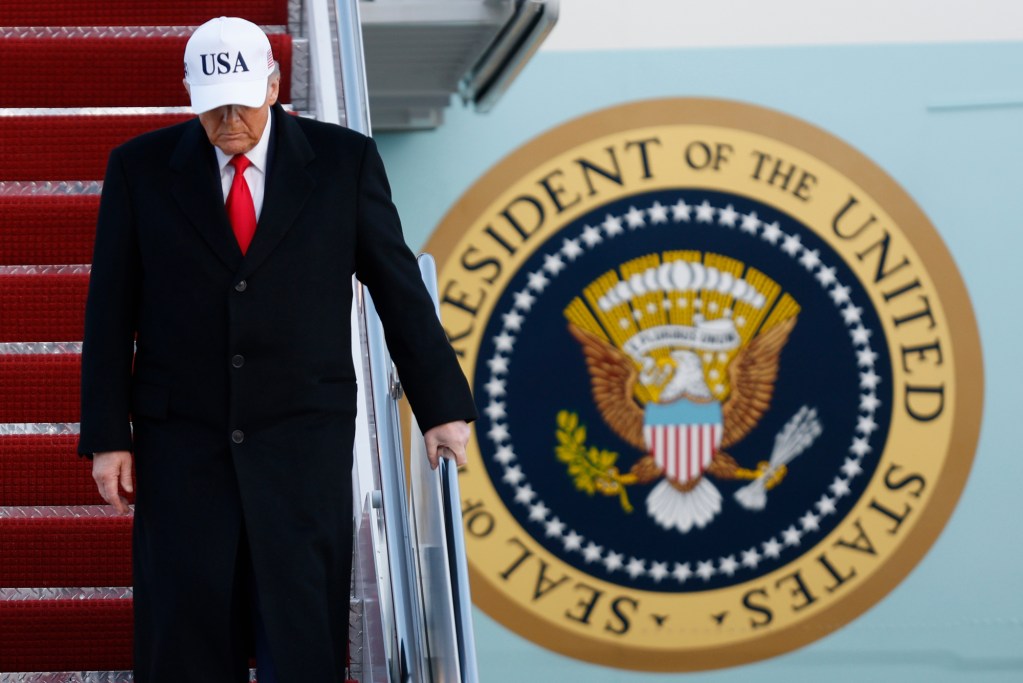
President Donald Trump announced on February 1, 2024, he will deny federal funding to any states housing local governments that resist his administration’s immigration policies. This declaration, made during a speech at the Detroit Economic Club, marks an escalation of previous threats aimed at cutting resources to sanctuary cities—localities that limit cooperation with federal immigration enforcement.
Trump stated, “We’re not making any payments to sanctuary cities or states having sanctuary cities, because they do everything possible to protect criminals at the expense of American citizens.” He emphasized that these policies contribute to crime and fraud, claiming that the decision would significantly impact federal funding to these jurisdictions.
While the specifics of the funding cuts remain unclear, Trump assured reporters that the consequences would be substantial. “You’ll see,” he remarked when questioned about which types of funding would be affected.
Legal Challenges and Previous Efforts
The concept of sanctuary cities lacks a strict legal definition but generally refers to jurisdictions that limit their cooperation with Immigration and Customs Enforcement (ICE). Previous attempts by the Trump administration to cut funding for these areas faced legal challenges. In 2017, courts blocked efforts to withhold federal funds from sanctuary cities, asserting that the administration lacked the authority to impose such conditions.
A California-based federal judge also rejected a similar executive order last year, stating that it was premature to stop the plan when no specific actions had been taken. The Justice Department had published a list identifying approximately three dozen jurisdictions it considers sanctuary areas, predominantly controlled by Democratic leadership. These include states like California, Connecticut, and New York, as well as cities such as Boston and counties like Baltimore County, Maryland, and Cook County, Illinois.
Current Funding Threats and Implications
The Trump administration has already initiated funding halts for various programs in recent weeks, facing multiple legal challenges. The U.S. Department of Agriculture warned states that have not provided data on recipients of the Supplemental Nutrition Assistance Program (SNAP) that they risk losing administrative funds. Additionally, the U.S. Department of Health and Social Services announced it would stop funding for daycare subsidies and other aid to low-income families in five Democratic-led states due to unspecified fraud suspicions, although a court has temporarily halted this action.
In Minnesota, the administration has applied financial pressure by freezing funding without clarity on the specifics. The Centers for Medicare and Medicaid Services informed state officials that it intends to withhold $515 million every three months from fourteen Medicaid programs considered “high risk” due to alleged fraud, a move that equates to one-fourth of the federal funding for those programs.
As states prepare to challenge these funding cuts, experts suggest that the implications could extend beyond sanctuary cities, impacting a wider range of local governments and communities. This ongoing struggle highlights the contentious intersection of federal immigration policy and local governance in the United States.