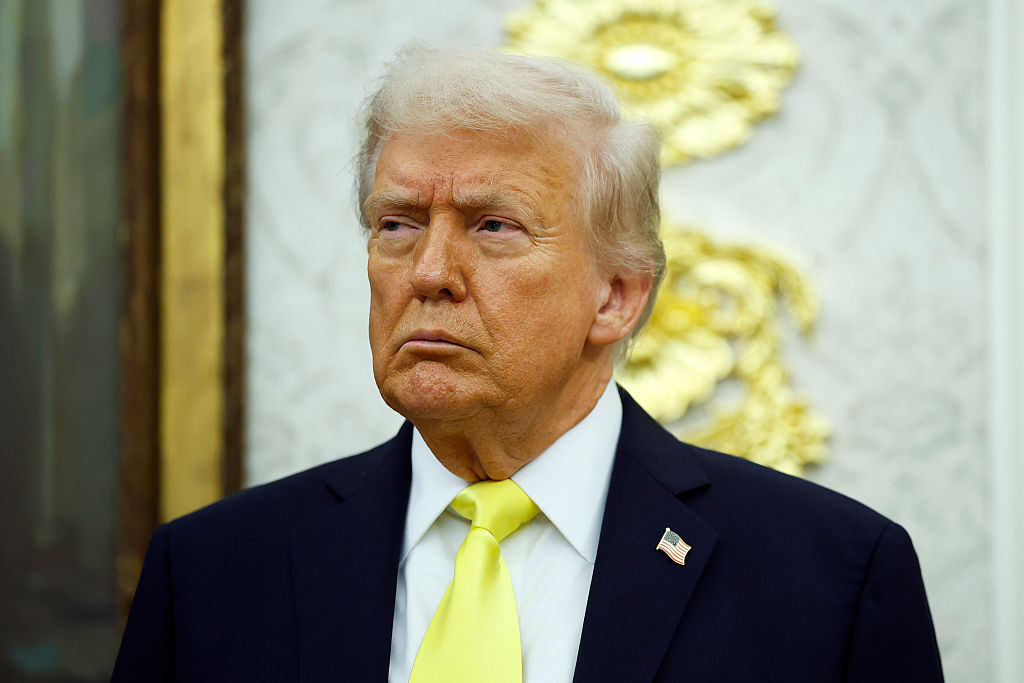
WASHINGTON, DC - OCTOBER 15: U.S. President Donald Trump looks on during a press conference in the Oval Office of the White House on October 15, 2025 in Washington, DC. Trump and Federal Bureau of Investigation Director Kash Patel provided an update on the Trump administration’s progress in reducing violent crime. (Photo by Kevin Dietsch/Getty Images)
President Donald Trump has indicated that the United States intends to maintain its oversight of Venezuela for a significant period, suggesting that Washington’s involvement in managing the country’s oil resources will extend “much longer” than one year. In an interview with The New York Times, Trump declined to provide a specific timeline for the United States’ role in Venezuela, emphasizing that the interim authorities are cooperating fully with U.S. interests.
During the interview, Trump outlined plans for the extraction and sale of Venezuelan oil, stating that revenues would be used to assist the country while simultaneously working to lower global oil prices. “We will rebuild it in a very profitable way,” he remarked, recognizing the challenge ahead in reviving Venezuela’s oil sector, which he noted could take years.
The president’s comments followed briefings from senior administration officials, including Secretary of State Marco Rubio and Defense Secretary Pete Hegseth, who informed lawmakers about the U.S. strategy for controlling Venezuela’s oil sales for the foreseeable future. The administration has proposed a three-phase approach: stabilization, recovery, and political transition following the ousting of Nicolás Maduro.
U.S. Strategy for Venezuelan Oil
Rubio described the initial phase as a “quarantine,” involving the continued seizure of sanctioned oil and the potential sale of between 30 million and 50 million barrels on the open market. The proceeds from these sales would be managed by the United States and allocated in a manner aimed at benefiting the Venezuelan populace rather than figures from the previous regime.
The subsequent phase would focus on revitalizing the Venezuelan market and fostering the rebuilding of civil society. However, specifics regarding the third phase, which pertains to the political transition, remain unclear. Trump did not provide a timeline for potential elections in Venezuela and refrained from explaining the decision to recognize Delcy Rodríguez, a former ally of Maduro, as the interim leader instead of supporting other opposition figures.
Despite the lack of defined timelines, Trump asserted that the administration is in “constant communication” with Rodríguez through Rubio. The U.S. government’s intent to exert control over Venezuela’s oil resources reflects a significant shift in foreign policy, highlighting the complexities of navigating the country’s future amid ongoing political turmoil.
The United States’ approach underscores the administration’s focus on leveraging Venezuelan oil to meet both domestic and international needs, while navigating a highly volatile geopolitical landscape. As the situation evolves, the implications for both Venezuela and global oil markets will likely continue to unfold in the coming months.