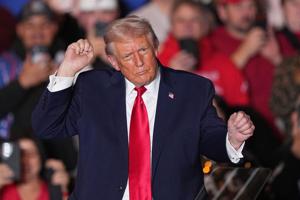
President Donald Trump announced on July 9, 2020, that the United States has seized an oil tanker off the coast of Venezuela. This action is part of a broader strategy by the Trump administration to exert pressure on the Venezuelan government led by President Nicolás Maduro, which has faced increasing scrutiny and sanctions from the U.S. in recent years.
Details of the Seizure
The seized vessel, which was reportedly transporting crude oil to Asia, is viewed as a significant step in the ongoing campaign against Maduro’s regime. The U.S. Department of Justice confirmed the seizure, stating that the tanker had links to a network involved in circumventing sanctions against Venezuela.
This development is emblematic of the escalating tensions between the two nations. The U.S. has accused the Maduro government of corruption and human rights violations while supporting opposition figures. The Trump administration’s latest move aligns with its goal to disrupt Venezuelan oil exports, a critical source of revenue for the Maduro government.
Impact on U.S.-Venezuela Relations
The seizure of the oil tanker is likely to exacerbate already strained relations between the United States and Venezuela. The Maduro administration has long criticized U.S. interventions as imperialistic, claiming they undermine the country’s sovereignty. In response to the seizure, Venezuelan officials denounced the action as a violation of international law.
The U.S. has consistently implemented sanctions aimed at crippling Venezuela’s economy, with oil exports being a primary target. In 2019, the U.S. imposed sanctions on the state oil company, Petróleos de Venezuela, S.A. (PDVSA), which significantly reduced the country’s oil production and export revenues.
As the U.S. continues to escalate its efforts against Maduro, the repercussions for the Venezuelan economy and its citizens remain severe. The country is already facing a humanitarian crisis, with shortages of food and medicine exacerbating the plight of ordinary Venezuelans.
While the U.S. government views these actions as necessary to support democracy in Venezuela, critics argue that such measures disproportionately affect the civilian population, further deepening the crisis.
The situation remains fluid, and the international community is watching closely as the U.S. seeks to maintain its stance against Maduro while navigating the complexities of regional politics.