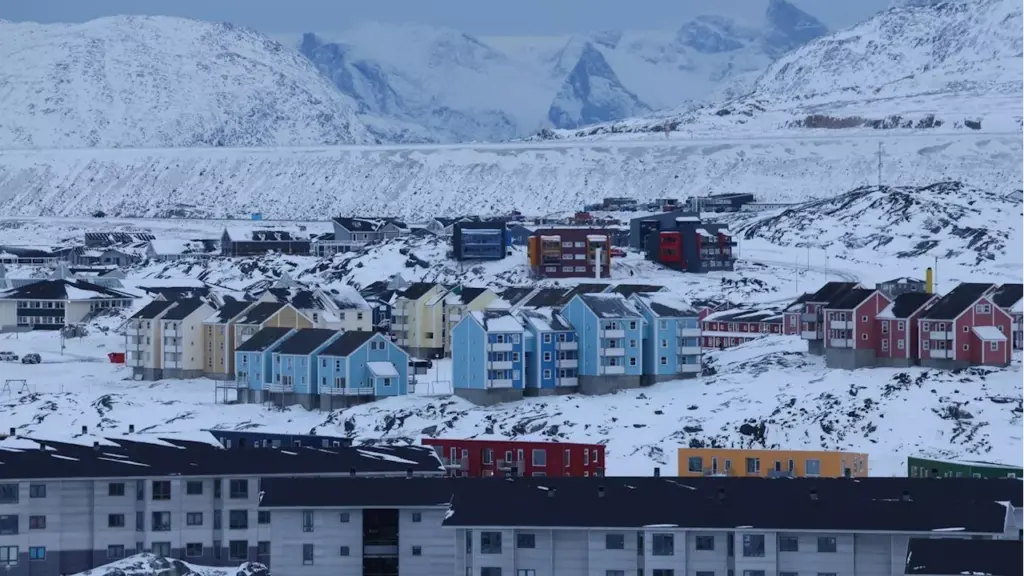
U.S. President Donald Trump has announced a framework deal concerning Greenland, which has led to the cancellation of potential tariffs on European allies. During an address on January 21, 2026, Trump stated that the United States is poised to gain “total access” to the territory, which he emphasizes as crucial for American security interests in the Arctic.
European leaders are set to convene this week to assess their response to Trump’s recent rhetoric, which included threats of imposing 10% tariffs on nations opposing U.S. ambitions in Greenland. The shift from a stance of panic to one of uncertainty marks a new phase in transatlantic relations, especially after Trump indicated he would not resort to military force in acquiring the territory.
The details of the agreement remain unclear, with negotiations still in their infancy. However, Trump assured that the U.S. would secure “everything we want at no cost.” On social media, he highlighted ongoing discussions regarding the Golden Dome missile defense program, which seeks to enhance U.S. military capabilities in space. The President has tasked Vice President JD Vance, Secretary of State Marco Rubio, and special envoy Steve Witkoff with leading these talks.
During his remarks, Trump reiterated that the U.S. is uniquely positioned to defend Greenland from potential threats posed by nations such as Russia and China. He has faced strong opposition from Denmark and Greenland’s leadership, both of whom have firmly rejected any notion of ceding sovereignty. Danish Prime Minister Mette Frederiksen emphasized that discussions regarding the country’s status as a sovereign state are “a red line.”
Initial discussions on the future of Greenland have reportedly focused on bolstering NATO’s presence in the Arctic. This strategy includes enhancing U.S. claims to military bases on the island and preventing adversaries from exploiting its mineral resources. Greenland’s leader, Jens-Frederik Nielsen, has also expressed opposition to U.S. sovereignty over military facilities, reinforcing the significance of sovereignty in these negotiations.
Trump’s announcement marks a significant departure from earlier pronouncements that hinted at military or economic confrontation with allies. NATO officials had warned that any attempt to seize Greenland by force would jeopardize the alliance, a concern that appears to have been alleviated following the framework deal. Trump asserted, “I won’t use force. All the United States is asking for is a place called Greenland.”
The ongoing dialogue between the U.S. and Europe reflects broader anxieties regarding military commitments in the Arctic. European nations are grappling with how to maintain a cooperative relationship with the U.S. while addressing their own security concerns. The Trump administration has frequently criticized NATO members for perceived inadequacies in defense spending, labeling them as “freeloaders” on American military resources.
With Europe poised to implement its own retaliatory tariffs, tensions have simmered. The threat of a trade war had significant implications for financial markets, particularly on Wall Street. However, the recent agreement has momentarily calmed these fears. As Ian Kelly, a former diplomat, noted, “The next few years are the most dangerous ones for them… They’re definitely panicking, as well they should.”
The evolving situation around Greenland will require careful navigation by both the U.S. and European powers. Strengthening the transatlantic alliance while addressing territorial sovereignty remains crucial as nations work to establish a collaborative approach to security in the Arctic region. The outcome of these negotiations will likely shape defense strategies for years to come.