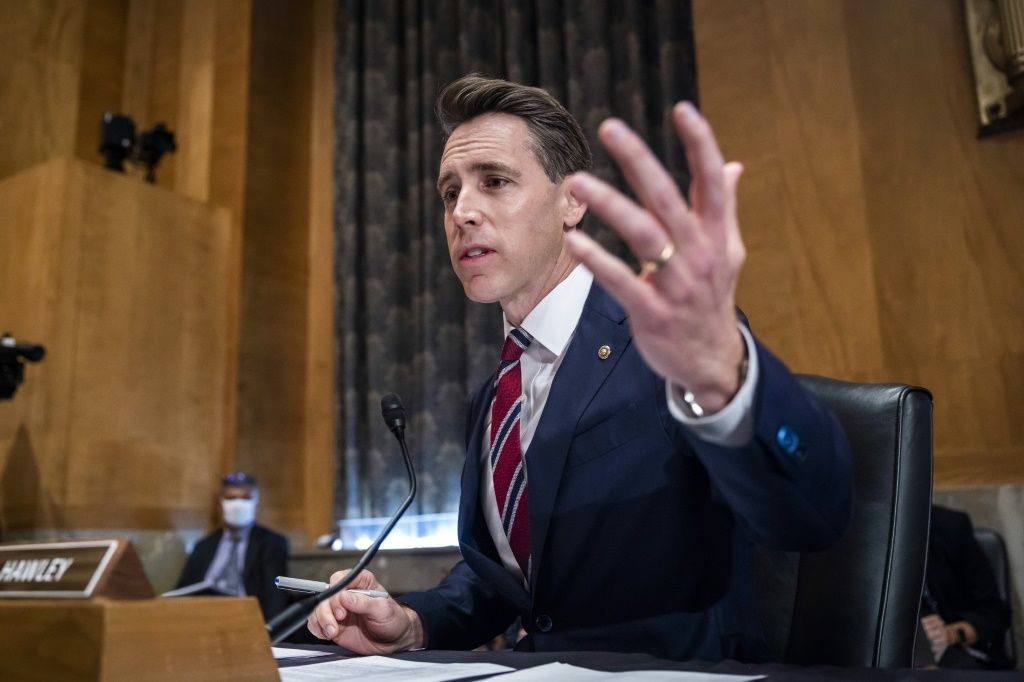
Republican Senator Josh Hawley of Missouri has publicly defended his recent vote to block President Donald Trump from conducting military operations in Venezuela without congressional approval. The resolution, introduced by Democratic Senator Tim Kaine of Virginia under the War Powers Act, passed the Senate by a vote of 52-47 and aims to limit the executive branch’s authority to engage in military actions unilaterally.
The resolution was a direct response to the Trump administration’s recent military activities in Venezuela, which included a series of missile strikes targeting locations in Caracas. These actions led to the capture of Venezuelan President Nicolás Maduro and his wife, Cilia Flores, who are currently in U.S. custody in Brooklyn, New York. They face serious charges, including narco-terrorism conspiracy and cocaine importation, in connection with alleged state-sponsored drug trafficking networks.
In a speech on the Senate floor, Kaine emphasized the need for congressional oversight of military actions, stating, “After the administration’s actions over the weekend, which resulted in several injuries to U.S. service members… Congress needs to tell the American public where it stands.”
Hawley, a supporter of Trump’s policies, took to social media to clarify his stance on the resolution. He stated, “My read of the Constitution is that if the President feels the need to put boots on the ground there in the future, Congress would need to vote on it. That’s why I voted yes on this morning’s Senate resolution.” His vote was notable as he was one of only a few Republican senators to support the measure, alongside colleagues such as Senator Todd Young of Indiana, Senator Lisa Murkowski of Alaska, Senator Susan Collins of Maine, and Senator Rand Paul of Kentucky.
While the resolution does not reverse any previous military actions taken against Venezuela, it seeks to prevent future unilateral military expansions that could move beyond targeted strikes on drug-smuggling boats.
President Trump responded negatively to the resolution, denouncing it as detrimental to national security. On his social media platform, Truth Social, he expressed that those GOP senators who supported the resolution “should be ashamed” and asserted that they “should never be elected to office again.”
Despite its passage in the Senate, the resolution may face significant challenges in the Republican-controlled House of Representatives. Previous attempts to limit military actions toward Venezuela have failed to gain traction there. Even if the House were to pass the measure, Trump has indicated he would veto it.
The ongoing debate over military intervention in Venezuela highlights the tension between congressional authority and executive power in matters of national security. As the situation unfolds, the implications for U.S. foreign policy in Latin America remain uncertain.