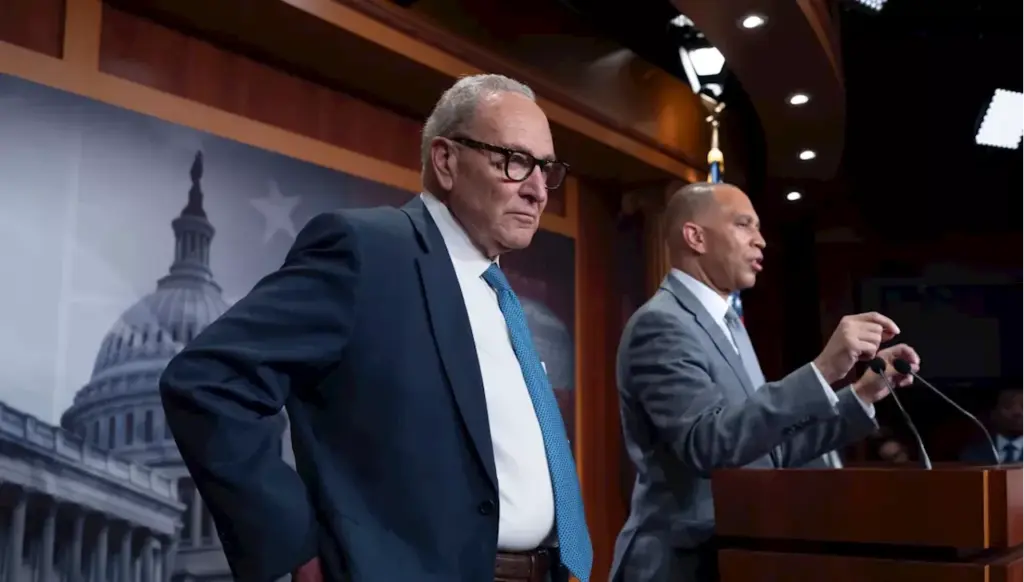
The political landscape in the United States has intensified following the Trump administration’s military operation in Venezuela, which resulted in the arrest of President Nicolás Maduro. Senate Majority Leader Chuck Schumer is pressing Republican lawmakers to reconsider the administration’s military powers, emphasizing the need for congressional authorization before engaging in military actions.
Concerns Over Military Action
Schumer noted that several Republican committee chairs have voiced their concerns regarding the operation, stating, “Maduro is an illegitimate dictator, but launching military action without congressional authorization, without a credible plan, is reckless.” He introduced a resolution aimed at limiting the president’s military powers, which he plans to bring to the Senate floor for debate next week.
In discussions with reporters, Schumer highlighted that some Republicans have expressed private worries about the administration’s actions. He stated, “We’re going to be pushing our Republican colleagues to stand up for the American people to get this done.” This call to action suggests a potential bipartisan effort to assert congressional authority over military engagements.
Schumer criticized the administration for not providing Congress with advance notice regarding the military operation. He explained that the “Gang of Eight,” a group comprising the top leaders from both parties in the Senate and House, requested a briefing from the White House. “It’s been sort of a dark screen,” he remarked, highlighting the lack of transparency from the administration.
Legal Justifications and Political Ramifications
The Trump administration has defended its actions by citing Article II of the Constitution, which designates the president as the commander-in-chief of the military. Officials categorized the operation as a law enforcement action rather than an act of war, arguing that it was necessary to arrest Maduro, who faces serious charges of narco-terrorism.
Senator Tom Cotton, chair of the Senate Intelligence Committee, supported the administration’s decision not to inform Congress beforehand, arguing that such notifications are not standard practice for operations targeting indicted individuals. He stated, “That’s probably one reason it didn’t leak over these four days.”
Meanwhile, other Republican lawmakers have shown a mix of support and skepticism regarding the operation. Senator John Thune expressed his intent to seek further briefings on the operation as part of a broader counternarcotics strategy, while Representative Don Bacon raised concerns about potential geopolitical consequences, suggesting that Russia or China might exploit the situation for their own objectives.
As the political dialogue continues, Schumer’s remarks underscore a growing tension between the executive branch and Congress over military engagement protocols. He emphasized the importance of congressional oversight, stating, “Congress should not be sidelined as the Trump administration gets sucked into another nation-building quagmire.”
With the resolution set to be debated next week, the outcome may significantly shape the legislative response to the administration’s military actions in Venezuela. Schumer remains hopeful for bipartisan support to ensure that Congress plays a pivotal role in decisions involving military force.